

 English
 русский
 Español
 عربى

Walk into any plant making ham, bacon or emulsified sausage and you will usually find the same quiet workhorse standing near the brine station: a meat vacuum tumbler. It looks simple enough, a drum, a vacuum pump and a drive, yet it decides how quickly brine moves into the muscle, how much of that brine stays there after cooking, and how even the finished slice looks once it leaves the smokehouse.
We have been building meat processing machinery since 2003, and in that time tumbling has moved from an afterthought to a process step that buyers plan a whole line around. This guide walks through what the machine actually does, the configurations available in our vacuum tumbler range, and the practical questions worth asking before you settle on a size.
Content
- 1 What a Meat Vacuum Tumbler Actually Does
- 2 Why the Vacuum Does the Heavy Work
- 3 The Main Types You Will See on the Market
- 4 Matching Capacity to Your Real Batch Size
- 5 Temperature Control Is Not a Luxury
- 6 Practical Checks Before You Commit
- 7 Cleaning, Maintenance and Everyday Reliability
- 8 Why Process Support Matters as Much as the Machine
- 9 Bringing It Together
What a Meat Vacuum Tumbler Actually Does
Three things happen at once inside the drum: mechanical tumbling, gentle massaging against the shell and paddles, and a reduced-pressure atmosphere. Under vacuum, the air trapped inside muscle fibers and in the gaps between them is drawn out. When the drum is vented, or when brine is pulled in under vacuum, that freed space fills with brine instead of air.
The mechanical side matters just as much. As pieces lift, fall and roll, fibers flex, cell walls open slightly, and salt-soluble proteins migrate to the surface. That thin protein film is what gives restructured ham its bind, helps whole-muscle products hold water through cooking, and keeps the slice from looking dry at the edges. Without tumbling you can still marinate, but you are relying on time and gravity alone.
The practical result is a shorter cycle, a more even distribution of cure and seasoning, and a better yield after thermal processing. That last point is where the numbers usually justify the investment.
Why the Vacuum Does the Heavy Work
Traditional immersion marination depends on diffusion, which is slow. A piece of pork loin sitting in brine overnight will take up salt, but the core may still lag behind the surface, and a good deal of the pickup is simply surface liquid that drains away later. Vacuum changes the physics. Removing air creates a pressure differential between the outside of the meat and the open pores inside it, so brine is drawn inward rather than waiting to seep in.
In practice, a well-run vacuum cycle of twenty to forty minutes can achieve uptake that would otherwise take many hours of static soaking, and it does so more uniformly. Because the drum is closed, brine concentration, temperature and hygiene are all controlled rather than guessed at, and the working area stays far drier than an open vat ever will.
The Main Types You Will See on the Market
Most tumblers share the same principle, but the mechanical layout decides which products and batch sizes fit comfortably. The table below is the quick version we usually walk customers through first.
| Configuration | Typical fit | What sets it apart |
|---|---|---|
| Horizontal vacuum tumbler | High-volume plants running mixed whole-muscle and cured products | Long drum, low loading height, gentle drop over the paddles |
| Hydraulic vacuum tumbler | Heavy batches and demanding brine schedules | Hydraulic drive and tilting drum for fast, complete discharge |
| Refrigerated vacuum tumbler | Temperature-sensitive recipes and long tumbling cycles | Integrated cooling keeps the mass in a safe, stable band |
| Small or lab-scale tumbler | Recipe development and pre-production trials | Scaled cycles that translate cleanly to full-size batches |
For most mid-size processors running hams, loins and marinated cuts on the same shift, a horizontal machine is the natural starting point because loading and unloading stay simple and the mechanical action is gentle on whole muscles.
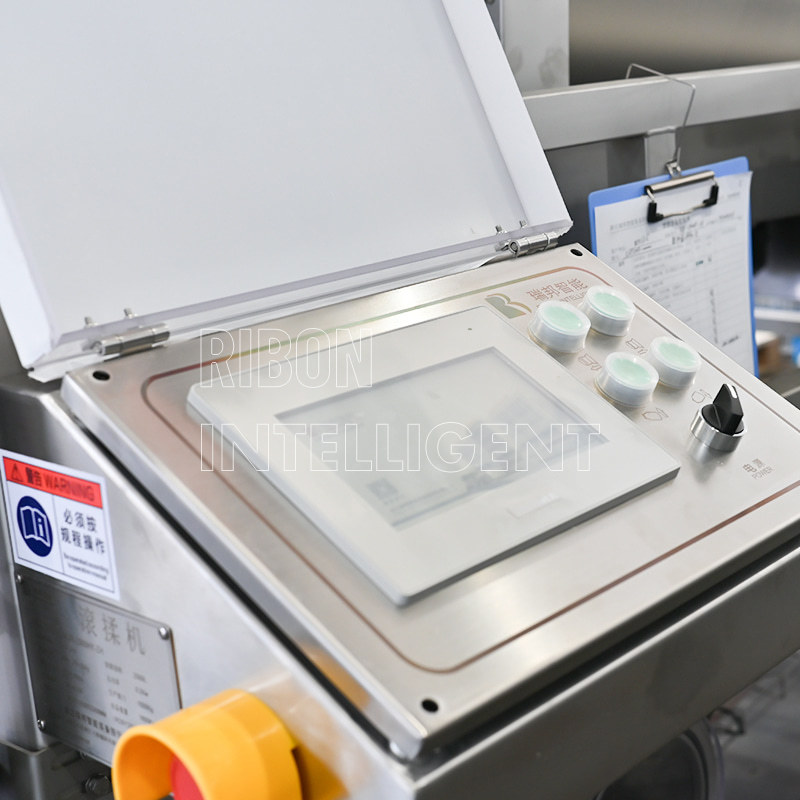 Horizontal Vacuum Tumblers for Mid-Size Meat ProcessingA range of horizontal vacuum tumblers from 500 to 3,500 L, suited to mid-size processors marinating hams, loins and whole-muscle cuts.View Product →
Matching Capacity to Your Real Batch Size
Capacity is where buyers most often overshoot or, less often, undershoot. The drum volume quoted in a brochure is not the batch weight. As a working rule, load the drum to roughly sixty to seventy percent of its gross volume, because the meat needs room to fall. A drum rated at 1,500 litres therefore handles batches somewhere in the 500 to 700 kg band depending on product density and brine ratio.
From there, work backwards through the shift rather than forwards from the machine. How many batches do you need per shift, including the time spent loading, evacuating, tumbling, discharging and cleaning? If the tumbler sits directly behind an injector, it becomes the pace-setter for everything downstream, and a machine that is only slightly too small will quietly cost you an hour every day.
- What is the heaviest single batch you will run, not the average one?
- How many batches per shift, counting load and discharge time?
- Will the same drum handle whole muscle and ground or emulsified products?
- Is there floor space and ceiling clearance for a tilted drum?
Temperature Control Is Not a Luxury
Brine uptake is temperature dependent. A warmer mass absorbs faster, which sounds helpful until you look at what it does to protein structure and to the safety margin of a long cycle. Friction from tumbling adds heat as well, and in a warm room a two-hour cycle can drift out of the band you intended.
For recipes where the mass must stay genuinely cold, an integrated cooling jacket removes the guesswork and lets you run longer cycles without opening the drum to top up ice. It also makes production planning easier in summer, when ambient temperatures in the plant are least cooperative.
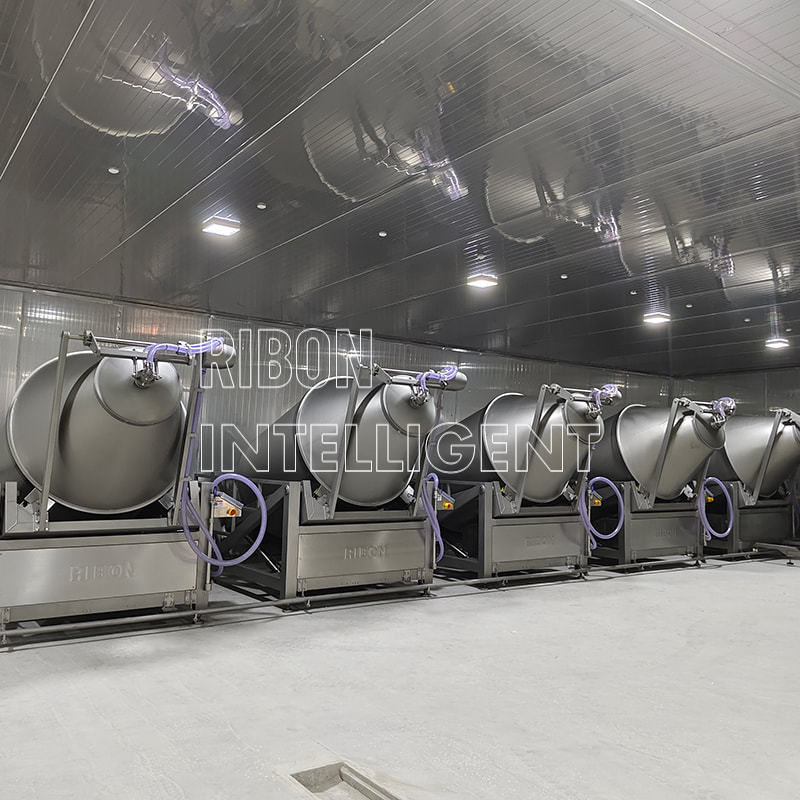 Refrigerated Vacuum Tumblers with Integrated Drum CoolingFor recipes needing genuinely cold product, these PLC-controlled units combine integrated refrigeration with 2–12 rpm tumbling across 800–3,500 L drum capacities.View Product →
Practical Checks Before You Commit
Once the type and rough size are settled, the details decide whether the machine is pleasant to live with. Look at the vacuum pump and its water consumption, the drive and control system, how the drum discharges, paddle geometry and clearance, and how easily the lid gasket and seals can be reached for cleaning. Spare parts availability over a ten-year horizon matters more than most buyers expect on the day of purchase.
We keep a longer checklist in our guide to choosing the right vacuum tumbler for your needs, which is worth reading alongside a quotation. It helps to compare machines on the same criteria rather than on price alone.
It also helps to see the drum loaded. Our RGR series covers a spread of working volumes, and smaller models are often the easiest way for a plant to validate a recipe before scaling up to a full production machine.
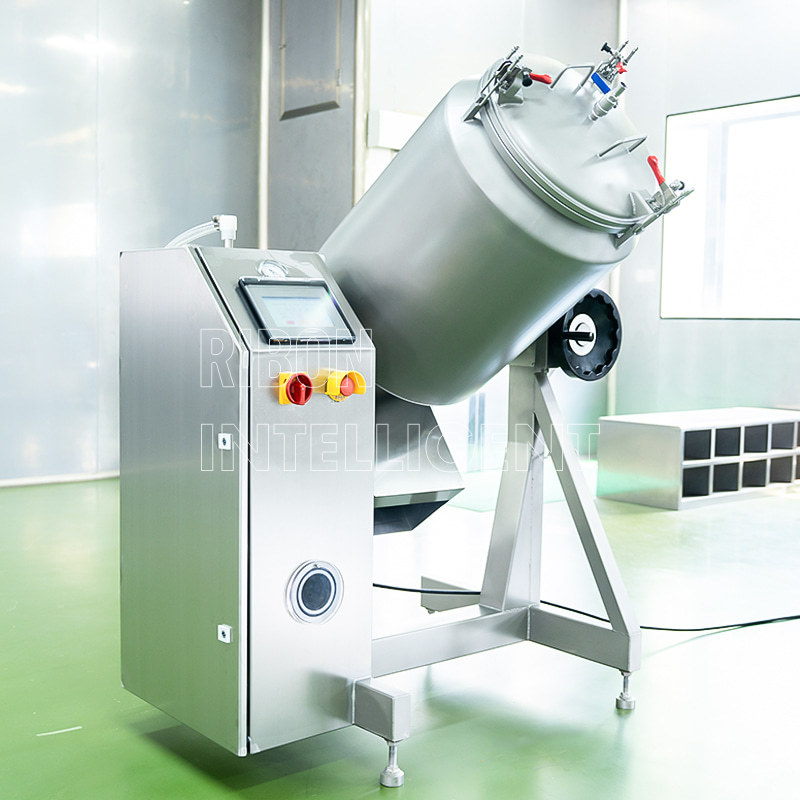 RGR-150VF Vacuum Tumbler for Trials and Small BatchesA 150 L vacuum tumbler with adjustable 3–17 rpm rotation, intended for restaurant production and laboratory testing before scaling to larger RGR models.View Product →
Cleaning, Maintenance and Everyday Reliability
A tumbler earns its keep only if it can be cleaned properly between allergens, cures and product families. Look for smooth internal surfaces, a lid that opens wide enough for inspection, and drum tilting that lets wash water drain completely instead of pooling at the low end. Paddle and shaft seals deserve particular attention, since they are the parts most exposed to brine and to mechanical load.
Day to day, the vacuum pump and the lid gasket take the most wear. A pump that is serviced on schedule holds vacuum faster, which shortens evacuation time on every batch and quietly raises throughput across a shift.
Why Process Support Matters as Much as the Machine
A tumbler is only one node in a chain that runs from slaughter and deboning through injection, tumbling, smoking and chilling. A supplier who understands that whole chain can tell you when a cycle time is unrealistic, when a brine formula needs adjusting, or when the real constraint sits one station upstream.
Ribon has manufactured meat processing equipment since 2003 and exports to processors worldwide. Our engineering team includes a research center of around sixty people, and we hold more than 150 national patents alongside ISO9001 certification. We also maintain a central test center equipped with a full set of processing machinery, so customers can run their own recipes on our equipment and see the yield before committing to a purchase.
That trial step is often the most useful part of the conversation. A batch of your own product, tumbled to your own schedule, answers more questions than any specification sheet.
Bringing It Together
Choose a meat vacuum tumbler by starting from the product, not the brochure. Decide what the brine has to do, how cold the mass must stay, and how many batches the shift really requires, then match drum volume and mechanical action to those answers. Get that right and the machine becomes the least dramatic item on your floor, quietly delivering consistent pickup, better bind and a slice that looks the way you intended. Get it wrong, and you will feel it in every batch. We are always happy to talk through a specific product and cycle before you decide.