

 English
 русский
 Español
 عربى
عربى
Content
- 1 What Vacuum Tumbling Actually Is
- 2 The Science Behind the Process
- 3 Types of Vacuum Tumbler Machines
- 4 What Foods Benefit Most from Vacuum Tumbling
- 5 Key Parameters That Affect Tumbling Results
- 6
- 7 Vacuum Tumbling vs. Traditional Marination Methods
- 8 How to Use a Home Vacuum Tumbler Effectively
- 9 Vacuum Tumbling in Commercial Meat Processing
- 10 Common Mistakes to Avoid
- 11 Is Vacuum Tumbling Worth It for Home Cooks?
What Vacuum Tumbling Actually Is
Vacuum tumbling is a mechanical marination process used in both commercial meat processing and home kitchens to deeply infuse seasonings, brines, and marinades into meat in a fraction of the time traditional soaking requires. The process works by placing meat and marinade inside a sealed drum or canister, removing the air to create a low-pressure (vacuum) environment, and then slowly rotating the container so the meat continuously tumbles against itself and the drum walls. This combination of reduced pressure and physical agitation opens up the muscle fibers and forces the marinade deep into the tissue rather than just coating the surface.
Unlike overnight soaking in a bowl or zip-lock bag, vacuum tumble marination compresses hours of passive absorption into as little as 20 to 60 minutes. The vacuum environment causes the pores in muscle tissue to expand, acting almost like a sponge being released underwater. When the marinade rushes in to fill that space, it penetrates far beyond the outer layer. The tumbling motion then ensures even distribution throughout the entire cut, not just the edges.
The Science Behind the Process
To understand why vacuum tumbling works so well, it helps to look at what happens to meat under reduced pressure. Meat is roughly 75% water and is structured around densely packed muscle fibers held together by connective tissue. Under normal atmospheric pressure, the fibers are relatively tight, and liquid-based marinades struggle to penetrate beyond a few millimeters even after many hours. When you reduce the pressure inside a vacuum tumbler, dissolved gases within the meat escape and the cellular structure loosens. This creates physical pathways for marinade to travel inward.
The mechanical action of tumbling adds another layer of effectiveness. As the meat rotates and falls inside the drum, it undergoes gentle but repeated physical stress. This breaks down some of the myofibrillar proteins — the structural proteins in muscle — making the meat more tender and giving the marinade even more surface area to bond with. Salt in the marinade also plays a role here: it dissolves proteins, which helps bind added moisture into the muscle and improves both juiciness and flavor retention during cooking.
The net result is a product that is more uniformly seasoned, more tender, and has better moisture retention compared to conventionally marinated meat. These outcomes are why vacuum tumbling has been a standard process in commercial meat production for decades.
Types of Vacuum Tumbler Machines
Vacuum tumbler machines range from countertop home units to large industrial drums used in meat processing plants. Understanding the main types helps you choose the right tool for your needs.
Countertop and Home-Use Vacuum Marinators
These are compact canisters — often made from BPA-free plastic or stainless steel — that attach to a hand pump or an electric vacuum pump. You place the meat and marinade inside, seal the lid, pull a vacuum manually or automatically, and then either let the canister sit (passive vacuum marination) or place it in a motorized cradle that rotates it. Popular brands include Reveo and various countertop models available through kitchen appliance retailers. These units typically handle 1 to 5 pounds of meat at a time and are ideal for home cooks who want restaurant-quality results without the overnight wait.
Commercial and Industrial Vacuum Tumblers
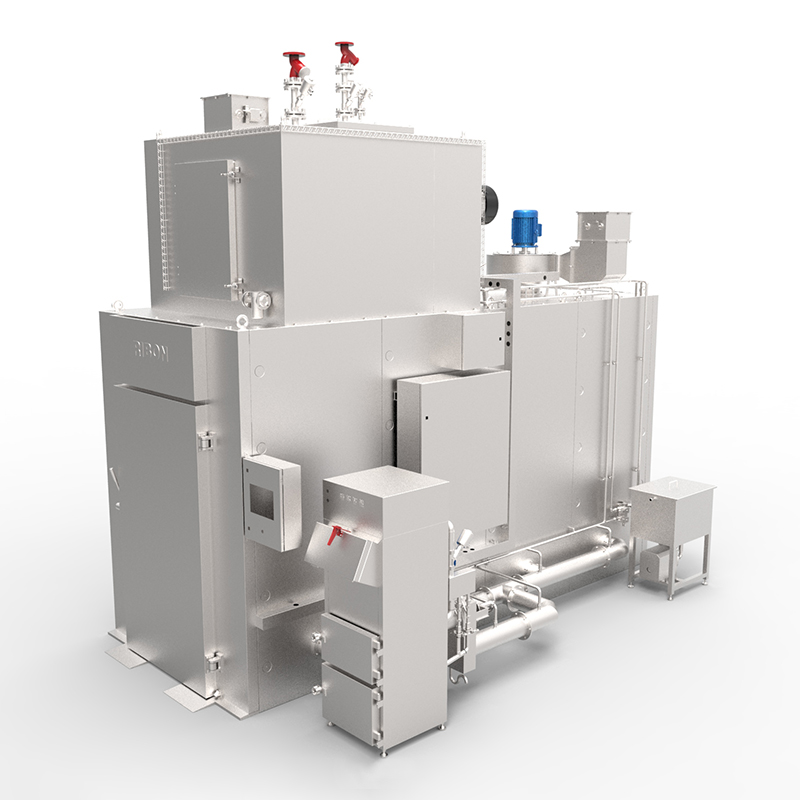
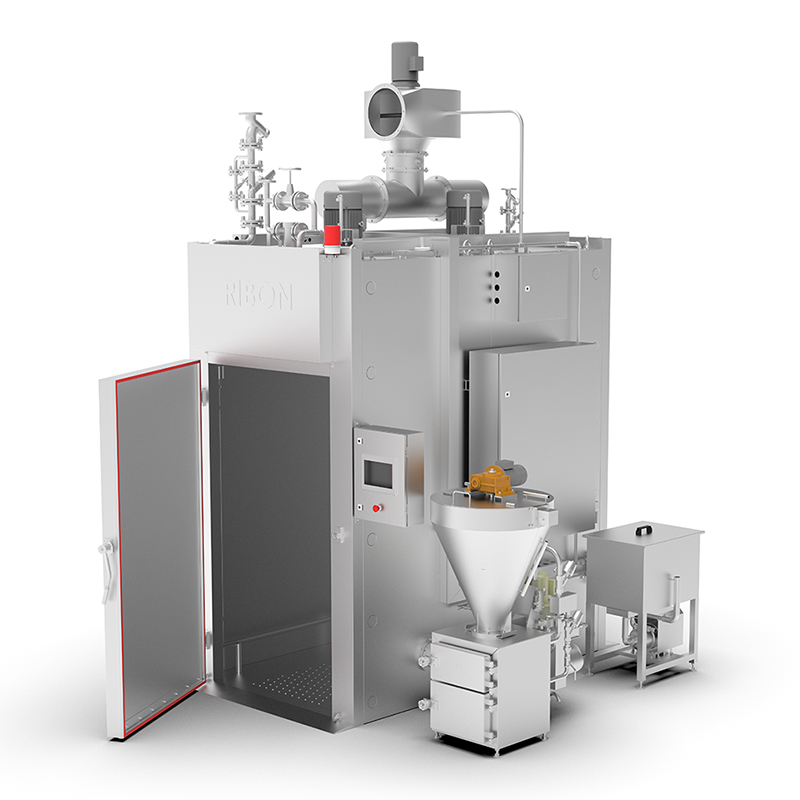
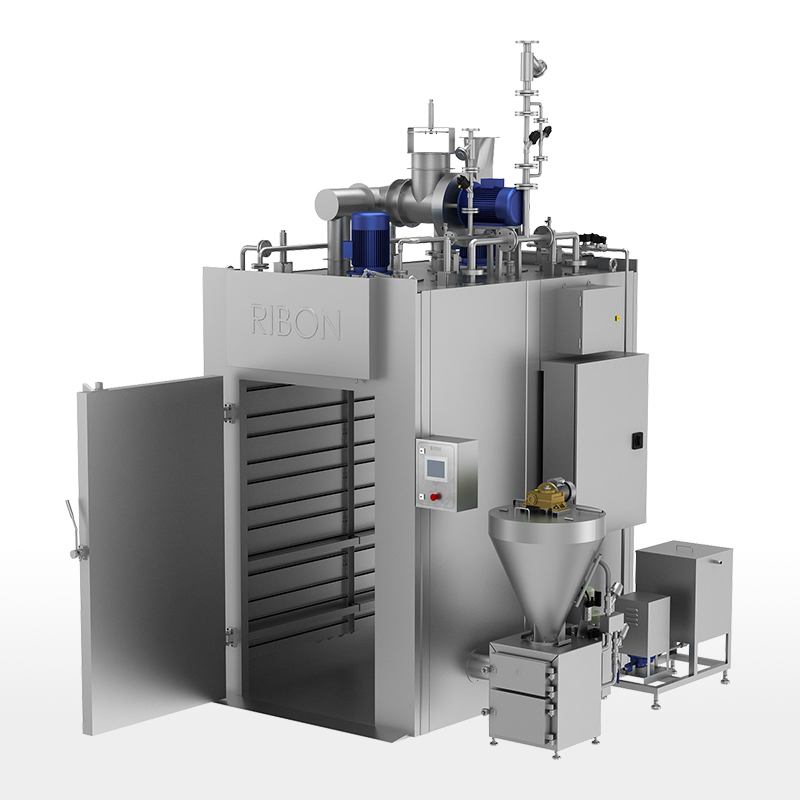
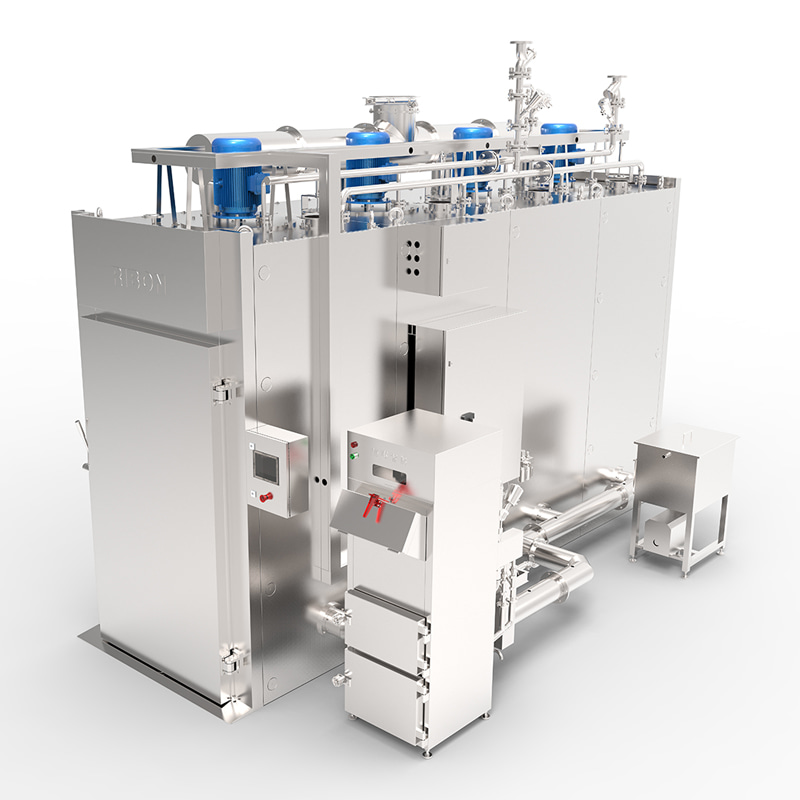
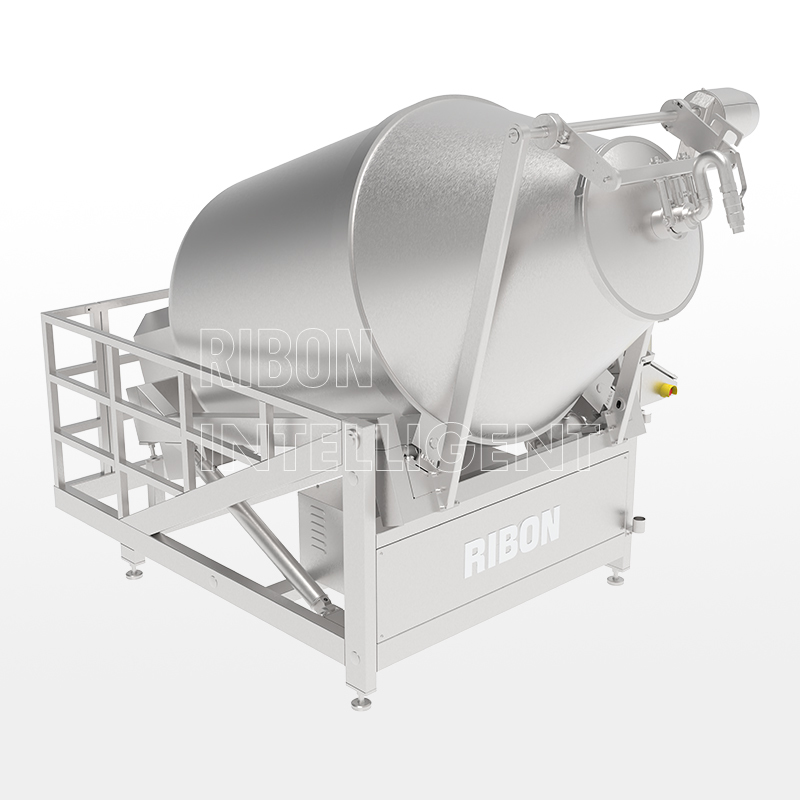
Industrial vacuum tumblers are large stainless steel drums with built-in vacuum pumps, programmable rotation speeds, timers, and cooling jackets to keep meat at safe temperatures during extended tumbling cycles. They can process hundreds or thousands of pounds per batch and are found in poultry plants, deli meat facilities, and large-scale marinated meat producers. These machines often have vanes or paddles inside the drum to increase mechanical action on larger or denser cuts like whole hams or beef rounds.
Mid-Range Restaurant and Butcher Shop Units
Between the home canister and the industrial drum sits a category of mid-range tumblers with 20 to 200-liter capacity, used by butchers, specialty food producers, and restaurant prep kitchens. These units balance portability with real processing power and are often the sweet spot for small businesses that want to offer marinated products at scale without committing to a full industrial setup.
What Foods Benefit Most from Vacuum Tumbling
While vacuum tumbling is most commonly associated with poultry and pork, a wide range of proteins and even some vegetables respond well to the process. Here is a breakdown of the most common applications and their typical tumble times:
| Food Type | Recommended Tumble Time | Key Benefit |
| Chicken breasts / thighs | 20–40 minutes | Deep flavor, juicier texture |
| Pork chops / loins | 30–60 minutes | Tenderization, moisture retention |
| Beef steaks / strips | 45–90 minutes | Marinade penetration, tenderness |
| Shrimp / seafood | 10–20 minutes | Fast flavor infusion, delicate texture |
| Whole muscle ham | 2–8 hours (commercial) | Brine distribution, cure uptake |
| Vegetables (mushrooms, zucchini) | 5–15 minutes | Rapid marinade absorption |
Thin or delicate proteins like fish fillets and shrimp require short tumble times and very gentle rotation speeds to avoid physical damage from the mechanical action. Dense whole muscles like ham or beef round benefit from longer cycles, often paired with injection marination beforehand to give the tumbling process a head start.
Key Parameters That Affect Tumbling Results
Getting consistent results from vacuum tumbling requires attention to several interrelated variables. Changing one without adjusting the others can lead to over-tenderized, mushy meat or under-seasoned product.
- Vacuum level: Most effective results occur between 25 and 28 inches of mercury (Hg), which is close to full vacuum. Insufficient vacuum means the muscle fibers never open up properly, limiting marinade penetration to the surface layer.
- Rotation speed: Too fast and the mechanical action becomes destructive, breaking down the protein structure and making the meat mushy. Too slow and the tumbling effect is negligible. Commercial units typically run between 6 and 12 RPM, while home canisters may rotate as slowly as 2–4 RPM.
- Marinade volume: The industry standard is roughly 10–20% of the meat weight in marinade. Too little and coverage is uneven; too much and the meat becomes waterlogged rather than well-seasoned.
- Temperature: Cold tumbling (below 40°F / 4°C) is essential for food safety during longer cycles, especially in commercial settings. Home tumbling in short sessions (under 30 minutes) at refrigerator temperature is generally safe, but warmer temperatures accelerate bacterial growth.
- Tumble duration: More time is not always better. Extended tumbling can over-tenderize the protein structure. Use the minimum time required for full penetration, which varies by meat type and cut thickness.
- Rest cycles: Some commercial operators use intermittent tumbling — tumbling for 20 minutes, resting for 10, then tumbling again — which allows the marinade that entered the tissue to redistribute before the next mechanical cycle, improving final uniformity.
Vacuum Tumbling vs. Traditional Marination Methods
To appreciate the practical advantages of vacuum tumbling, it helps to compare it directly against conventional techniques that home cooks and small food businesses commonly use.
| Method | Time Required | Penetration Depth | Uniformity |
| Bowl / bag soak | 4–24 hours | Shallow (surface only) | Uneven |
| Injection marination | 30–60 minutes | Deep (localized pockets) | Patchy |
| Dry rub | 1–12 hours | Very shallow | Moderate |
| Vacuum tumbling | 20–90 minutes | Deep and uniform | Excellent |
The table makes it clear that vacuum tumble marination offers the best combination of speed, depth, and uniformity. The main trade-off is cost and equipment — you need a vacuum tumbler, whereas a bowl or bag costs essentially nothing. For home cooks, even an entry-level countertop vacuum marinator (typically $30–$150) delivers a meaningful upgrade in results, especially for thick cuts that have historically been difficult to season throughout.
How to Use a Home Vacuum Tumbler Effectively
If you are using a countertop vacuum marinator for the first time, following a clear process helps you get consistent results from the start. The steps below apply to most canister-style home units.
Step 1: Prepare Your Marinade
Build a marinade that includes salt or soy sauce (for protein penetration), an acid like citrus juice or vinegar (for tenderization), oil (for moisture and mouthfeel), and your choice of aromatics. For vacuum marination specifically, avoid very thick, chunky marinades with large pieces of garlic or herbs — these can clog the vacuum seal or stick to the surface rather than penetrating. Finely minced or blended marinades work best.
Step 2: Load and Seal
Place your meat inside the canister and add marinade at roughly 15% of the meat's weight. For example, for 500g of chicken breast, add approximately 75ml of marinade. Seal the lid firmly, making sure the gasket is clean and undamaged to hold vacuum properly.
Step 3: Pull the Vacuum
Attach your hand pump or electric pump to the valve on the lid and pull vacuum until you reach the maximum your unit allows — typically indicated by resistance on the pump or a gauge reading. Electric pump models often have an auto-shutoff when the target vacuum is reached.
Step 4: Tumble and Monitor
Place the canister in its motorized cradle (if your unit has one) or rotate it by hand every few minutes. Home motorized units typically run a full session of 20–30 minutes automatically. If tumbling manually, rotate the canister end-over-end for 1–2 minutes, rest for 5 minutes, and repeat for 3–4 cycles. Keep the canister in the refrigerator if your kitchen is warm.
Step 5: Release and Cook
Once the tumbling session is complete, release the vacuum valve slowly, open the canister, and remove the meat. You can cook it immediately — no additional resting time is needed — or refrigerate it for up to 24 hours before cooking. The marinade that has penetrated into the muscle will stay there even after the vacuum is released, so the seasoning holds all the way through cooking.
Vacuum Tumbling in Commercial Meat Processing
In the commercial food industry, vacuum tumbling is a core step in producing a wide range of products including deli meats, marinated poultry, value-added pork products, ready-to-cook kebabs, and reformed meat products. The process serves multiple functions beyond just flavor: it improves yield by increasing the moisture content of the finished product (a critical economic factor in large-scale meat processing), extends shelf life by distributing preservatives and antimicrobial agents uniformly, and improves the binding of restructured meat products like formed ham logs or chicken rolls.
From a regulatory standpoint, commercial vacuum tumbling operations must comply with USDA FSIS regulations regarding water activity, brine concentrations, and temperature controls during processing. Products that have been vacuum tumbled with added water must disclose this on the label (e.g., "contains up to 12% added solution"), which is a point of transparency for consumers buying marinated retail meats.
Food scientists and product developers also use vacuum tumbling as a delivery mechanism for functional ingredients — phosphates to improve water-holding capacity, antioxidants like rosemary extract to extend shelf life, and natural smoke flavors to replicate traditional processes at industrial scale. In this sense, vacuum tumbling is not just a marination shortcut; it is a precision tool for engineering the final eating quality of a product.
Common Mistakes to Avoid
Even with the right equipment, a few common errors can undermine the benefits of vacuum tumble marination.
- Over-tumbling delicate proteins: Shrimp, fish, and thinly sliced meats break down quickly under mechanical stress. Stick to the minimum effective time and use the slowest rotation speed available.
- Using too much marinade: Excess marinade does not improve penetration — it just dilutes flavor and makes the surface wet, which interferes with browning during cooking. Stay within the 10–20% ratio.
- Poor vacuum seal: A leaking lid gasket will allow air back in during tumbling, defeating the entire purpose. Inspect the gasket before each use and replace it when it shows signs of cracking or deformation.
- Tumbling at room temperature for too long: Any session over 30 minutes should be done in a refrigerated environment. Warm temperature combined with mechanical agitation can accelerate surface bacterial growth.
- Skipping acid or salt in the marinade: These are the active ingredients that actually open up muscle fibers for penetration. Marinades without them — plain oil-and-herb mixes, for example — rely purely on surface coating and get minimal benefit from vacuum tumbling.
Is Vacuum Tumbling Worth It for Home Cooks?
For home cooks who regularly prepare marinated chicken, grilled pork, or seasoned beef, the answer is almost always yes. The time savings alone — going from an overnight soak to a 30-minute tumble session — make it worth the modest investment in a countertop unit. But the quality improvement is arguably the bigger draw: meat that is seasoned all the way through rather than just on the outside tastes fundamentally different, and the improved juiciness from better moisture retention is noticeable in every bite.
That said, vacuum tumbling is most impactful for cuts that are traditionally difficult to season thoroughly — bone-in chicken thighs, thick pork chops, whole beef strips. For very thin cuts or dishes where surface seasoning is intentional (like a dry-rubbed brisket or a ceviche), the added step adds little value. Know what you are cooking and whether deeper penetration actually improves that specific dish before defaulting to the vacuum tumbler every time.
Ultimately, vacuum tumbling bridges the gap between professional food production techniques and the home kitchen. It is one of those tools that, once you use it and taste the difference, is hard to go back from — especially if you cook a lot of poultry or pork, which benefit the most from both the mechanical tenderization and the rapid, deep marinade infusion the process delivers.