

 English
 русский
 Español
 عربى
عربى
Content
- 1 What Vacuum Tumblers Do and Why Meat Processors Use Them
- 2 How a Vacuum Tumbler Actually Works: The Mechanics Behind the Process
- 3 Types of Vacuum Tumblers and How They Differ
- 4 Vacuum Tumbler Program Parameters and How to Set Them
- 5 Products That Benefit Most from Vacuum Tumbling
- 6 Common Vacuum Tumbling Problems and How to Fix Them
- 7 Sanitation and Food Safety Requirements for Vacuum Tumbler Operations
- 8 What to Look for When Buying a Vacuum Tumbler
What Vacuum Tumblers Do and Why Meat Processors Use Them
A vacuum tumbler is a rotating drum vessel that combines mechanical action with reduced atmospheric pressure to accelerate the marination, curing, and tenderization of meat and poultry products. The basic principle is straightforward: meat loaded into the drum is physically worked as the drum rotates — tumbling, massaging, and impacting against the drum walls and internal paddles — while the vacuum environment causes the muscle tissue to expand, opening up the protein matrix and drawing marinades, brines, and curing solutions deep into the product. The result is faster ingredient penetration, improved water-holding capacity, enhanced tenderness, and better cooking yield compared to static marination or conventional immersion brining.
Without vacuum tumbling, marinating meat is largely a surface phenomenon. A whole chicken breast sitting in a marinade for 24 hours absorbs flavoring compounds only a few millimeters deep from the surface — the interior remains largely untouched by the marinade ingredients. A vacuum meat tumbler achieves equivalent or superior penetration depth in 2–4 hours by combining the vacuum expansion effect with repeated mechanical working of the tissue. For commercial meat processors producing marinated chicken, formed ham, injected pork products, and value-added beef items, the time compression alone justifies the capital investment — a 12–24 hour static brine cycle replaced by a 2–4 hour tumbling cycle represents a fundamental shift in production throughput and inventory management.
Vacuum tumblers are used across a wide range of meat processing applications beyond simple marination. Whole muscle ham production relies on vacuum tumbling to distribute curing salts uniformly through large muscle cuts and to extract myosin — the structural protein that binds muscle pieces together in formed and restructured products. Poultry processors use vacuum tumblers to apply phosphate solutions that improve water retention and cooking yield in further processed chicken products. Deli meat producers tumble cured whole muscle products to develop the protein extraction necessary for slice-binding cohesion. In each case, the vacuum tumbler is doing work that static processing cannot replicate at commercially viable speeds.
How a Vacuum Tumbler Actually Works: The Mechanics Behind the Process
Understanding the physical and biochemical mechanisms at work inside a vacuum tumbling machine helps operators optimize programs for specific products and troubleshoot quality issues when they arise. Several distinct processes occur simultaneously during a tumbling cycle, and each contributes differently to the final product outcome.
The Vacuum Effect on Muscle Tissue
When atmospheric pressure inside the drum is reduced — typically to 70–90% vacuum, or an absolute pressure of 50–100 mbar — the gas trapped within the muscle tissue expands and exits through the tissue's natural channels: the perimysium connective tissue sheaths, fascial planes, and vascular channels left open after slaughter. This expansion physically opens up the tissue microstructure, creating pathways for brine and marinade components to penetrate when pressure is released or when the tumbling action forces liquid into the expanded spaces. The cycle of vacuum application, mechanical working, and pressure release creates a pumping action that drives marinade progressively deeper into the tissue over successive drum rotations.
The vacuum environment also suppresses microbial growth during the tumbling process by limiting available oxygen, which is an important food safety consideration for extended tumbling programs. Additionally, reduced pressure lowers the boiling point of water at the meat surface, which — combined with the jacket cooling systems included on most commercial vacuum tumblers — helps maintain product temperature within the critical range of 0–4°C during processing, preventing the temperature rise that would otherwise result from the mechanical energy input of tumbling.
Mechanical Action and Protein Extraction
As the drum rotates, product is lifted by internal paddles or baffles and allowed to fall back onto the product mass below — a controlled impact that works the muscle tissue without tearing it. This mechanical working ruptures some of the myofibrillar structure at the muscle surface, releasing myosin and actin proteins into the liquid phase of the brine. The extracted myosin is highly functional — when heated during subsequent cooking, it forms a heat-set gel that binds muscle pieces together, fills voids between pieces in formed products, and creates the sliceable, cohesive structure required for deli meat and formed ham products. The degree of protein extraction, measured visually as the exudate coating on the meat surface and quantitatively as the protein content of the brine solution, is a direct indicator of tumbling effectiveness and product binding performance.
Temperature Control During Tumbling
Maintaining product temperature during vacuum tumbling is critical for both food safety and product quality. The mechanical energy input from tumbling generates heat through friction and impact — enough to raise product temperature by 2–5°C over a multi-hour tumbling program if not actively managed. Most commercial vacuum tumblers address this through a refrigerated jacket surrounding the drum, chilled water or glycol circulation systems that keep the drum wall at 0–2°C, and the temperature-depressing effect of the vacuum itself. Product temperature throughout the tumbling cycle should remain between 0°C and 4°C — cold enough to inhibit microbial growth and maintain myosin functionality, but not so cold that the protein matrix becomes rigid and resistant to the mechanical working action.
Types of Vacuum Tumblers and How They Differ
Commercial vacuum tumblers are available in several configurations, and the differences between them affect capacity, product handling, cleanability, and the range of products that can be effectively processed. Selecting the right tumbler type for a specific operation requires matching equipment design to product requirements and production scale.
Horizontal Drum Tumblers
The horizontal drum vacuum tumbler is the most widely used configuration in commercial meat processing. The cylindrical drum rotates on a horizontal axis, with internal paddles or fins lifting product as the drum turns and allowing it to fall back in a controlled cascade. Drum sizes range from laboratory-scale units of 20–50 liters for product development and small batch production up to large production tumblers of 2,000–5,000 liters for high-volume operations. The horizontal orientation provides consistent product movement throughout the drum volume and is well suited to whole muscle products, cut portions, and formed product applications. Loading and unloading is straightforward — the drum opening faces the operator and product can be loaded by chute or conveyor and discharged by reversing the drum rotation direction with the opening positioned downward.
Tilting and Tumble-Chiller Combination Units
Some commercial vacuum tumblers incorporate a tilting drum mechanism that allows the drum angle to be adjusted during the tumbling program. Tilting changes the product cascade pattern within the drum, providing more aggressive mechanical action at steeper angles and gentler action at shallower angles — useful for products that require careful handling at certain process stages while benefiting from more intensive working at others. Combination tumble-chiller units integrate a refrigeration system directly into the drum jacket, replacing the need for a separate chilled water circulation system and providing precise temperature control throughout the cycle. These combination units are particularly well suited to operations running extended overnight tumbling programs where temperature stability over 8–12 hours is essential.
Continuous Vacuum Tumblers
For high-volume operations processing a consistent product at scale — marinated poultry portions, cut steak products, or pre-seasoned retail cuts — continuous vacuum tumblers feed product in at one end and discharge finished, tumbled product at the other in a continuous flow, without the batch loading and unloading cycles of conventional drum tumblers. The residence time in the continuous tumbler is controlled by the drum angle, rotation speed, and internal helix configuration. Continuous tumblers are not suited to products requiring extended tumble programs of several hours, but they excel at high-throughput applications where 30–90 minutes of tumbling delivers the required marinade uptake and surface coverage. Integration with upstream injection equipment and downstream loading systems makes continuous vacuum tumblers a key component of fully automated marinated meat production lines.
Vacuum Tumbler Program Parameters and How to Set Them
The tumbling program — the combination of vacuum level, drum rotation speed, tumble-to-rest cycle, total processing time, and temperature — determines product outcome more than any other operational variable. There is no universal program that works for all products, and developing an optimized program for each product type requires understanding how each parameter affects the process.
| Parameter | Typical Range | Effect of Increasing | Effect of Decreasing |
| Vacuum Level | 70–90% (50–100 mbar absolute) | Greater tissue expansion, faster penetration | Reduced penetration benefit, closer to static marination |
| Drum Speed (RPM) | 4–12 RPM | More mechanical action, higher protein extraction, more tissue damage risk | Gentler action, less protein extraction, less surface damage |
| Tumble/Rest Cycle | 20 min on / 10 min off (typical) | More rest allows brine redistribution; reduces temperature rise | Continuous tumble maximizes mechanical action but raises temperature |
| Total Program Time | 2–16 hours | Deeper penetration, higher uptake, risk of over-working at extremes | Faster cycle, less penetration, lower protein extraction |
| Product Temperature | 0–4°C | Above 4°C: microbial risk, reduced myosin functionality | Below 0°C: tissue rigidity, reduced mechanical effectiveness |
| Drum Fill Level | 50–70% of drum volume | Over-filling reduces product movement and tumbling effectiveness | Under-filling causes excessive impact force and product damage |
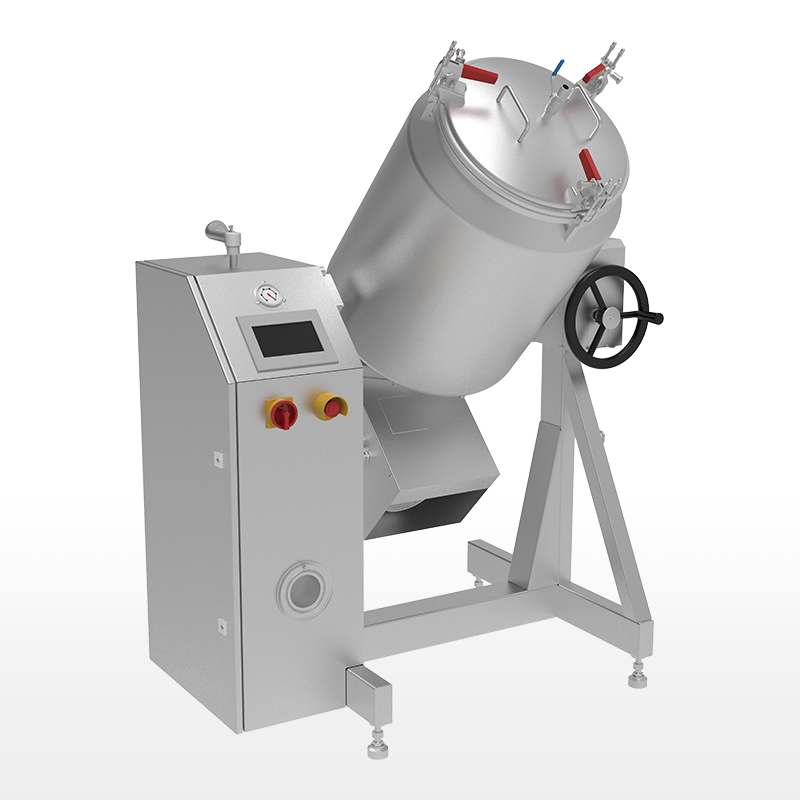
Drum fill level deserves particular attention because it is one of the most commonly mismanaged parameters in industrial vacuum tumbling operations. Overfilling a tumbler reduces the free fall distance of product within the drum, diminishing the impact energy that drives protein extraction and mechanical tenderization. Underfilling allows product to impact with excessive force against the drum walls and paddles, causing surface damage, torn muscle fibers, and excessive brine absorption that results in a mushy texture in the finished product. Most equipment manufacturers recommend a fill level of 50–70% of total drum volume as the working range, and this should be validated for each specific product type during program development.
Products That Benefit Most from Vacuum Tumbling
While vacuum tumbling can improve a wide range of protein products, some categories see the most significant and commercially meaningful benefits. Understanding where the technology delivers the greatest return helps processors prioritize investment and justify the capital cost against production value.
Whole Muscle Ham and Formed Deli Products
Whole muscle cooked ham production is arguably the application where vacuum tumbling delivers its most critical functional benefit. Curing salts — sodium nitrite, sodium chloride, sodium phosphate, and ascorbate — must be distributed uniformly through large muscle cuts that may be 5–10 cm thick. Without tumbling, static brining of whole muscle hams requires 3–5 days of immersion or multiple injection passes to achieve acceptable cure distribution. Vacuum tumbling of injected ham muscles achieves equivalent or superior cure distribution in 8–12 hours, with the added benefit of myosin extraction for binding performance in formed and sectioned ham products. The extracted protein creates the cohesive slice structure that allows formed ham to be sliced thinly on high-speed slicers without the product crumbling or separating at muscle boundaries.
Marinated Poultry
Value-added marinated chicken — breast fillets, thigh portions, tenderloins, and whole leg quarters — represents one of the highest-volume vacuum tumbler applications globally. Vacuum tumbling of poultry with phosphate-based marinade solutions achieves marinade uptake levels of 15–25% above green weight in 2–4 hours, dramatically improving cooking yield compared to static marination or surface application. The phosphate components of the marinade denature myosin in a controlled way that increases water-holding capacity during cooking, reducing moisture loss in the oven or on the grill and delivering a juicier, more consistent product to the consumer. For retail marinated poultry products sold on cook yield claims, vacuum tumbling is essentially the only commercially viable method of achieving the claimed performance consistently.
Whole Muscle Beef and Pork Cuts
Marinated steaks, seasoned pork loins, flavored ribs, and brined roasting joints all benefit from vacuum tumbling to achieve marinade penetration beyond the surface layer. For beef products where tenderness is a key quality attribute, tumbling also provides mechanical tenderization through the controlled disruption of the myofibrillar structure — particularly valuable for secondary cuts that are inherently tougher than premium loins and tenderloins. The combination of marinade penetration and mechanical tenderization can significantly narrow the eating quality gap between premium and secondary beef cuts in marinated retail and foodservice applications, which has direct implications for raw material cost management.
Seafood and Non-Meat Proteins
Vacuum tumblers are increasingly used for seafood products — particularly shrimp, salmon portions, and white fish fillets — where brine absorption, marinade application, and texture modification are desired. Seafood requires gentler tumbling programs than meat due to the more delicate muscle structure — lower RPM, shorter tumble-to-rest ratios, and colder processing temperatures are typical. Plant-based protein products designed to mimic whole muscle meat are also emerging as a vacuum tumbler application, as the mechanical working and marinade absorption functions are directly relevant to achieving the texture and flavor penetration that plant-based whole cut products require.
Common Vacuum Tumbling Problems and How to Fix Them
Even with properly selected equipment and well-developed programs, vacuum tumbling operations encounter recurring quality issues that trace back to specific process variables. Recognizing the symptoms and understanding the likely causes makes troubleshooting systematic rather than trial-and-error.
- Insufficient marinade uptake or poor penetration depth: Most commonly caused by inadequate vacuum level, product loaded too cold (below 0°C causes tissue rigidity), drum overfilled limiting product movement, or brine viscosity too high for effective penetration. Check vacuum pump performance and drum seals, verify product temperature at loading, reduce fill level, and review brine formulation viscosity
- Mushy or over-worked product texture: Excessive mechanical action from too-high RPM, excessive total tumbling time, drum underfilled causing hard impacts, or product temperature too warm making tissue more susceptible to mechanical damage. Reduce drum speed, shorten program time or increase rest intervals, adjust fill level, and verify product temperature at loading
- Poor slice cohesion in formed products: Insufficient protein extraction — the meat surface should be visibly coated with a sticky, tacky exudate after tumbling. Increase drum speed slightly, extend total tumble time, verify that brine salt concentration is sufficient to drive myosin extraction (minimum 1.5–2% NaCl in the brine), and confirm vacuum level is adequate
- Product temperature rising above 4°C during tumbling: Jacket cooling system underperforming, ambient temperature too high, or program running too many continuous tumble minutes without adequate rest periods. Service the cooling jacket system, increase rest intervals in the tumble program, and consider pre-chilling product more deeply before loading if ambient conditions are warm
- Uneven marinade distribution within the product load: Brine added after loading rather than with the product, insufficient liquid-to-product ratio, or drum paddles worn and no longer effectively lifting product. Add brine before or with product at loading, verify brine volume against recipe specification, and inspect paddle condition and replace if worn
- Vacuum not holding during the tumbling cycle: Worn drum door seals, damaged vacuum pump, or brine foam blocking the vacuum line. Inspect and replace door seals on a scheduled maintenance basis, service the vacuum pump per manufacturer recommendations, and install a foam trap in the vacuum line if foaming brines are in use
Sanitation and Food Safety Requirements for Vacuum Tumbler Operations
Vacuum tumblers in meat processing environments operate with raw protein products under conditions — cold temperatures, moist surfaces, brine residues — that are favorable to pathogen survival and biofilm formation. Rigorous sanitation protocols are not optional; they are a core operational requirement that directly affects food safety compliance and product quality consistency.
The drum interior, paddles, baffles, vacuum line, and drain system are the primary sanitation targets. After each production run, the drum should be rinsed with cold water to remove gross soil before detergent application — hot water rinse at this stage sets protein residues and makes subsequent cleaning significantly harder. A caustic detergent solution circulated in the drum at the manufacturer's recommended concentration and contact time dissolves fat and protein residues from the drum interior and paddle surfaces. Acid rinse following caustic cleaning removes mineral deposits from hard water and brine residues that could otherwise build up into harborage sites for Listeria and other environmental pathogens. Final sanitizer application and a potable water rinse complete the sequence.
Vacuum line sanitation is frequently neglected and represents a significant contamination risk. Brine droplets and meat particles are drawn into the vacuum line during tumbling and can accumulate in bends, traps, and low points where they are not reached by standard drum cleaning procedures. Dedicated vacuum line flush protocols — circulating detergent and sanitizer through the line using the vacuum pump — should be included in the standard cleaning program and documented in the sanitation standard operating procedure. Environmental swab programs targeting the drum door gasket, the vacuum line junction, drain outlets, and the drum exterior support verification that the cleaning program is achieving effective microbial reduction between production runs.
What to Look for When Buying a Vacuum Tumbler
Selecting a commercial vacuum tumbler involves evaluating a range of technical and operational criteria that go beyond drum volume and price. The following checklist covers the most practically important specifications and features for a production meat processing environment.
- Drum construction material and finish: Food-grade stainless steel (304 or 316) throughout the product contact zone is the baseline requirement. Interior surface finish should be smooth and crevice-free to support effective sanitation — avoid units with exposed bolt heads, rough welds, or internal angles that trap soil
- Vacuum pump capacity and reliability: The vacuum pump must achieve and maintain the target vacuum level throughout the tumbling cycle, including under conditions of some brine carryover and foam generation. Request pump specification data and ask about pump maintenance intervals and replacement part availability
- Cooling jacket coverage and temperature control precision: Full-drum jacket coverage is preferable to partial jacket designs. Verify that the cooling system can maintain drum wall temperature at 0–2°C under continuous tumbling load conditions — not just under empty drum conditions. Request temperature control accuracy specifications
- Programmable controller with data logging: Multi-step program capability, digital display of real-time parameters, and cycle data logging for HACCP documentation are standard requirements for any production tumbler. Verify that the controller can store multiple product programs and that data can be exported for record-keeping
- Ease of loading and unloading: Evaluate drum opening size, door mechanism, discharge chute or conveyor compatibility, and whether the drum can be tilted or reversed for complete product discharge. Residual product remaining in the drum after discharge is a yield loss and a sanitation risk
- Variable speed drive on drum rotation: Fixed-speed tumblers limit program flexibility. Variable speed drives allowing RPM adjustment across the full program range are essential for operations running diverse product types with different mechanical action requirements