

 English
 русский
 Español
 عربى
عربى
Content
- 1 What a Meat Processing Smokehouse Actually Does
- 2 Types of Commercial Smokehouses Used in Meat Processing
- 3 The Core Processing Stages Inside a Meat Smokehouse
- 4 Smoke Generation Systems and Wood Species Selection
- 5 Food Safety Requirements and Regulatory Compliance in Smokehouse Operations
- 6 Key Smokehouse Parameters and What Happens When They Go Wrong
- 7 Selecting a Commercial Smokehouse: What to Evaluate Before You Buy
What a Meat Processing Smokehouse Actually Does
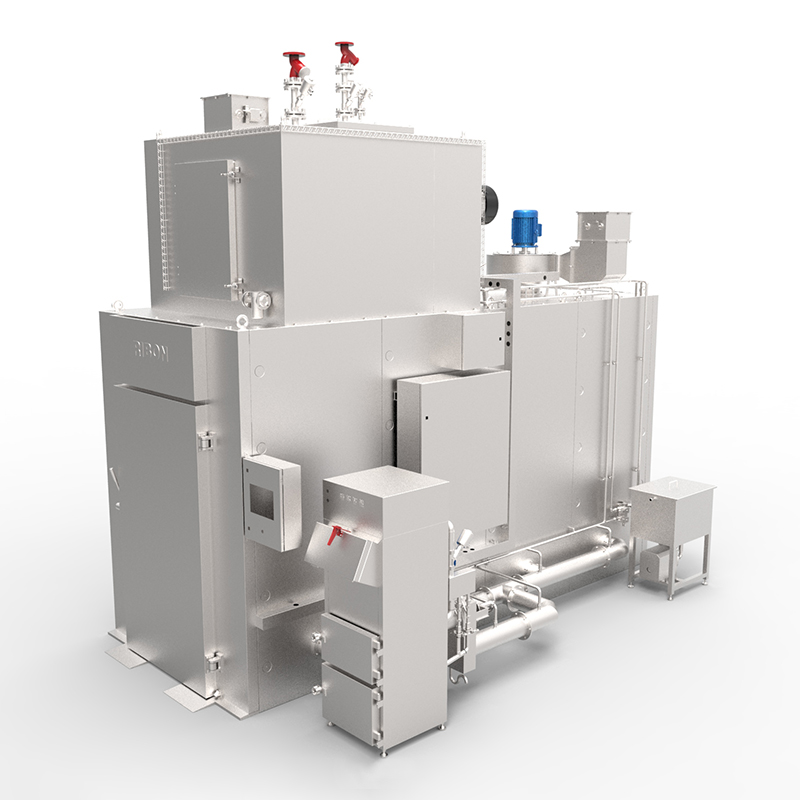
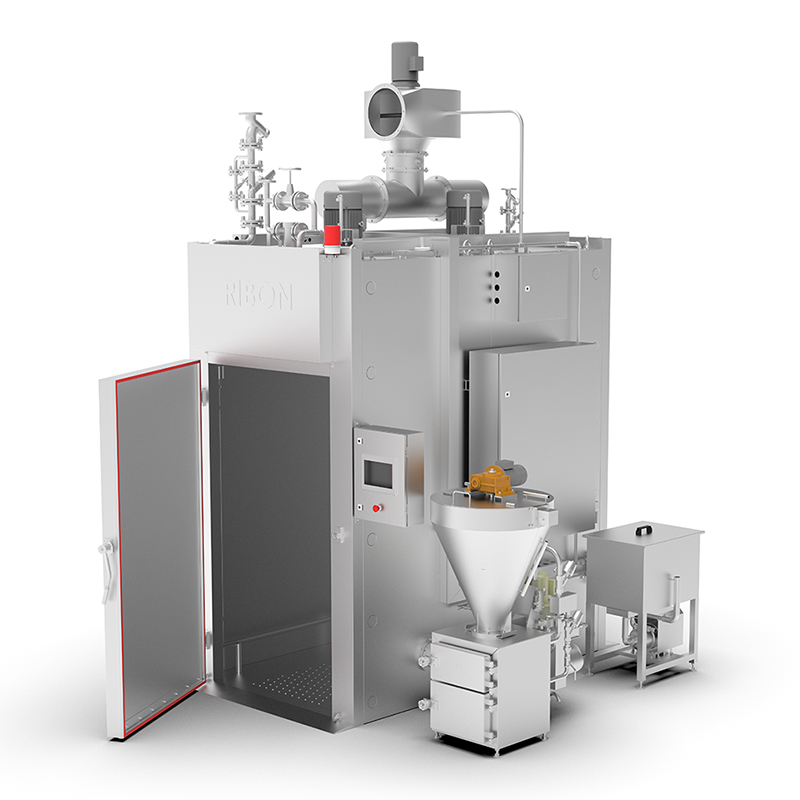
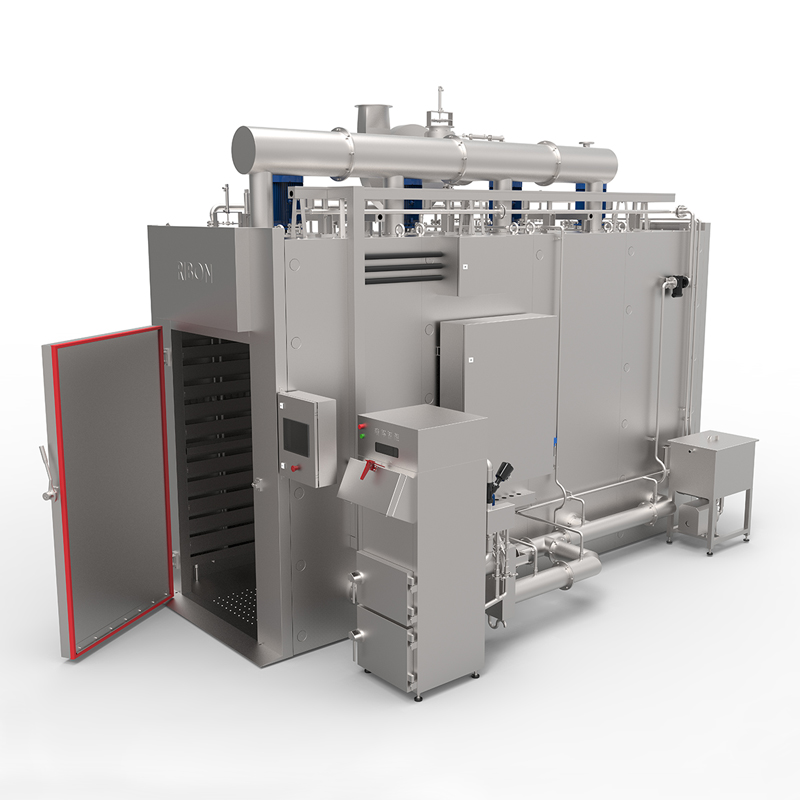
A meat processing smokehouse is a controlled-environment chamber designed to apply heat, smoke, humidity, and airflow to meat products in a precise, repeatable sequence. Unlike a backyard smoker where conditions shift with the weather and the cook's attention, a commercial smokehouse for meat processing is an engineered system built around consistency — delivering the same color development, moisture loss, internal temperature, and smoke penetration on every cycle, every batch, day after day. That consistency is what separates a commercially viable smoked meat product from an artisan approximation.
The smokehouse is where raw or cured meat is transformed into finished product across multiple simultaneous processes. Drying removes surface moisture to prepare the protein matrix for smoke absorption and color development. Smoking deposits phenols, carbonyls, and organic acids from combustion onto and into the meat surface, contributing flavor complexity, color, and antimicrobial protection. Cooking raises internal product temperature to pasteurization targets required by food safety regulations. Chilling or showering may follow within the same unit to reduce product temperature rapidly and lock in the finished texture. In a modern continuous smokehouse or a programmable batch smokehouse, all of these stages run sequentially under automated control — the operator sets the program and the equipment executes it.
The range of products processed in commercial smokehouses is broader than most people assume. Frankfurters, bologna, smoked sausages, cooked ham, bacon, smoked poultry, smoked salmon, jerky, and a wide range of deli meats all rely on smokehouse processing at some stage of production. Each product category has distinct smokehouse requirements — different temperature profiles, humidity ranges, smoke application timing, and cycle lengths — which is why smokehouse selection and programming are central technical decisions for any meat processing operation.
Types of Commercial Smokehouses Used in Meat Processing
Commercial meat processing smokehouses come in several configurations, and the right choice depends on production volume, product mix, available floor space, and capital budget. Each type has a distinct operational profile that suits certain production environments better than others.
Batch Smokehouses
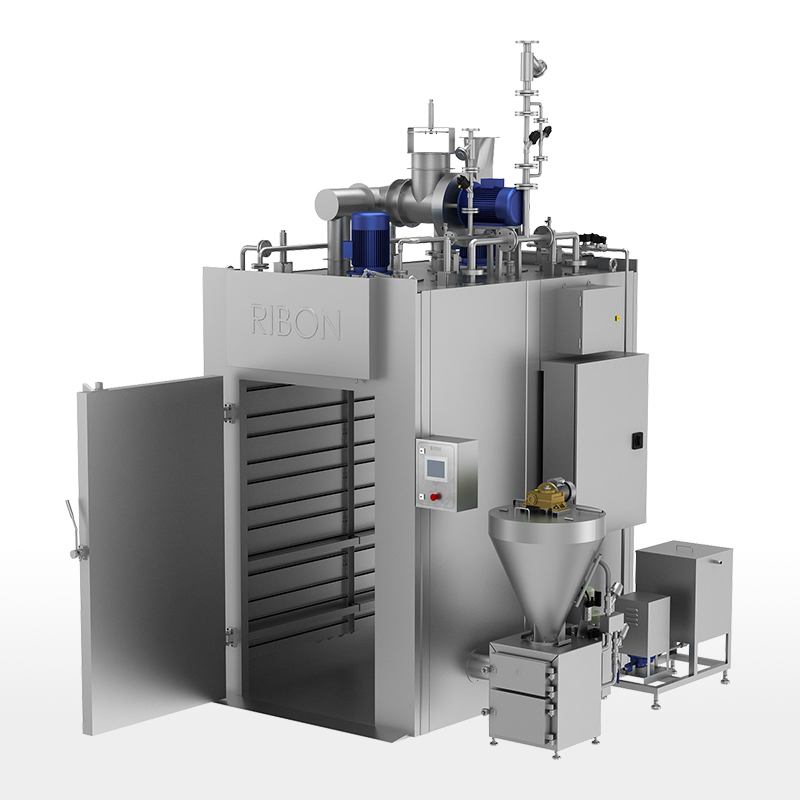
The batch smokehouse — also called a cabinet smokehouse or truck smokehouse — is the most widely used format in small to mid-size meat processing plants. Product is loaded onto smoke sticks, hanging trees, or oven trucks, rolled or wheeled into the smokehouse chamber, and processed through a complete cycle before the chamber is opened and product is unloaded. Batch smokehouses range in size from single-truck units holding 200–400 kg of product per cycle up to multi-truck configurations capable of processing several tonnes per batch. The format is highly flexible — different products can be processed in sequence with full program changes between batches, and the capital cost is significantly lower than continuous systems. The trade-off is labor intensity: loading and unloading requires manual handling, and cycle time includes non-productive loading and cooling intervals.
Continuous Smokehouses
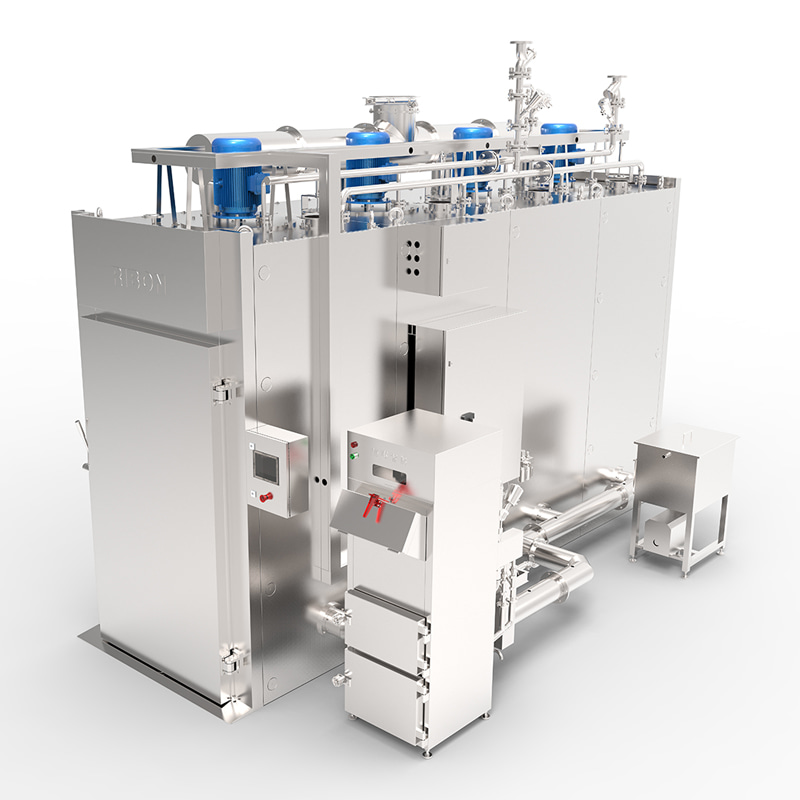
A continuous smokehouse moves product through the processing zones on a conveyor or trolley track system, with separate zones for drying, smoking, cooking, and showering maintained at different conditions simultaneously. Product enters one end and exits the other as finished goods without stopping. Continuous smokehouses are built for high-volume, single-product or narrow product-range operations — frankfurter and wiener production lines, high-volume bacon processing, and large-scale poultry smoking are the most common applications. Throughput capacity is much higher than batch systems for the same footprint, and labor input per kilogram of product is significantly lower. The limitation is inflexibility — changing the product being run requires reconfiguring the entire line and zone settings, making continuous systems poorly suited to plants with diverse or frequently changing product mixes.
Tunnel Smokehouses
Tunnel smokehouses are a variant of continuous processing where product travels through an elongated tunnel chamber on trolleys or conveyors. The tunnel format allows longer processing times at each stage without requiring an extremely long conveyor system, and the product movement can be indexed — advancing in steps rather than continuously — to allow precise dwell time control in each zone. Tunnel smokehouses are commonly used for whole muscle products, large-diameter sausages, and smoked poultry where longer processing cycles are required. They bridge the gap between the flexibility of batch systems and the throughput of continuous conveyor lines.
Spiral Smokehouses
Spiral smokehouses use a helical conveyor path within a compact chamber footprint, allowing long product residence times without requiring a long linear tunnel. The spiral conveyor carries product through multiple stacked loops within a single chamber, with airflow, temperature, and smoke conditions applied uniformly across all levels. This format is particularly efficient for plants with limited floor space that need continuous processing capability. It is widely used for frankfurters, breakfast sausages, and small-diameter formed meat products where cycle times are moderate and consistent conditions across the entire product load are critical.
The Core Processing Stages Inside a Meat Smokehouse
Understanding what happens inside the smokehouse during each stage of the processing cycle is essential for troubleshooting quality problems, optimizing programs for new products, and communicating effectively with equipment suppliers. Each stage has a specific function and a set of parameters that need to be controlled to achieve the target outcome.
Drying Stage
Drying is the first stage in most commercial smokehouse programs and serves two purposes: removing free surface moisture from the product and beginning the protein denaturation process that sets the casing or surface texture. Surface moisture is the enemy of smoke color development — if the product surface is wet when smoke is applied, the smoke compounds dissolve in the surface water rather than bonding to the protein matrix, producing a blotchy, uneven color and a wet, sticky surface finish. Effective drying requires airflow, temperature, and low relative humidity applied for sufficient time to achieve a dry, tacky surface before smoke introduction. Typical drying stage parameters are 50–65°C dry bulb temperature with dampers open to exhaust moisture and a relative humidity target below 30%. Drying time ranges from 15 minutes for thin-cased sausages to 60 minutes or more for large whole muscle products.
Smoke Application Stage
Smoke is introduced to the dried product surface through a smoke generator connected to the smokehouse chamber. The smoke generator burns wood chips, sawdust, or hardwood chunks — with species selection having a significant impact on the flavor and color compounds produced — and the generated smoke is drawn into the chamber by a fan and distributed over the product. Smoke application typically runs at moderate temperatures (55–75°C) with partially closed dampers to maintain smoke concentration within the chamber. Smoke density, measured as optical density or by the color change it produces on indicator paper, needs to be consistent between cycles to achieve repeatable color development. Heavy smoke at too-high temperatures risks surface hardening that seals the casing before adequate smoke penetration occurs — a defect known as case hardening — while insufficient smoke produces pale, under-colored product.
Cooking Stage
After smoke application, temperature is ramped up to cook the product to the required internal temperature. In the United States, USDA lethality requirements for ready-to-eat meat products mandate specific time-temperature combinations — for example, an internal temperature of 71.1°C (160°F) for whole muscle beef or a validated time-temperature table for comminuted poultry products. The smokehouse cooking stage must achieve and hold these temperatures throughout the entire product load, which requires careful consideration of product load density, airflow uniformity across the chamber, and temperature ramp rate. Cooking too quickly can cause fat separation, case splitting in sausages, and uneven internal doneness; cooking too slowly increases cycle time and energy consumption without improving product quality.
Showering and Chilling Stage
Many commercial batch smokehouses include a cold water shower system that activates after the cooking stage. The cold shower rapidly drops product surface temperature, which serves multiple functions: it stops the cooking process, sets the casing or surface texture, reduces post-process moisture loss, and begins the cooling trajectory required by food safety regulations. USDA requires that ready-to-eat meat products be chilled from 54.4°C to 26.7°C within 1.5 hours and to 7.2°C or below within a further 5 hours — a total chilling window that the shower stage supports by getting surface temperature down rapidly before the product moves to a chill room for final cooling. Without a shower stage, product must be moved to blast chilling immediately after exiting the smokehouse to meet these timelines.
Smoke Generation Systems and Wood Species Selection
The smoke generator is one of the most operationally critical components of a commercial meat processing smokehouse, and the choice of smoke generation method and wood fuel has a direct impact on product flavor, color consistency, and regulatory compliance. There are three primary smoke generation approaches used in commercial meat processing.
Friction Smoke Generators
Friction generators press a hardwood log against a rotating disc or drum at controlled pressure, generating smoke through surface friction and heat. The friction method produces a relatively clean, consistent smoke with lower particulate content than open combustion systems and can be precisely controlled by adjusting log pressure and disc speed. Friction generators are well-suited to automated smokehouse programs because smoke output is consistent and responds quickly to control inputs. The log format also reduces wood handling labor compared to chip or sawdust systems, since a single log can run for extended periods without reloading.
Smoldering Chip and Sawdust Generators
Chip and sawdust generators feed wood fuel onto a heated pan or burn plate, where it smolders at controlled temperatures to generate smoke. This is the most common smoke generation method in commercial meat smokehouses due to the wide availability and low cost of wood chip and sawdust fuels and the ability to blend different wood species for custom flavor profiles. Temperature control of the burn plate is critical — too hot produces excessive combustion and bitter, acrid smoke; too cool produces incomplete combustion and higher polycyclic aromatic hydrocarbon (PAH) output that creates regulatory compliance concerns. Modern automated chip generators maintain burn plate temperature within ±5°C and include auto-feed mechanisms that maintain consistent fuel supply throughout the production cycle.
Liquid Smoke Application
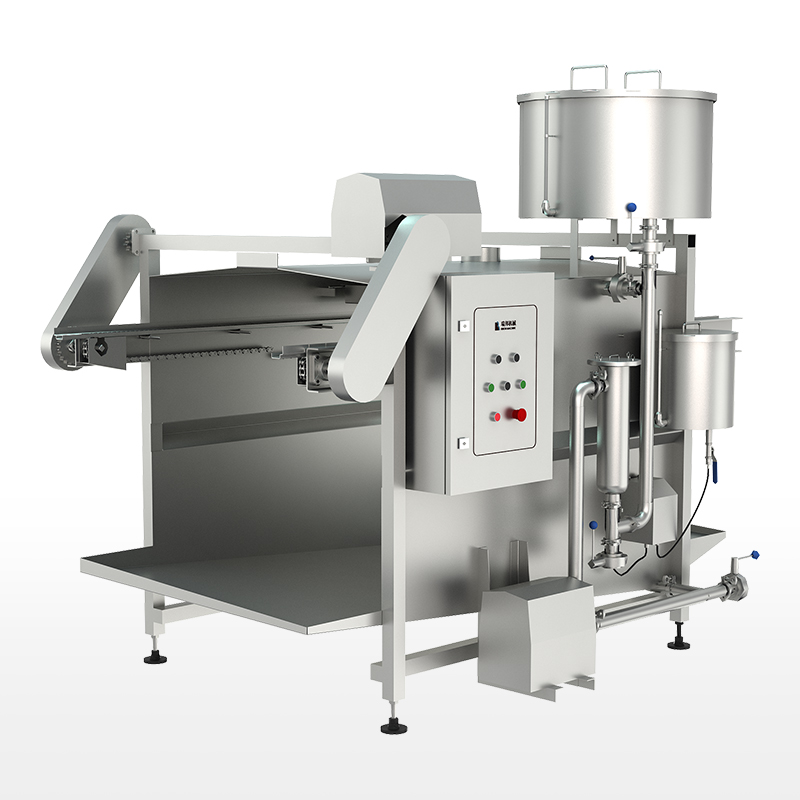
Liquid smoke — a condensed aqueous solution of smoke compounds produced by controlled combustion and fractionation — is increasingly used in commercial meat processing as a complement to or substitute for traditional wood smoke generation. Applied by atomization into the smokehouse chamber, by direct surface application before loading, or by incorporation into the product formulation itself, liquid smoke provides highly consistent flavor and color delivery with minimal PAH content and no combustion byproducts in the processing environment. Liquid smoke is particularly advantageous in jurisdictions with strict air quality regulations on smokehouse emissions and in operations where consistency of smoke flavor delivery is more important than the artisan authenticity of natural wood smoke. The limitation is that liquid smoke flavor profiles, while improving significantly, are still distinguishable from natural wood smoke by trained sensory panels — a consideration for premium positioning products.
Wood Species and Their Flavor Contributions
The choice of wood species for smokehouse fuel has a documented impact on the flavor compounds deposited on meat products. The following species are the most commonly used in commercial meat processing smokehouses:
| Wood Species | Flavor Profile | Best Product Applications | Color Development |
| Hickory | Strong, robust, bacon-like | Bacon, ham, pork sausages | Deep mahogany |
| Applewood | Mild, sweet, fruity | Poultry, pork loin, fish | Light golden-brown |
| Oak | Medium, earthy, well-rounded | Beef, lamb, all-purpose | Medium brown |
| Cherry | Mild, slightly sweet, subtle | Poultry, pork, smoked cheese | Rich reddish-brown |
| Alder | Delicate, slightly sweet | Salmon, seafood, light poultry | Light golden |
| Maple | Mild, slightly sweet, clean | Bacon, ham, breakfast sausage | Medium golden-brown |
| Beech | Neutral, mild, clean | frankfurters, European sausages | Pale to medium gold |
Food Safety Requirements and Regulatory Compliance in Smokehouse Operations
Commercial meat processing smokehouse operations are subject to food safety regulatory requirements that govern time-temperature combinations, chilling protocols, HACCP documentation, and environmental monitoring. These requirements are not optional compliance exercises — they define the minimum performance envelope that smokehouse programs must achieve on every production cycle, and they carry legal liability implications if they are not met and a product safety issue occurs.
Lethality Requirements for Ready-to-Eat Products
In the United States, USDA FSIS Appendix A provides the time-temperature tables that define acceptable lethality performance for cooked meat and poultry products. For beef, the minimum internal temperature for a 7-log reduction of Salmonella is 71.1°C (160°F) with no holding time required, or lower temperatures with validated holding times — for example, 65.6°C (150°F) held for 4 minutes achieves equivalent lethality. For poultry, a 7-log reduction of Salmonella requires 74°C (165°F) instantaneous or validated alternative time-temperature combinations. Smokehouse cooking programs must be validated to demonstrate that the coldest point in the heaviest product in the most challenging load configuration achieves these parameters — not just that the thermocouple at the monitoring point reaches the target temperature.
Chilling and Stabilization Requirements
Post-lethality chilling requirements exist to prevent outgrowth of spore-forming pathogens — primarily Clostridium perfringens — during the cooling phase after cooking. USDA FSIS requires that cooked meat products be chilled from 54.4°C to 26.7°C within 1.5 hours and then to 7.2°C or below within an additional 5 hours. Alternatively, processors may use the Appendix B alternative stabilization options, which allow somewhat slower chilling with compensating controls. These timelines must be validated under worst-case production conditions and documented in the HACCP plan. Smokehouse operators who rely on post-cook showering followed by chill room cooling must validate that the combined cooling rate consistently meets the regulatory timeline, accounting for variation in product load density, room temperature, and equipment performance over time.
Listeria Control in the Smokehouse Environment
The post-lethality smokehouse environment — after cooking but before final packaging — is the highest-risk zone for Listeria monocytogenes contamination in ready-to-eat meat processing. Listeria can colonize condensate drains, floor-wall junctions, conveyor surfaces, and cooling water systems, and post-process contamination of cooked product from the processing environment is a leading cause of ready-to-eat meat recalls. USDA FSIS requires processors to have a written post-lethality exposure program addressing Listeria control under FSIS Directive 10,240.4. Sanitation of smokehouse interiors — walls, ceilings, smoke sticks, hanging trees, and drains — must be thorough and documented, with environmental swab testing programs to verify effectiveness. Condensate management is particularly important: condensate dripping from smokehouse surfaces onto product or product contact surfaces represents a direct contamination pathway that must be eliminated through design and operational controls.
Key Smokehouse Parameters and What Happens When They Go Wrong
Smokehouse programs involve multiple interdependent variables, and understanding the cause-and-effect relationships between parameter deviations and product quality defects makes troubleshooting much faster and more systematic. The following are the most common smokehouse quality problems and their root causes.
- Uneven color development across the load: Caused by non-uniform airflow within the chamber. Product near the fan receives more airflow and dries and colors faster; product in stagnant zones lags. Check for damaged or blocked airflow baffles, overloaded product racks that restrict air circulation, and verify that damper positions match program specifications
- Pale, under-colored product: Insufficient smoke density, inadequate drying before smoke application, or too-short smoke stage duration. Verify smoke generator output, check wood chip moisture content (should be below 20%), and confirm that the drying stage is achieving a dry, tacky surface before smoke introduction
- Casing splits or fat separation in sausages: Cooking temperature ramped too quickly, causing steam pressure buildup inside the casing before the protein matrix has set sufficiently. Extend the intermediate cooking stage at 65–68°C to allow gradual protein setting before the final cook temperature is reached
- Wrinkled or shriveled casings: Excessive moisture loss during drying or smoke stages, or inadequate showering after cooking. Adjust drying stage humidity upward slightly, reduce drying time, and verify that the shower system is delivering adequate water volume and coverage across the full product load
- Bitter or acrid smoke flavor: Incomplete combustion in the smoke generator, excessive wood chip moisture, or wood chip depth too great on the burn plate causing smoldering at insufficient temperature. Clean the burn plate, reduce chip loading depth, and verify burn plate temperature calibration
- Failure to reach internal temperature target: Product overloaded into the chamber, thermocouple not placed in the thermal center of the heaviest product, or airflow obstruction reducing heat transfer. Reduce load density, verify thermocouple placement procedure, and review airflow baffle configuration
Selecting a Commercial Smokehouse: What to Evaluate Before You Buy
Purchasing a commercial smokehouse for a meat processing operation is a significant capital investment, and the decision involves more variables than chamber size and price. The following evaluation criteria cover the aspects that most directly affect long-term operational performance and total cost of ownership.
- Airflow uniformity certification: Request airflow uniformity validation data — temperature distribution mapping across a full load under production conditions — before committing to purchase. Poorly designed airflow systems are the leading cause of uneven product quality in commercial smokehouses and cannot be easily corrected after installation
- Control system capability: Modern smokehouses should offer multi-step programmable controllers with data logging, alarm management, and remote monitoring capability. The ability to log and retrieve time-temperature data for every cycle is essential for HACCP documentation and regulatory compliance
- Sanitation design: Evaluate drain placement, wall-floor junction design, surface finishes, and accessibility for cleaning. A smokehouse that is difficult to clean thoroughly is a Listeria liability — sanitation should be a primary design consideration, not an afterthought
- Energy efficiency: Smokehouse heating and refrigeration represent significant operating costs. Insulation quality, heat recovery systems on exhaust dampers, and variable-speed fans for airflow control all affect energy consumption per kilogram of product processed. Request energy consumption data per cycle under standard load conditions
- Parts availability and service support: For a piece of equipment that runs every production day, downtime from unavailable spare parts or delayed service response is a direct production loss. Evaluate the supplier's parts inventory, service network, and typical response time before purchase — particularly important for operations in regions with limited equipment service infrastructure
- Emissions compliance: Smokehouse exhaust smoke emissions are subject to air quality regulations in many jurisdictions, with requirements varying significantly by location and production volume. Confirm that the smokehouse and smoke generator configuration meets local emissions standards before installation, and evaluate afterburner or smoke scrubber options if operating in a jurisdiction with strict air quality requirements