

 English
 русский
 Español
 عربى
عربى
Content
The Challenge of Tenderizing and Marinating Meat
For centuries, achieving perfectly tender and flavorful meat has been a culinary goal. Traditional methods, such as long-term brining, manual massaging, or injecting marinades, are effective but often time-consuming, inconsistent, and labor-intensive. In modern meat processing, where efficiency and consistent quality are paramount, a more sophisticated solution was needed. This necessity led to the invention and widespread adoption of the vacuum tumbler for meat processing.
What is a Vacuum Tumbler?
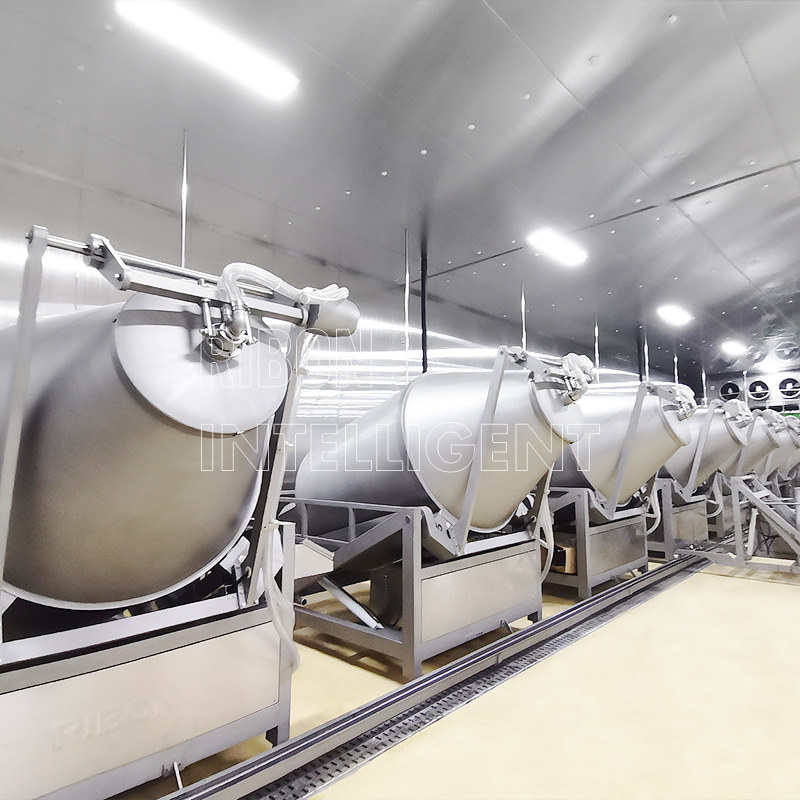
A vacuum tumbler is an industrial machine designed to efficiently and uniformly marinate, cure, and tenderize meat and poultry products. At its core, it consists of a large, rotating barrel or drum connected to a vacuum pump. The meat, along with the desired marinade or curing solution, is placed inside the drum. The magic happens when the air is evacuated, creating a vacuum inside the vessel, and the drum begins to rotate.
How Vacuum Tumbling Works: The Science of Pressure
The effectiveness of the vacuum tumbler stems from a few key scientific principles:
1. Vacuum Pressure and the “Sponging” Effect
When the air is removed from the tumbler, a negative pressure, or vacuum, is created. This reduced pressure causes the air trapped within the muscle fibers of the meat to expand and be drawn out.
When the vacuum is released (or when the meat is removed from the tumbler and exposed to normal atmospheric pressure), the internal pressure of the meat drops sharply. The external atmospheric pressure then rapidly forces the marinade or curing solution into the vacant spaces previously occupied by air and into the open muscle structure. This is often called the “sponging” or “syringing” effect, and it dramatically accelerates the penetration of the solution deep into the meat tissue, ensuring thorough and rapid distribution.
2. Mechanical Action and Muscle Protein Extraction
As the drum gently tumbles, a continuous lifting and dropping motion occurs. This mechanical action serves two vital purposes:
- Tenderization: The tumbling physically breaks down tough muscle fibers and connective tissues (collagen). This mechanical manipulation contributes significantly to the final tenderness of the product.
- Protein Extraction: The tumbling action causes the surface of the meat to rub against itself and against the walls of the drum. This friction helps to extract salt-soluble proteins, such as myosin, to the surface of the meat. These extracted proteins are sticky and, when cooked, form a protein matrix that binds the pieces of meat together (critical for products like restructured ham or roasts) and also traps moisture, significantly reducing cook loss and improving the product’s juiciness.
3. Accelerated Curing and Marination
The combination of the vacuum effect and mechanical action allows the brines, spices, and curing agents (like salt or nitrite) to penetrate the meat much faster than in traditional soaking methods. A process that once took days can be completed in a matter of hours, leading to greater consistency and reduced processing time.
Benefits of Using a Vacuum Tumbler in Meat Processing
The use of a vacuum tumbler for meat processing has brought about a paradigm shift in the industry by offering numerous advantages:
Higher Yield and Better Moisture Retention
By mechanically binding water and marinade within the meat structure, the tumbler helps meat retain significantly more moisture during cooking. This translates to a higher finished product yield and a juicier, more palatable final product for the consumer.
Uniformity and Consistency
The controlled rotation and vacuum ensure that every piece of meat, whether at the top or bottom of the batch, is exposed to the marinade and the mechanical action equally. This eliminates inconsistencies often found in static brining or hand-massaged products.
Reduced Processing Time
The dramatic acceleration of marination and curing times allows processors to move product from raw material to finished good much faster, improving overall plant throughput and efficiency.
Enhanced Safety
The tumbling process can also be performed in a chilled environment, and the vacuum itself inhibits the growth of aerobic spoilage bacteria, contributing to a safer, more stable product.
Applications in the Food Industry
The vacuum tumbler is an indispensable tool across a wide range of meat products:
- Poultry: Producing flavored chicken wings, strips, and whole breasts.
- Pork: Curing bacon, ham, and pork bellies.
- Beef: Tenderizing steaks, roasts, and corned beef.
- Fish/Seafood: Marinating fish fillets and shrimp.
In summary, the vacuum tumbler for meat processing is a sophisticated piece of equipment that leverages basic principles of physics and chemistry—pressure differential and mechanical energy—to create superior, consistent, and efficiently processed meat products that meet the high demands of the modern consumer.