

 English
 русский
 Español
 عربى
عربى
Content
- 1 What Pig Slaughtering Solutions Actually Cover
- 2 The Core Steps in a Pig Slaughter Line
- 3 Stunning Systems: The Foundation of Humane and Efficient Processing
- 4 Scalding and Dehairing: Equipment That Defines Carcass Presentation
- 5 Evisceration Equipment and Contamination Control
- 6
- 7 Choosing Between Manual, Semi-Automatic, and Fully Automatic Pig Processing Lines
- 8 Hygiene and Food Safety Systems in Modern Pig Abattoirs
- 9 Key Factors to Consider When Setting Up a Pig Slaughter Facility
What Pig Slaughtering Solutions Actually Cover
The term "pig slaughtering solutions" refers to the full range of equipment, processes, facility layouts, and operational systems used to convert live hogs into pork carcasses efficiently, hygienically, and in compliance with food safety regulations. It is not limited to a single machine or a single step — it encompasses everything from the moment a pig enters the lairage area to the point where the dressed carcass enters the chiller. For processors at any scale, choosing the right combination of hog slaughter equipment and workflow design is one of the most consequential decisions they will make.
Modern pork processing solutions have evolved significantly over the past two decades. What was once an almost entirely manual process is now available in highly automated configurations capable of processing hundreds or even thousands of pigs per hour with minimal direct labor. At the same time, well-designed small-scale pig abattoir equipment has made it possible for regional and artisan processors to achieve the same hygiene and quality standards as industrial plants, just at lower volumes. Understanding what solutions exist — and which ones fit your specific operation — is the foundation of a productive and compliant pork processing business.
The Core Steps in a Pig Slaughter Line
Regardless of facility size, every pig slaughter line follows the same fundamental sequence of operations. Each step has specific equipment associated with it, and the efficiency of the entire line depends on how well each station is sized and integrated with the others. Here is a breakdown of the key stages and the equipment that supports them:
| Process Step | Key Equipment | Purpose |
| Lairage and Handling | Holding pens, drive alleys, electric prods | Rest animals, reduce stress, improve meat quality |
| Stunning | CO₂ gas stunner, electric stunner, captive bolt | Render animal unconscious before sticking |
| Sticking and Bleeding | Sticking knives, bleeding conveyor, blood collection trough | Exsanguination and blood recovery |
| Scalding | Scalding tank or tunnel, temperature control system | Loosen hair and outer skin layer |
| Dehairing | Dehairing machine (drum or polisher type) | Remove hair from carcass surface |
| Singeing and Polishing | Gas singeing torch or tunnel, polishing machine | Burn off residual hair, firm up skin |
| Evisceration | Evisceration table, gut trucks, vacuum systems | Remove internal organs without contamination |
| Splitting | Splitting saw (manual or automatic) | Divide carcass into two halves along the spine |
| Inspection and Chilling | Inspection rails, carcass washing cabinet, chiller | Veterinary check, surface decontamination, cold chain |
Stunning Systems: The Foundation of Humane and Efficient Processing
Stunning is arguably the most critical step in any pig slaughtering solution. It directly affects animal welfare compliance, meat quality, and worker safety. An improperly stunned animal is dangerous to handle, produces lower-quality pork due to stress-related muscle damage, and creates serious welfare and regulatory problems. Choosing the right stunning system for your throughput and facility type is essential.
CO₂ Gas Stunning
CO₂ stunning is the dominant method in large-scale commercial swine slaughter lines. Pigs are moved in groups into a gondola or dip-lift system that lowers them into a pit filled with a controlled concentration of carbon dioxide gas — typically 80–90% CO₂. The animals lose consciousness within seconds and remain insensible for long enough to be shackled and bled without any struggle. CO₂ systems are favored because they eliminate the need for individual restraint, reduce bruising dramatically, improve meat quality, and allow very high throughput — some systems process over 1,000 pigs per hour. The main drawbacks are high capital cost and the ongoing expense of CO₂ supply.
Electric Stunning
Electric stunning applies a controlled electrical current to the brain (head-only stunning) or the brain and heart simultaneously (cardiac arrest stunning). Head-only stunning is reversible — the animal will regain consciousness if not bled quickly — making speed of sticking critical. Cardiac arrest stunning is irreversible but can cause more blood splash in the muscle tissue, which is a meat quality concern in some markets. Electric stunners are less expensive to purchase and operate than CO₂ systems and are well-suited for small to mid-size hog processing operations. Portable electric stunning tongs are also commonly used in very small facilities and on-farm slaughter situations.
Captive Bolt Stunning
Captive bolt stunning is less commonly used for pigs than for cattle but remains an option, particularly for individual animals or in facilities that also process other species. A penetrating captive bolt delivers a percussive blow to the frontal skull, causing immediate unconsciousness. It requires precise placement and individual restraint, making it impractical for high-throughput lines but suitable for small custom-exempt operations.
Scalding and Dehairing: Equipment That Defines Carcass Presentation
One of the most distinctive aspects of pork processing — compared to beef — is that pig carcasses are typically processed skin-on. This means the hide is not removed; instead, hair is scalded and mechanically dehaired, and the skin is retained as part of the finished product. The quality of the scalding and dehairing process directly affects carcass appearance, which matters greatly to both retail buyers and food service customers.
Scalding Tanks vs. Scalding Tunnels
Traditional scalding tanks are large water baths maintained at 60–62°C in which the carcass is submerged for 3–6 minutes. They are simple, low-cost, and effective for small to medium operations. However, they present cross-contamination risks when multiple carcasses share the same water, and temperature control can be less precise than in modern systems. Scalding tunnels — where carcasses are conveyed through a continuous hot-water spray or steam environment — offer better hygiene, more consistent temperature control, and are better suited for high-volume continuous lines. They are the preferred solution in modern large-scale pork processing facilities.
Dehairing Machines
After scalding, the carcass passes through a dehairing machine, which uses rotating rubber paddles or scrapers to strip the loosened hair from the skin surface. Drum-type dehairers are the most common — the carcass tumbles through a horizontal drum fitted with scraping elements while water sprays keep the surface wet. High-capacity machines can process a carcass in under a minute. After mechanical dehairing, operators perform manual touch-up with dehairing bells or scrapers to remove residual hair from ears, feet, and the head. A polishing machine — essentially a finer-action dehairer — may be used as a final step before singeing.
Singeing Torches and Tunnels
Singeing burns off the fine hair that dehairing machines leave behind and firms up the surface of the skin, giving the finished carcass a cleaner, more uniform appearance. In small operations, handheld gas torches are used. In larger plants, singeing tunnels pass the carcass through an enclosed flame environment automatically. After singeing, a final polishing or scrubbing pass removes the charred residue. The singed skin is not only more visually appealing — it also has a reduced surface bacterial load, which contributes to better shelf life.
Evisceration Equipment and Contamination Control
Evisceration — the removal of the internal organs — is the step where contamination risk is highest. A nick in the intestine or stomach can release gut contents directly onto the carcass surface, leading to potential fecal contamination of the meat. Modern pig processing solutions address this through a combination of specialized tools, workflow design, and hygiene protocols.
- Bung capping and tying tools seal the rectum before evisceration begins, preventing fecal material from escaping during the opening of the carcass. Pneumatic bung cutters make this step faster and more consistent than manual knife work.
- Breastbone saws and belly openers divide the sternum and open the abdominal wall to allow organ removal. Powered versions reduce operator fatigue and improve cut consistency compared to manual knives.
- Synchronized evisceration trolleys travel alongside the carcass at the same speed as the rail, allowing the operator to remove organs and place them on a matching inspection tray that stays in sync with the carcass for veterinary inspection. This system ensures each set of organs can be definitively matched to a specific carcass if a problem is identified.
- Knife sterilization stations — typically hot water at 82°C or higher — must be positioned at every evisceration workstation. Operators must sterilize knives between each carcass to prevent cross-contamination. Automated knife sterilizers make this faster and more consistent.
- Vacuum evisceration systems are used in some high-volume plants to remove the bladder and certain organs without cutting, reducing contamination risk from incidental punctures.
Choosing Between Manual, Semi-Automatic, and Fully Automatic Pig Processing Lines
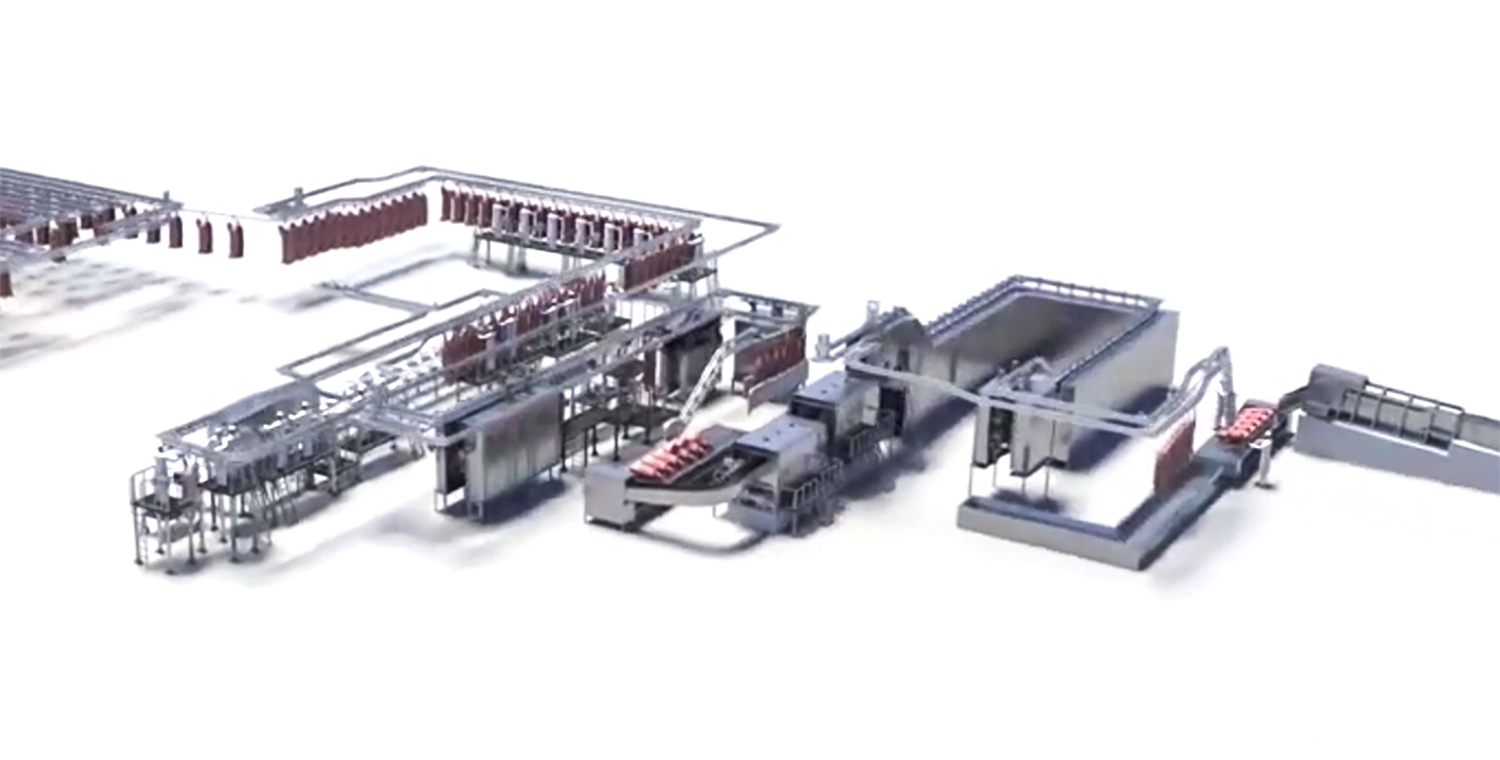
One of the most important decisions in selecting pig slaughtering solutions is determining the right level of automation for your operation. This is not simply a question of budget — it involves throughput requirements, labor availability, maintenance capability, and long-term growth plans. Here is a practical comparison:
Manual Slaughter Lines
Manual pig processing lines rely primarily on skilled operators using hand tools, with basic mechanical support for hoisting and conveying. These setups are appropriate for very small operations processing fewer than 20–30 pigs per day. Capital costs are low, and the systems are relatively simple to maintain. However, labor costs per unit are high, throughput is limited by human physical capacity, and consistency depends heavily on individual skill. Hygiene can also be more difficult to control when everything is done by hand.
Semi-Automatic Pig Slaughter Lines
Semi-automatic lines mechanize the most physically demanding and hygiene-critical steps — stunning, scalding, dehairing, and splitting — while retaining skilled operators for tasks that require judgment, such as evisceration, inspection, and trimming. This is the most common configuration for mid-size pork processing facilities processing between 50 and 500 pigs per day. Semi-automatic hog slaughter equipment offers a good balance between capital investment and labor savings, and the systems are generally robust enough for facilities in developing markets where fully automated solutions may be difficult to maintain.
Fully Automatic Swine Slaughter Lines
High-volume industrial plants processing thousands of pigs per day use fully automated swine slaughter lines where robotic systems handle splitting, carcass washing, fat trimming, and in some cases evisceration. These systems minimize labor costs, maximize throughput consistency, and reduce ergonomic injury risks for workers. However, they require substantial capital investment, sophisticated maintenance programs, and technically skilled staff. Fully automatic lines are primarily viable for operations processing at least 500–1,000 pigs per day where the economics of automation are clearly justified.
Hygiene and Food Safety Systems in Modern Pig Abattoirs
Food safety is not an add-on to pig slaughtering solutions — it is embedded in every equipment choice, facility design decision, and operational protocol. Regulatory requirements for pork processing facilities are stringent in most markets, and non-compliance carries severe consequences ranging from product recalls to facility closure. The following hygiene systems are considered standard in any compliant pig processing operation:
- Carcass washing cabinets: High-pressure hot water or steam-vacuum cabinets spray the entire carcass surface before it enters the chiller. Some facilities use lactic acid or other approved antimicrobial interventions at this step to reduce surface bacterial counts. Carcass washing cabinets are one of the most effective contamination reduction tools available.
- Separate clean and dirty zones: Facility layout must enforce a strict physical separation between the dirty side of the operation (lairage, bleeding, scalding) and the clean side (evisceration onward). Air pressure differentials, separate drainage systems, and access controls between zones are all part of a properly designed pig abattoir layout.
- HACCP-based monitoring systems: Modern processing plants implement Hazard Analysis and Critical Control Point (HACCP) programs with real-time monitoring of critical parameters — scalding temperature, chiller temperatures, pH of antimicrobial solutions — using automated data logging systems. This not only ensures food safety but provides documentation for regulatory audits.
- Sanitation equipment and CIP systems: Automated clean-in-place (CIP) systems for scalding tanks, evisceration conveyors, and other enclosed equipment reduce manual cleaning labor and ensure that sanitation is thorough and consistent. Foam cleaning systems for walls, floors, and equipment surfaces are standard on modern swine kill floors.
Key Factors to Consider When Setting Up a Pig Slaughter Facility
Whether you are building a new facility from scratch or upgrading an existing operation, the following factors should guide your equipment selection and facility design decisions for a pig slaughtering solution that will serve your business reliably for years to come:
- Target daily throughput and peak capacity: Design your line for your realistic peak volume, not your average. Bottlenecks created by undersized equipment at any single station will limit the output of your entire facility. Build in at least 15–20% capacity headroom above your projected peak.
- Regulatory and market requirements: Different export markets have specific equipment and process requirements — for example, some Muslim-majority markets require hand sticking after halal-compliant stunning, and some EU export approvals mandate specific HACCP documentation systems. Know your target markets before specifying equipment.
- Utility availability and costs: Pig slaughter lines are intensive consumers of hot water, steam, electricity, and refrigeration. CO₂ stunning systems also require reliable and affordable CO₂ supply. Map out your utility infrastructure requirements early and build them into your facility cost model.
- Waste and byproduct management: A pig processing plant generates significant quantities of wastewater, blood, offal, hair, and other byproducts. Your facility design must include compliant systems for each of these waste streams — blood collection for sale or disposal, hair collection, rendering connections for condemned material, and a wastewater treatment system that meets local discharge standards.
- Supplier support and spare parts availability: Equipment downtime in a slaughter facility is extremely costly. Choose equipment suppliers who have a proven track record in your region, maintain local spare parts inventory, and can provide qualified technicians for service and training. The cheapest equipment option is rarely the most economical when total cost of ownership and downtime risk are factored in.