

 English
 русский
 Español
 عربى
عربى
Walk into almost any modern meat plant that produces ham, bacon, jerky, or marinated poultry, and you will find a marinator vacuum tumbler somewhere near the start of the process. It has quietly replaced the old overnight soak in a vat, not because soaking never worked, but because tumbling reaches the same result in a fraction of the time and with far more consistency from batch to batch.
Ribon Intelligent has been building meat processing equipment since 2003, and vacuum tumblers have been part of that story from the beginning. This guide covers what these machines actually do to the meat, which settings matter most, and how to choose a drum that fits the products you run.
Content
- 1 What a Marinator Vacuum Tumbler Actually Does
- 2 Why Vacuum Marination Beats Soaking in a Vat
- 3 The Settings That Decide Your Results
- 4 Choosing the Type of Marinator Vacuum Tumbler
- 5 Matching the Machine to What You Marinate
- 6 Daily Care, Hygiene, and the Surrounding Line
- 7 Questions Worth Asking Before You Buy
- 8 Working With a Partner, Not Just a Supplier
What a Marinator Vacuum Tumbler Actually Does
A vacuum tumbler is, at heart, a slowly rotating drum. What separates it from an ordinary mixer is that three things happen inside it at the same time.
Air is removed from the drum first. Pulling the internal pressure down draws trapped air out of the meat surface and out of the gaps between muscle fibers, and those spaces then fill with brine instead of air.
Then the rotation goes to work. As the drum turns, pieces of meat lift, tumble, and fall against the drum wall and against each other. That gentle mechanical massage flexes the fibers, opens the structure slightly, and helps the brine travel deeper. Surface protein is also worked into a tacky layer that later holds moisture during cooking.
Finally, the brine itself is formulated and kept cold so it cooperates with the process. With the air gone and the surface opened, the solution moves into the meat by capillary action rather than sitting on top of it.
The practical outcome is straightforward: even distribution in a few hours instead of a full overnight soak, and a batch that behaves the same way tomorrow as it did today.
Why Vacuum Marination Beats Soaking in a Vat
Traditional soaking depends on time and gravity. A vacuum tumbler replaces both with controlled pressure and controlled movement, and the differences show up in several places at once.
- Faster brine uptake, measured in hours rather than a full day, which shortens the window between deboning and cooking.
- Better yield, because brine stays inside the muscle instead of draining away with the excess.
- More consistent color and flavor, since every piece sees roughly the same vacuum and the same number of tumbles.
- Improved texture in whole muscle cuts, with less of the dry, fibrous edge that comes from uneven curing.
- Lower handling labor and less floor space than racks of meat sitting in open tubs.
- Tighter hygiene control, because the process happens inside a sealed, chilled vessel.
The Settings That Decide Your Results
Two plants can buy the same machine and get very different results. Most of that difference lives in a handful of settings, and it is worth running trials on your own product before locking them in.
| Setting | What It Controls | Sensible Starting Point |
|---|---|---|
| Vacuum level | How completely air is removed from the drum | Work close to full vacuum |
| Total cycle time | Overall brine pickup and distribution | Extend until pickup stops rising |
| Tumble and rest ratio | Mechanical action versus equalization time | Short tumbles, longer rests |
| Drum speed | Gentleness of the massage | Slow, so pieces fall rather than fly |
| Product temperature | Safety and protein behavior | Keep the load cold throughout |
Load ratio matters as much as any setting on that list. Overfilling a drum reduces the fall distance that does the real work, while a very light load simply wastes cycle time.
Choosing the Type of Marinator Vacuum Tumbler
Vacuum tumblers are not a single design. The right one depends on batch size, how much chilling you need inside the drum, and how much of the cycle you want automated.
A horizontal vacuum tumbler is the workhorse shape in most plants, with a drum turning on a horizontal axis and a door at one end for loading and unloading. It suits everything from ham and bacon to marinated poultry portions.
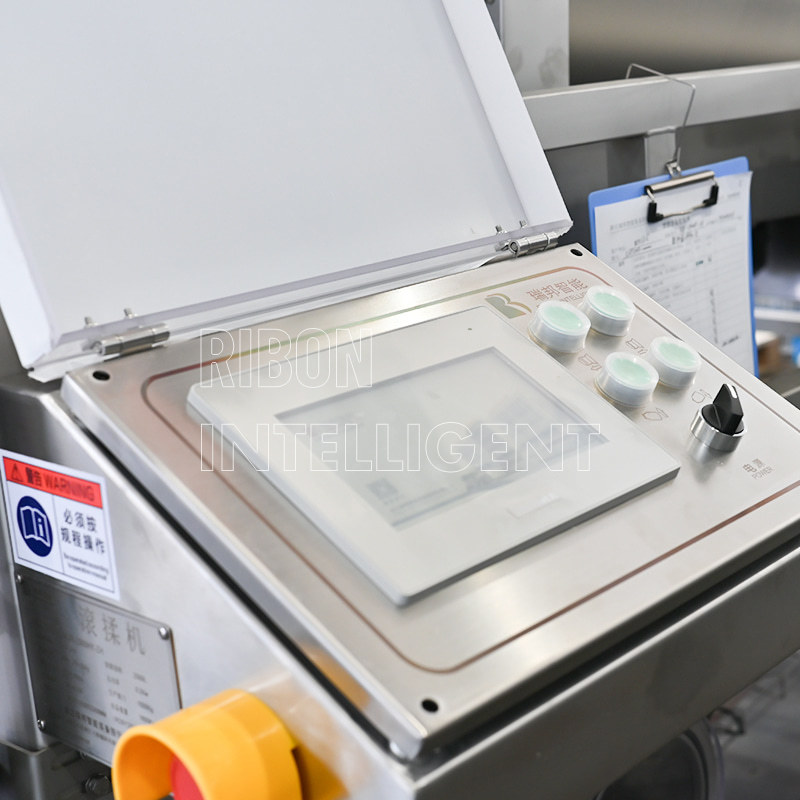 Horizontal Vacuum Tumbler for Meat Marinating and ProcessingHorizontal drum design for marinating ham, bacon, poultry, and similar products, with PLC control, vacuum/breathing rotation, and models from 500 L to 3500 L.View Product →
Where a standard machine struggles is temperature. Friction and long cycles warm the load, and warm meat absorbs brine unevenly, so a refrigerated vacuum tumbler keeps the drum cold from the inside rather than relying on a chilled room.
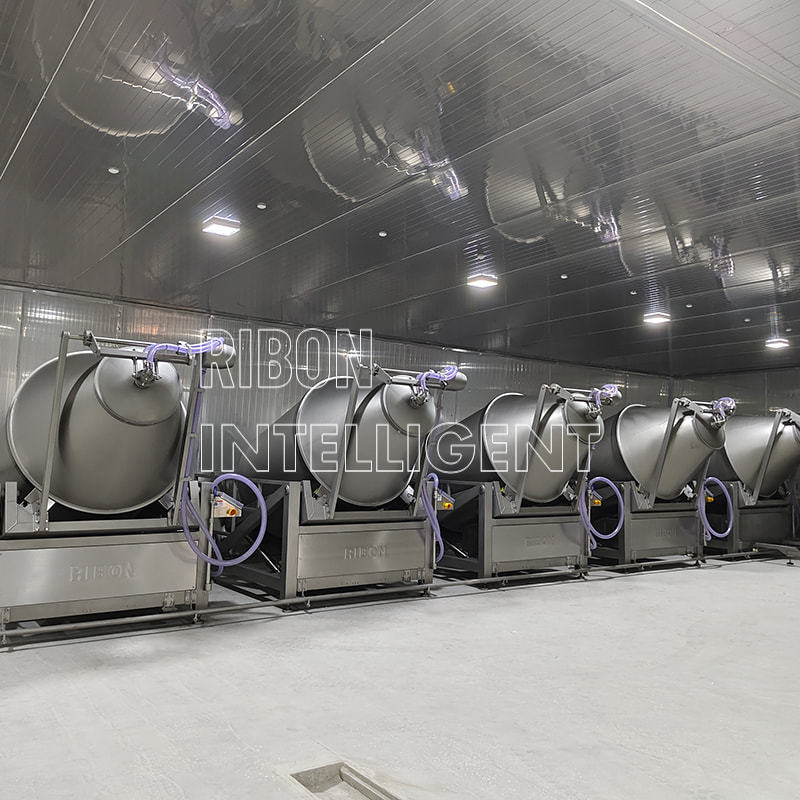 RIBON Refrigerated Vacuum Tumbler for Prolonged Meat MarinatingIntegrated drum-jacket refrigeration helps control temperature during prolonged marinating and tumbling, with PLC control and models from 800 L to 3500 L.View Product →
For plants that prefer a defined capacity with proven cycle behavior, a named model is often an easier starting point than a custom specification. The RGR150VF is a good example of a larger frame built around whole muscle production, and smaller drums serve the same logic at the other end of the scale.
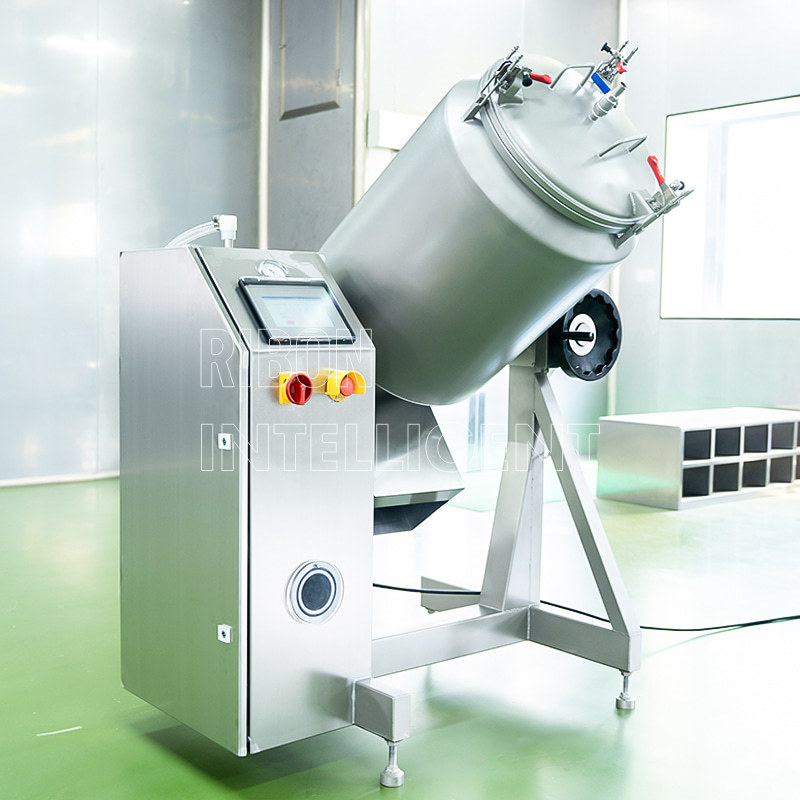 RGR-150VF Vacuum Tumbler for Restaurant and Laboratory UseA 150 L vacuum tumbler for restaurant production and laboratory testing, with adjustable 3–17 rpm rotation and optional V-shape or blade-shape paddles.View Product →
Hydraulic drive options cover heavier loads and tougher duty cycles, while laboratory and bench-scale drums are useful when a recipe still needs to be proven before a full line is committed.
Matching the Machine to What You Marinate
Whole muscle products such as ham, bacon, and roast are the classic application. These benefit most from longer rest periods between tumbles, because the brine needs time to equalize through thick cuts rather than being pushed in all at once.
Poultry and thinner cuts respond well to shorter cycles at a gentle speed. The goal is even coverage without tearing the surface, which is why drum speed is usually the first setting to reduce when a product starts looking bruised.
Jerky and snack products sit somewhere in between. They need deep seasoning penetration but must stay firm enough to slice and dry cleanly, so a shorter tumble with a stronger brine often works better than a long, slow cycle.
Emulsified and ground products change the picture again. Here the tumbler is often used for mixing and protein extraction as much as for marination, and the load size becomes the dominant variable rather than the vacuum level.
Daily Care, Hygiene, and the Surrounding Line
A tumbler that is cleaned properly after every shift lasts longer and produces more consistent results. A routine that works in most plants looks like this.
- Discharge the load and rinse the drum while residue is still soft.
- Remove the lid seal and inspect for trapped particles along the rim.
- Wash the drum, paddles, and door with a food-safe detergent at the recommended concentration.
- Rinse thoroughly, since detergent residue affects both flavor and vacuum performance.
- Check the vacuum pump and its oil or water supply according to the maintenance schedule.
- Leave the door open between shifts so the interior dries instead of holding moisture.
It is also worth remembering that the tumbler never works alone. Meat arrives from the deboning floor, and everything that touches it before and after matters. Plants that run slaughtering and deboning equipment alongside their tumblers usually find hygiene is easier to manage when crate washing, hand wash basins, and knife sterilizers are planned as part of the same layout rather than added later.
Questions Worth Asking Before You Buy
A short list of questions will separate a machine that fits from one that merely looks impressive on a specification sheet.
- What is the real working capacity after accounting for load ratio, not the drum volume?
- How long does a full cycle take for my heaviest product?
- Is the vacuum pump rated for continuous daily operation?
- Can the drum be chilled, or does the room have to carry that job?
- How accessible is the interior for cleaning and inspection?
- What spare parts are likely to wear out first, and how quickly can they be supplied?
If you want a more detailed walkthrough of selection criteria, our guide on how to choose the right vacuum tumbler goes through the same points step by step.
Working With a Partner, Not Just a Supplier
Buying a tumbler is rarely just a purchase. It is a decision about how your plant will run for the next decade, and it is far easier when the people supplying the machine understand what happens upstream and downstream of it.
Ribon has been building meat processing machinery since 2003 and exporting those solutions worldwide, with an in-house test center where customers can run their own recipes on real equipment before committing to a configuration. If you are still weighing options, we are happy to talk through your product, your batch sizes, and the cycle times you actually need.