

 English
 русский
 Español
 عربى
عربى
Content
The Science of Vacuum Tumble Marination
Vacuum tumblers are essential pieces of equipment in the modern food processing industry, designed to enhance the flavor, texture, and weight of meat products. The core principle relies on atmospheric pressure manipulation. By removing air from the tumbling drum, the fibers of the meat—whether beef, poultry, or seafood—begin to expand. This expansion creates microscopic gaps between the muscle tissues, allowing marinades, brines, and seasonings to penetrate deep into the core of the product rather than just coating the surface.
Pore Expansion and Protein Extraction
When the vacuum is applied, it does more than just open pores; it facilitates the extraction of salt-soluble proteins to the surface of the meat. This process is often referred to as "protein massage." As the drum rotates, the meat is gently lifted and dropped, creating a mechanical action that, combined with the vacuum, draws out the myofibrillar proteins. These proteins act as a natural binding agent, which is crucial for maintaining the integrity of the meat during subsequent cooking or slicing processes.
Key Technical Advantages for Processors
The transition from traditional soaking methods to vacuum tumbling offers measurable improvements in both product quality and operational throughput. By automating the marination process, facilities can achieve results in minutes that would typically take 24 to 48 hours in a standard refrigerator soak. This rapid processing reduces the risk of bacterial growth by minimizing the time the meat spends in the "danger zone" and significantly lowers the inventory footprint required for marination stages.
| Feature | Traditional Soaking | Vacuum Tumbling |
| Processing Time | 12 - 48 Hours | 15 - 60 Minutes |
| Flavor Penetration | Superficial (Outer Layer) | Deep (To the Core) |
| Yield Increase | Minimal (2-4%) | Significant (10-20%) |
Critical Components and Operational Safety
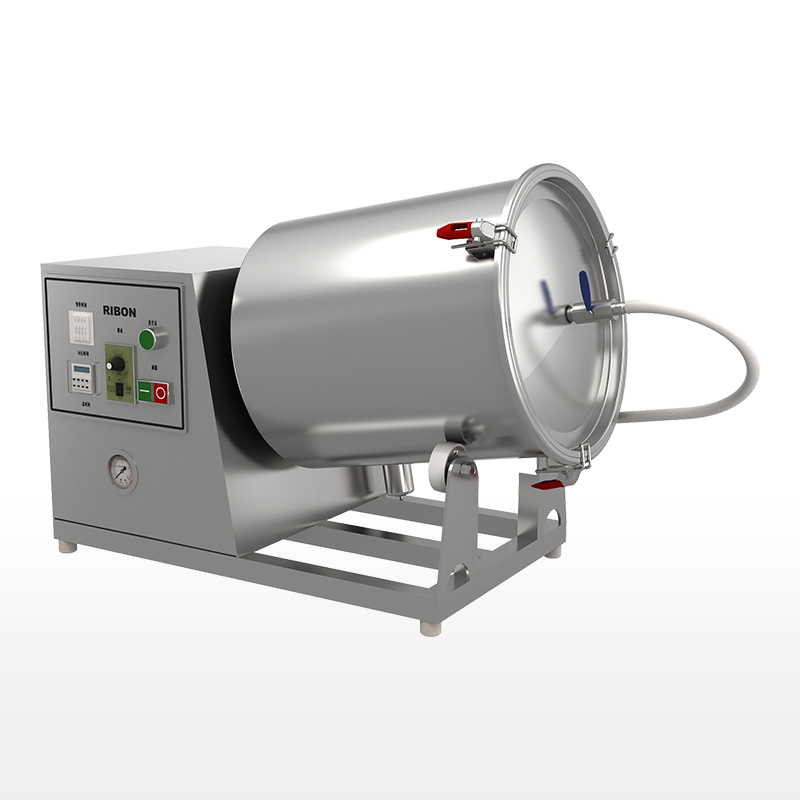
A high-performance vacuum tumbler consists of several specialized components that must work in harmony to ensure food safety and equipment longevity. Because these machines handle raw proteins and acidic marinades, the material of construction is almost exclusively high-grade stainless steel (SUS304 or SUS316). This ensures the equipment is resistant to corrosion and can withstand the rigorous sanitation protocols required in food-grade environments.
Essential Features to Consider
- Variable Speed Control: Allows for the processing of delicate items like fish at low speeds and tougher cuts like beef at higher rotations.
- Programmable Logic Controllers (PLC): Enables the operator to set specific intervals for tumbling, resting, and vacuum levels to ensure consistency across batches.
- Continuous Vacuum Capabilities: Some advanced models maintain a vacuum even during the rotation phase, preventing the meat from "re-breathing" air.
- Integrated Cooling Systems: Vital for maintaining meat temperature below 4°C during long tumbling cycles to prevent spoilage and maintain protein stability.
Optimizing Yield and Moisture Retention
The primary economic driver for using a vacuum tumbler is the "yield." In the meat industry, yield refers to the final weight of the product compared to its raw weight. By using vacuum technology, the meat can absorb and retain a higher percentage of the brine. Because the proteins are properly extracted and the moisture is "locked" into the fiber structure, the meat experiences significantly less "purge" or liquid loss during packaging and less "shrinkage" during the cooking process. This results in a juicier final product for the consumer and higher profitability for the producer.