

 English
 русский
 Español
 عربى
عربى
Content
- 1 What Makes a Smokehouse "Variable Airflow" in the First Place
- 2 The Breakpoint Concept: How Commercial Variable Airflow Smokehouses Actually Work
- 3 Key Components That Give a Smokehouse Variable Airflow Control
- 4 Manual vs. Automated Damper Control: Choosing the Right Approach
- 5
- 6 Five Factors That Determine How Well Your Airflow Control Actually Works
- 7 Variable Airflow Control for Cold Smoking Applications
- 8 Common Airflow Problems and How Variable Control Solves Them
- 9 Practical Tips for Getting the Most Out of Your Variable Airflow Smokehouse
What Makes a Smokehouse "Variable Airflow" in the First Place
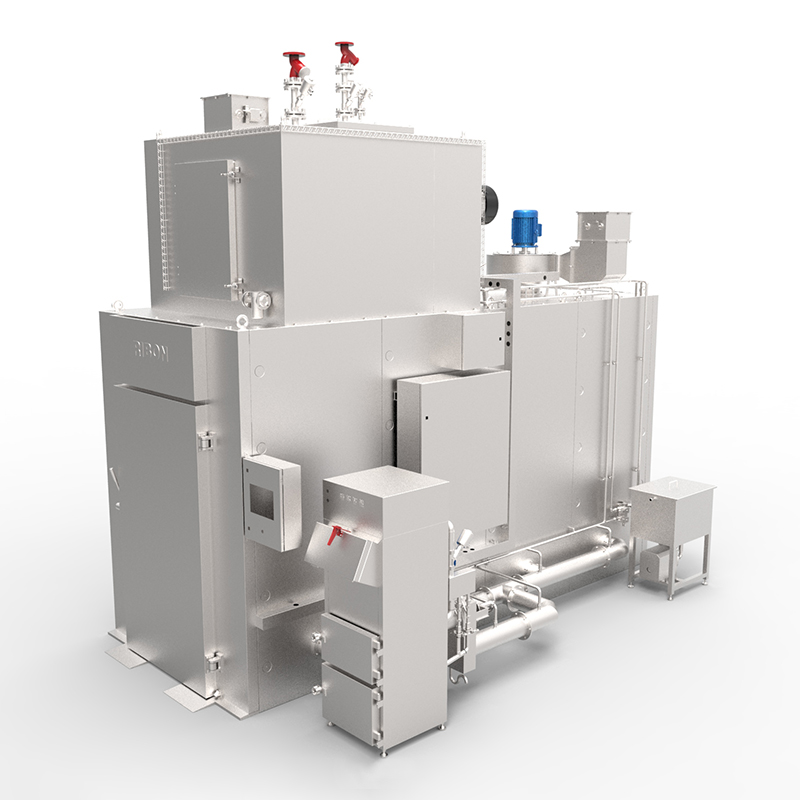
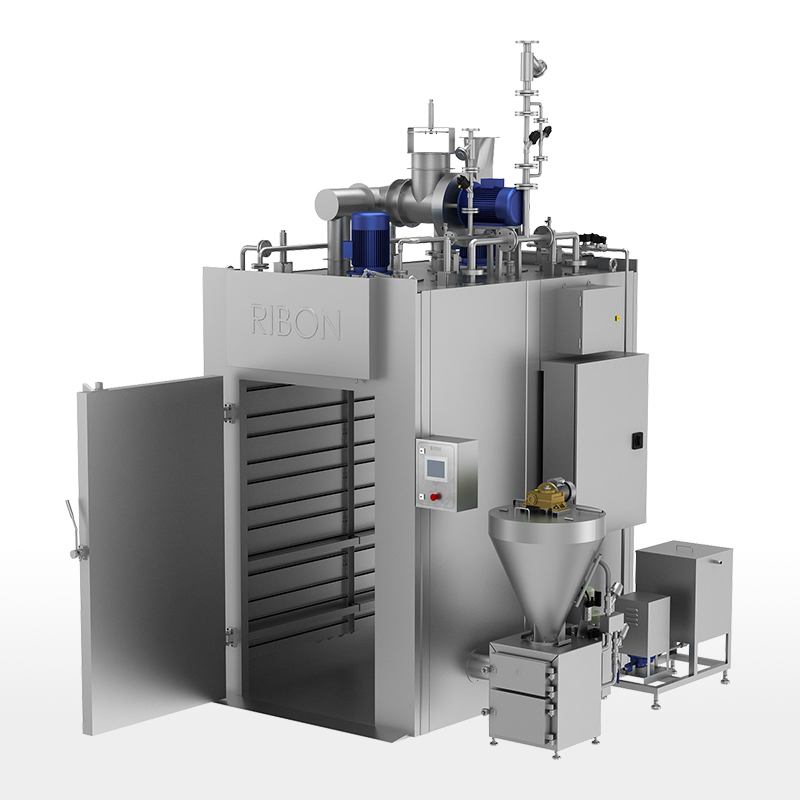
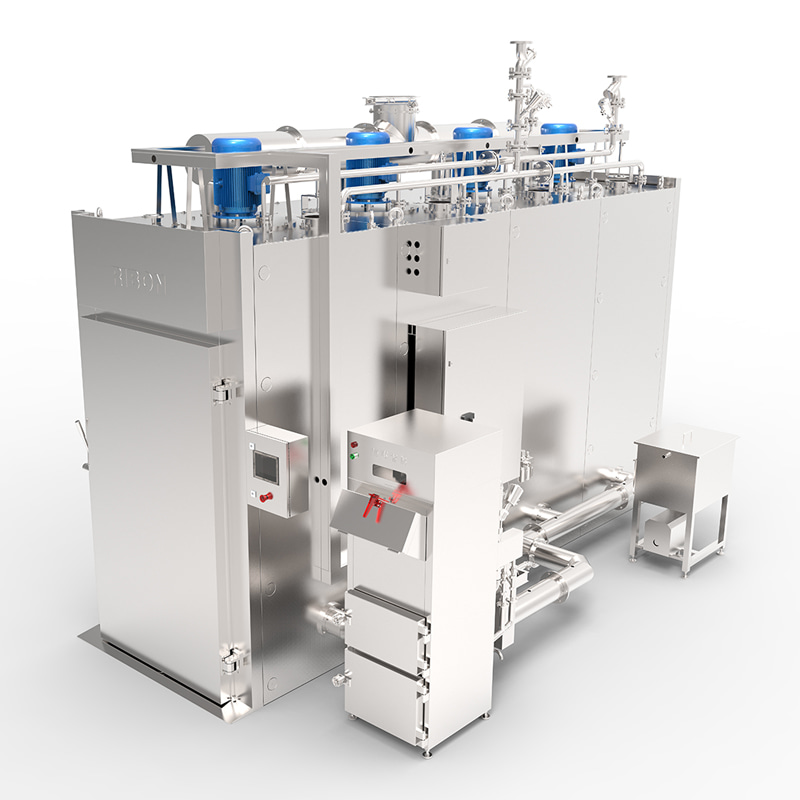
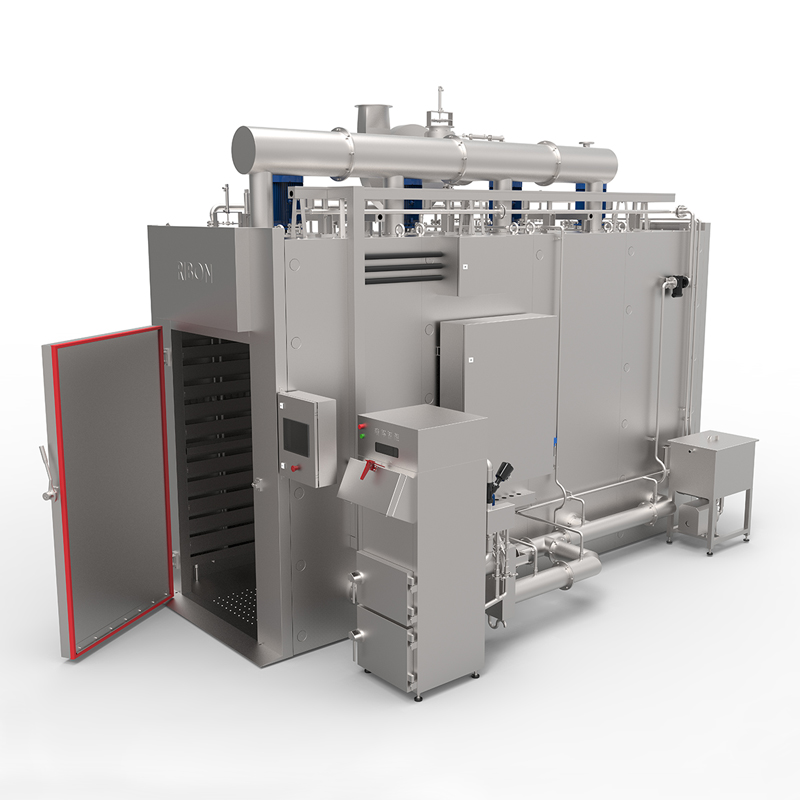
A variable airflow smokehouse is a smoking chamber designed so the operator (or an automated control system) can actively adjust how air and smoke move through the cabinet, rather than relying on a single fixed draft. In a basic fixed-airflow setup, smoke and heat rise and exit through whatever opening exists, with no real way to direct that flow toward the product. A variable airflow smokehouse changes that by adding adjustable elements — dampers, vents, or even dual fan systems — that let you control the speed, direction, and distribution of air as it passes over the meat, fish, or other product on the racks.
This matters because airflow is just as important to a good smoking result as temperature or smoke density. Even heat alone doesn't guarantee even cooking; if air isn't moving uniformly past every rack and every piece of product, you end up with hot spots, cold spots, and inconsistent texture or color from one batch to the next. A properly designed variable airflow smokehouse gives the operator the tools to correct for these imbalances in real time, which is why almost every serious commercial smokehouse — and a growing number of advanced home builds — incorporates some form of adjustable airflow control.
The Breakpoint Concept: How Commercial Variable Airflow Smokehouses Actually Work
Industrial smokehouse design relies heavily on a concept called the "breakpoint," a technique that dates back to the late 1950s and is still the backbone of forced-air smokehouse and dehydrator design today. The idea uses a single fan paired with a set of alternating dampers positioned in a 90-degree formation in the air supply duct. One damper sits more open while the other sits mostly closed, and this asymmetry creates two different airstreams inside the cabinet: a high-velocity stream on one side and a low-velocity stream on the other. The damper that is set to block the duct creates the low-velocity airflow while the damper set to open creates the high-velocity airflow, and these differing airflows are on opposing sides of the oven.
These two airstreams travel through the cabinet and eventually collide, and the point where they meet — called the breakpoint — is where the actual cooking and smoking action happens. The high-velocity airflow travels down the oven wall, across the floor, and up the opposing side, while the low-velocity airflow travels a much shorter distance, and the collision of the two causes the air to break toward the center of the oven, forming the breakpoint. When this breakpoint is positioned and controlled correctly, it has enough force to push through the product on the rack rather than just flowing around it, which is what actually delivers consistent heat and smoke penetration. Variable airflow smokehouses control the breakpoint either by running two opposing fans against each other, or by using the alternating-damper method described above — both achieve the same result of a controllable, repositionable collision zone inside the chamber.
Why the Breakpoint Location Matters for Product Quality
If the breakpoint sits in the wrong place, certain racks or zones in the cabinet end up starved of moving air, creating a cold spot where product cooks more slowly and absorbs less smoke. Many conventional smokehouse designs have a recognized cold-spot at the top-center of the cabinet, and engineering changes such as extended return ducts combined with variable-width supply slots have been shown to pull air more effectively through that zone, producing more uniform velocity throughout the cabinet. This is exactly the kind of problem variable airflow smokehouse design solves: by giving the operator damper or fan controls, the breakpoint can be shifted to compensate for known cold zones, different product loads, or even how trucks and racks are arranged inside the cabinet on a given day.
Key Components That Give a Smokehouse Variable Airflow Control
Whether you're looking at a small craft operation or a large industrial line, most variable airflow smokehouses rely on a handful of mechanical components working together. Understanding what each part does makes it much easier to diagnose airflow problems or evaluate equipment when buying or upgrading a system.
- Alternating dampers: paired blades positioned opposite each other to create high- and low-velocity airstreams
- Supply duct slots: openings, often variable-width, that direct conditioned air into the cabinet
- Return duct: pulls air back out of the cabinet, with its length and position affecting which zones get the strongest draw
- Recirculation fan: the primary driver of airflow, sometimes paired with a second fan for opposing-airstream designs
- Chimney or exhaust damper: a simple adjustable opening on the outlet side, common in smaller and traditional-style smokehouses
- Intake vents: adjustable openings that control how much fresh air enters to replace exhausted smoke and moisture
On the simpler end of the spectrum, traditional and small-batch smokehouses often rely on nothing more than a single damper on the chimney outlet to manage draft. This kind of exit control, even when basic, is common across many European smokehouse and cabinet designs, and being able to tweak airflow through the chamber is one of the fastest ways to improve smoking outcomes. Even a single, simply placed damper gives meaningful control over chamber behavior, which shows that variable airflow smokehouse design exists on a real spectrum from basic to fully automated.
Manual vs. Automated Damper Control: Choosing the Right Approach
Variable airflow smokehouses generally fall into one of two control categories: manually adjusted dampers, where an operator physically sets the position based on experience and observation, or automated/motorized dampers, which are controlled by a programmable system that adjusts airflow according to a preset cook profile. Each approach has clear advantages depending on the scale and consistency requirements of the operation.
Manual control is straightforward, inexpensive, and gives an experienced operator a direct feel for how the chamber is behaving, which is why it remains common in small commercial operations, craft smokehouses, and most home-built designs. The tradeoff is that results depend heavily on the operator's skill and attentiveness, and airflow settings that work well on one day may need adjustment the next if outside temperature, humidity, or product load changes. Automated systems, by contrast, use programmed dampers tied into a control processor so the same airflow profile gets reproduced exactly every time, which is critical for larger operations that need batch-to-batch consistency and detailed production records. Commercial units in this category often include features like multi-program memory, delay-start timers, and automatic damper sequencing as standard equipment.
Comparing Manual and Automated Variable Airflow Control
| Factor | Manual Damper Control | Automated Damper Control |
| Upfront Cost | Low | Higher |
| Batch Consistency | Depends on operator | Highly repeatable |
| Best Suited For | Small batches, craft operations | High-volume commercial production |
| Adjustment Speed | Immediate, hands-on | Programmed, requires setup time |
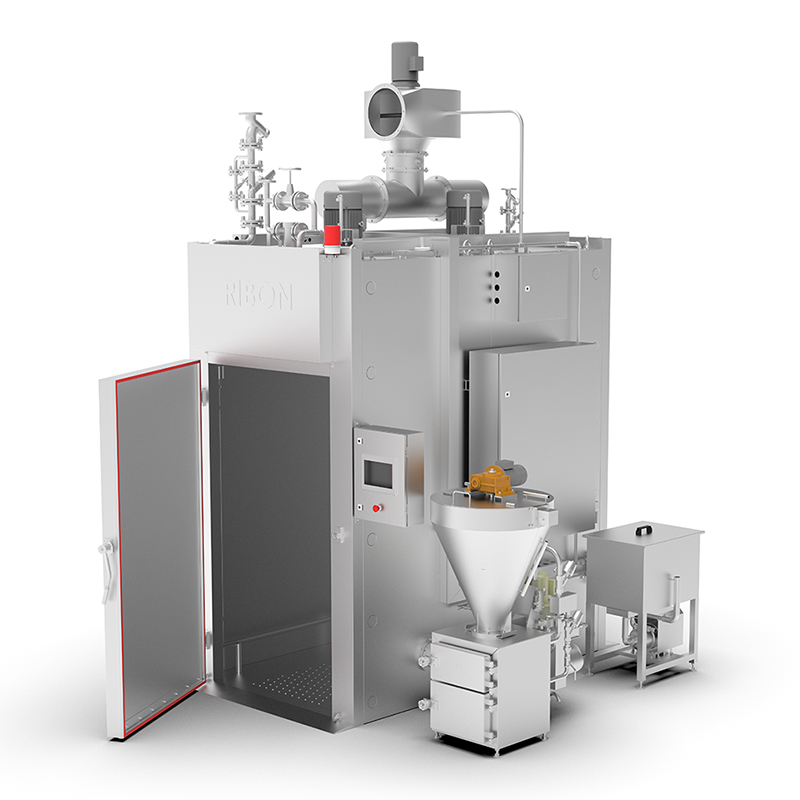
Five Factors That Determine How Well Your Airflow Control Actually Works
Adjustable dampers alone don't guarantee good airflow; several physical factors inside the cabinet interact with the damper settings to determine whether the breakpoint forms correctly and stays consistent throughout the cook. Industrial smokehouse engineers generally point to five interacting factors that need to be managed together for strong, controllable airflow.
- Fan output and speed, which sets the overall energy driving the airflow
- Damper position and the resulting velocity differential between opposing airstreams
- Supply duct slot width and placement, which shapes how air enters the cabinet
- Return duct design and position, which determines where air is pulled out and how strongly
- Cabinet geometry, especially how the side walls and floor meet, which can either reinforce or disrupt the airstream as it travels along the surface
It's also worth noting that the product load itself becomes part of this airflow equation. Placing a truck of product in the oven affects the flow of the high- and low-velocity airstreams that create the breakpoint, since any obstruction in the cabinet changes the airflow pattern, which means the design and placement of racks and trucks is just as critical to airflow performance as the mechanical dampers themselves. A variable airflow smokehouse with excellent dampers can still underperform if racks are loaded inconsistently or positioned in a way that blocks the intended airstream path.
Variable Airflow Control for Cold Smoking Applications
While most of the breakpoint and damper discussion centers on hot smoking and cooking applications, airflow control is arguably even more important in cold smoking, where there's no strong heat source helping to move air or evaporate moisture. In cold smoking, a single well-placed damper on the exhaust or chimney outlet is often the main tool an operator has for managing how fast smoke and moisture leave the chamber, and getting this wrong can mean either a stale, smoke-saturated chamber or a draft so strong it pulls heat in and pushes the temperature out of the cold-smoking range.
Maintaining the correct temperature band is critical, since cold smoking generally needs to stay between roughly 10 and 20°C (50 to 68°F) to avoid cooking the product. Chamber size also plays a role in how airflow and temperature interact: a bigger, heavier chamber usually changes temperature more slowly, while small chambers can shift much faster, which means smaller variable airflow smokehouses need more frequent and more careful damper adjustment to hold a stable range. Even DIY cold smoking setups benefit enormously from this principle. Many DIY builders achieve adjustable airflow without a dedicated damper at all, simply by tuning existing vents, leaving a controlled door gap, or adjusting the exhaust opening to fine-tune the draft through the chamber.
Common Airflow Problems and How Variable Control Solves Them
Most of the quality complaints operators have about smoked product — uneven color, inconsistent texture, longer-than-expected cook times in certain spots — trace back to airflow problems that a properly adjusted variable airflow smokehouse can correct. Recognizing the symptoms early makes troubleshooting much faster.
| Symptom | Likely Airflow Cause | Adjustment to Try |
| Pale or undercooked product in one zone | Cold spot from misplaced breakpoint | Rebalance damper positions to shift the breakpoint |
| Inconsistent results between batches | Variable rack loading or manual damper drift | Standardize rack placement; consider automated dampers |
| Excess moisture or stale smoke buildup | Exhaust damper too closed | Open exhaust/chimney damper slightly |
| Chamber temperature creeping too high during cold smoke | Excess draft pulling in warm air | Reduce intake/exhaust opening size |
Practical Tips for Getting the Most Out of Your Variable Airflow Smokehouse
Getting consistent, high-quality results from a variable airflow smokehouse comes down to treating airflow as a setting you actively manage, not something you set once and forget. Operators who get the best results typically log their damper positions alongside batch outcomes, so they can build a reliable reference for different product types, loads, and seasonal conditions rather than re-guessing the setup every time.
- Start with less airflow adjustment than you think you need, then fine-tune based on the actual result
- Keep rack and truck loading as consistent as possible between batches so airflow comparisons stay meaningful
- Check known cold-spot zones first when troubleshooting uneven results
- Adjust airflow settings seasonally, since outside temperature and humidity change how the chamber behaves
- For cold smoking, treat the exhaust opening as a temperature control, not just a smoke-clearing vent
Whether you're running a small craft setup with a single chimney damper or a fully automated industrial line with programmed alternating dampers, the underlying principle is the same: airflow is a controllable variable, and a smokehouse that lets you actually control it will consistently outperform one that doesn't. Investing the time to understand how your specific dampers, ducts, and fan create the breakpoint inside your cabinet pays off directly in more even color, more reliable texture, and far fewer wasted batches.