

 English
 русский
 Español
 عربى
عربى
In a meat processing plant, the cutting and deboning line is where the largest share of carcass value is decided. Every cut, every trim, and every second of waiting between stations eventually shows up in yield figures, labour cost, and product consistency. After more than two decades of building meat processing machinery, we have learned that most of that outcome is settled long before the first knife is picked up, at the layout and equipment selection stage.
This article explains what a cutting and deboning line is made of, how cattle and pig lines differ, which equipment most influences throughput and hygiene, and what to verify before you invest. It is written for plant owners, production managers, and process engineers who want practical answers rather than marketing language.
Content
- 1 What Is a Cutting and Deboning Line?
- 2 How the Line Flows, Stage by Stage
- 3 Cattle and Pig Lines: Two Different Sets of Problems
- 4 Equipment That Shapes Line Performance
- 5 What Determines Throughput and Yield
- 6 Hygiene, Safety, and Compliance in Deboning Halls
- 7 Choosing a Partner for Your Cutting and Deboning Line
What Is a Cutting and Deboning Line?
A cutting and deboning line is an organised sequence of workstations, rails, conveyors, saws, and support equipment that converts chilled carcasses or primal cuts into retail portions, further-processing cuts, and trimmings. It starts where the slaughter process ends and continues until product is packed or sent on to marination, tumbling, smoking, or freezing.
The key word is line. Buying individual machines is not the same as designing a line, because output depends on how the stations connect: how quickly carcasses arrive, how far an operator reaches for the next cut, where full and empty crates travel, where tools are sterilised, and how fast product reaches the chiller. One undersized saw or one badly placed crate station can hold back an otherwise well-equipped hall.
For a wider view of how these systems have evolved, our overview of the modern cutting and deboning line covers the layout, automation, and hygiene changes shaping today's projects.
How the Line Flows, Stage by Stage
Every plant arranges its hall differently, but most cutting and deboning lines pass through the same functional stages. The table below summarises them and the equipment behind each one.
| Stage | Typical equipment | Primary objective |
|---|---|---|
| Carcass reception and transfer | Rail systems, delivery arms, lifting platforms | Move carcasses from chilling to the first cutting station |
| Primal breakdown | Table-type and vertical circular blade saws | Split quarters and primals to a consistent size |
| Deboning and trimming | Deboning tables, knife stations, hand wash basins and knife sterilisers | Separate lean meat from bone with controlled trim levels |
| Container logistics | Crate spinning machines, crate stack and unstack machines | Keep full and empty crates moving in a predictable loop |
| Container and tool hygiene | Crate washers, hand wash basins, knife sterilisers | Hold microbiological control between shifts and batches |
The sequence is fixed; the balance between stages is not. A line producing primals for wholesale runs on a different rhythm from one producing retail cuts for a supermarket programme, and the equipment mix should follow the product mix.
Cattle and Pig Lines: Two Different Sets of Problems
Beef and pork share the same basic sequence and almost nothing else. Carcass weight, fat cover, cutting patterns, and hygiene risks all differ, so a cattle layout cannot simply be copied onto a pig line. Our own cutting and deboning solutions are configured around the animal and the finished product first, and around the machines second.
Cattle cutting and deboning lines
Cattle work is heavier and more variable. A beef line handles large quarters, thick bone, and wide differences in fat cover, which places more demand on saw power, table height, and the distance between the saw and the deboning stations. Rail pacing is usually slower than on a pig line, but the load at each station is higher, so ergonomic positioning matters more than raw speed. Typical equipment includes a heavy-duty circular blade saw, dedicated deboning tables, crate handling equipment, and hand wash basins and knife sterilisers within reach of every station.
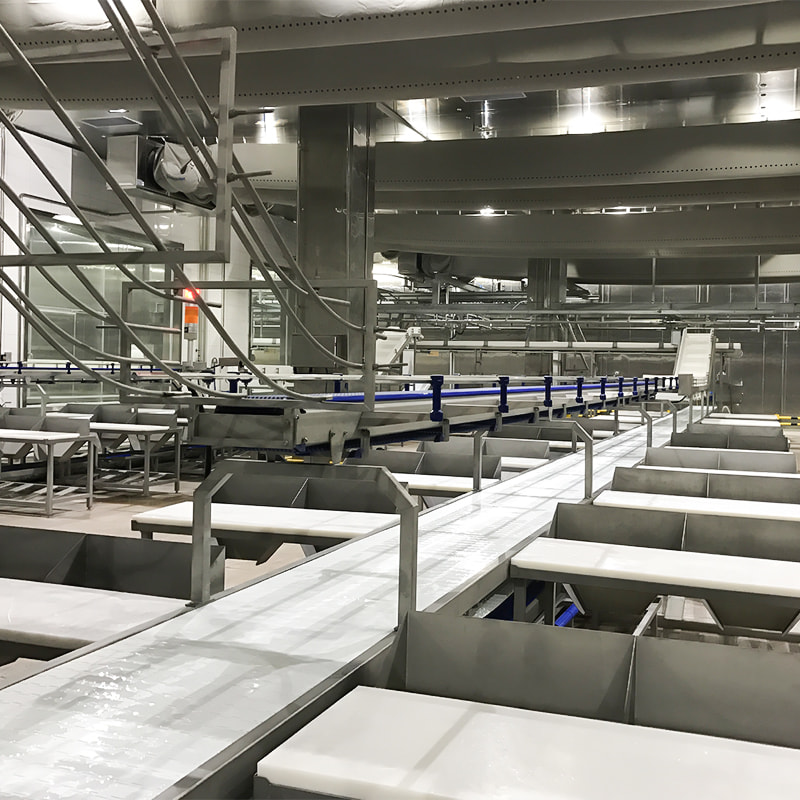 Cattle Cutting And Deboning SolutionSet of Cattle cutting and deboning solutions for processing cattle carcasses. RIBON is proposal design with layout drawing, manufacture, installation and commissioning...View Product →
Pig cutting and deboning lines
Pig lines run faster and with tighter tolerances. Carcasses are smaller and more uniform, so rhythm is set more by station count and container logistics than by saw capacity. Throughput is usually the deciding factor: how many operators can work along a given rail length, how quickly crates are turned around, and how fast tools can be sterilised without stopping the flow. Pig lines also tend to run more product variations in a single shift, which makes quick changeover and clear station instructions important.
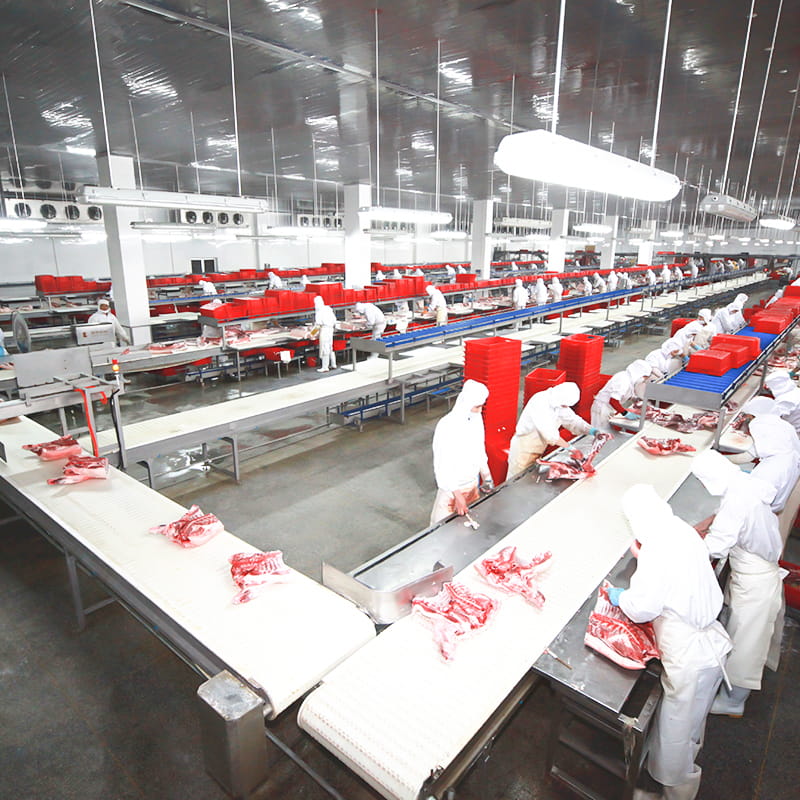 Pig Cutting And Deboning SolutionSet of Pig cutting and deboning solutions for processing pig carcasses. RIBON is proposal design with layout drawing, manufacture, installation and commissioning, prov...View Product →
Equipment That Shapes Line Performance
Most of the capital sits in the large process machines, yet daily performance is often decided by smaller items around the cutting table. Two groups deserve particular attention.
Circular blade saws
The breakdown saw sets the pace for everything downstream. A table-type circular blade saw suits flexible work and mixed product ranges, while a vertical circular blade saw is usually chosen where portions must be split repeatedly with consistent thickness and less physical effort from the operator. Blade condition, guarding, and how quickly the machine can be cleaned between products matter as much as cutting power, because a saw that takes fifteen minutes to strip down will eventually be used without proper cleaning.
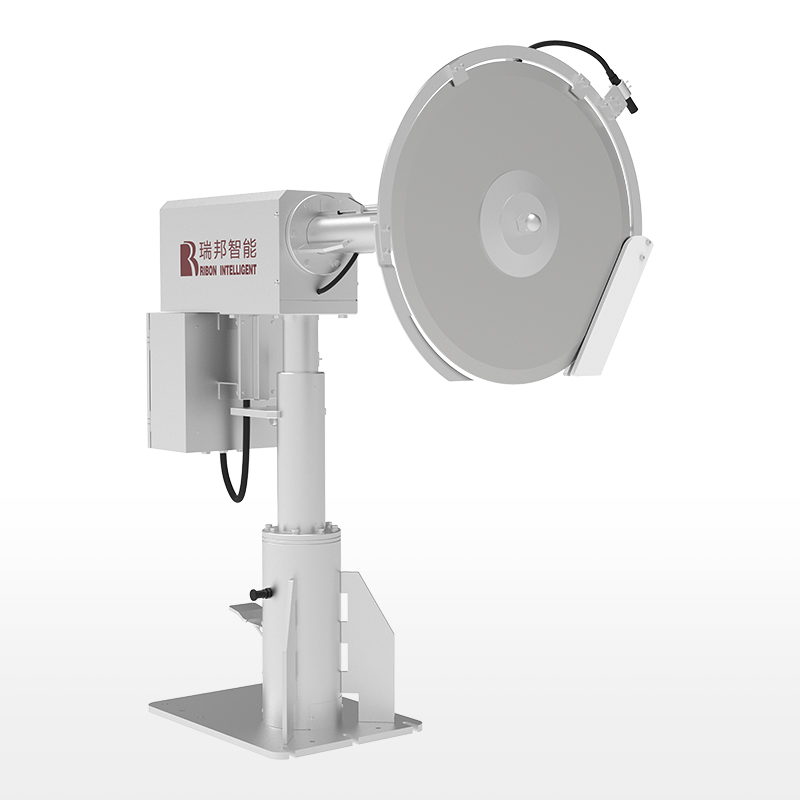 Vertical Type Circular Blade SawThe Vertical circular blade saw is used for pre-cutting of pig carcasses. The blade saw is located above the conveyor belt, and the rotation direction of the knife is ...View Product →
Crate handling and hygiene stations
Trim, portions, and offcuts all travel in containers, so the crate loop is effectively a second production line running inside the first one. Crate spinning machines, stack and unstack machines, and crate washers decide whether operators spend their time cutting or waiting. Hand wash basins and knife sterilisers belong to the same group: placed well, they make hygiene compliance the natural way to work; placed far from the table, they turn it into a compromise.
What Determines Throughput and Yield
When a line underperforms, the cause is rarely one machine. In our experience, these factors account for most of the gap between design capacity and real output.
- Carcass presentation: how much adjustment the operator must make before the first cut.
- Line balance: the slowest station sets the pace, so task allocation should match the product mix.
- Saw uptime: blade changes and maintenance planned into the shift rather than discovered during it.
- Container logistics: enough crates in circulation and a clear route for both full and empty ones.
- Ergonomics: reach distance, table height, and tool weight decide how fast a skilled operator can work for a full shift.
- Hygiene time: sterilisation and cleaning routines designed around the actual layout, not added afterwards.
- Buffer and chilling capacity: product that waits too long loses both quality and yield.
Hygiene, Safety, and Compliance in Deboning Halls
Deboning areas sit at the intersection of food safety regulation and daily production pressure. Surfaces should be smooth, non-absorbent, and easy to inspect; water should drain away from the cutting positions; and the paths of people, product, and containers should not cross in ways that create contamination risk.
Two practical points are worth repeating. Tool sterilisation needs to be continuous rather than occasional, which is why hand wash basins and knife sterilisers should be counted as line equipment. Crate washing is a food safety control, not housekeeping: containers carrying raw meat residue into a cutting hall undo careful work elsewhere. On the safety side, guarding on saws, controlled lifting of heavy carcass parts, and clear traffic routes for pallet trucks all reduce the risk of avoidable stoppages.
Choosing a Partner for Your Cutting and Deboning Line
A cutting and deboning line is a long-term asset, and the supplier becomes part of your production engineering for years after installation. Beyond price, it is worth checking four things.
- Engineering depth: can the supplier design a line around your animal size, product mix, and hall dimensions instead of offering a fixed catalogue layout?
- Verification: can your product be tested on real equipment before the order is placed, so that capacity assumptions are confirmed?
- Quality system and standards: certification, patent activity, and participation in industry standard drafting are useful indicators of engineering discipline.
- Service and export experience: installation, spare parts, and technical support across borders matter as much as the machines themselves.
Zhejiang Ribon Intelligent Equipment Co., Ltd. has been designing and manufacturing meat processing machinery since 2003 and exporting those solutions worldwide since the same year. We are certified to ISO 9001 and publicly recognised as a national high-tech enterprise and a national specialised and sophisticated "little giant" enterprise, with a provincial enterprise research institute and a provincial post-doctoral workstation. Our R&D centre employs 60 people, 45 of whom hold a bachelor's degree or above or an intermediate professional title. The company holds more than 150 national patents and 12 software copyrights, and six of our products have been developed under industry standards for which we acted as the first drafting unit. A central test centre equipped with a full set of meat processing machinery allows customers to trial equipment operation and product processes before they commit to a configuration.
A cutting and deboning line rewards planning. The plants that get the most from their investment are rarely the ones that bought the largest machines; they are the ones that matched the line to the animal, the product, and the people working on it, then kept the smaller details in order.
Whether you are reviewing an existing deboning hall or planning a new one, start with the finished product and work backwards through the line. We are always glad to discuss layouts, equipment choices, and the trade-offs involved.