

 English
 русский
 Español
 عربى
عربى
Content
- 1 Why a Solid Cattle Cutting and Deboning Solution Is the Backbone of Beef Processing
- 2 Main Stages in a Cattle Cutting and Deboning Line
- 3 Manual, Semi-Automated, and Fully Automated Approaches
- 4 How to Choose the Right Cattle Cutting and Deboning Solution
- 5 Hygiene and Food Safety Standards for Beef Processing
- 6 Maximizing Yield in Beef Cutting and Deboning
- 7 Common Mistakes That Hurt Cattle Deboning Line Performance
- 8 Final Thoughts on Building an Effective Cattle Cutting and Deboning Solution
Why a Solid Cattle Cutting and Deboning Solution Is the Backbone of Beef Processing
Beef carcasses are large, heavy, and far more complex to break down than pork or poultry, which is why a well-planned cattle cutting and deboning solution matters so much to processors. The way a carcass is split, cut into primals, and deboned directly affects meat yield, cut consistency, and how much of the final product meets premium grading standards. A poorly designed line can waste valuable trim, slow down throughput, and create safety risks for workers handling heavy sides of beef.
As beef demand continues to grow in both domestic and export markets, processing plants are under pressure to increase output while maintaining strict food safety and quality standards. This is pushing more operations to rethink their cattle cutting and deboning workflow, whether that means upgrading equipment, retraining staff, or redesigning the entire line layout.
Main Stages in a Cattle Cutting and Deboning Line
A complete cattle cutting and deboning solution generally moves through a series of connected stages, each requiring specific equipment, space, and skilled labor to keep the line moving efficiently.
| Stage | Purpose | Typical Equipment |
| Carcass splitting | Divide carcass into left and right sides | Carcass splitting saws |
| Quartering | Separate forequarter and hindquarter | Quartering saws, hanging rails |
| Primal cutting | Break into chuck, rib, loin, round, brisket | Cutting tables, band saws |
| Deboning | Remove bones from primal sections | Deboning stations, pneumatic knives |
| Trimming and grading | Remove excess fat, sort by quality grade | Trimming tables, grading conveyors |
| Portioning and packing | Cut to final retail or export size | Portion cutters, vacuum packaging |
Because beef carcasses are so much larger than pork, each stage in a cattle cutting and deboning line requires more robust equipment, wider working areas, and often additional workers to manage the weight and size safely.
Manual, Semi-Automated, and Fully Automated Approaches
Manual Cutting and Deboning
Manual cattle cutting and deboning relies on experienced butchers working at cutting tables or on hanging rails with knives and hand saws. This method offers flexibility for producing specialty cuts and is still common in smaller abattoirs or plants serving niche or artisanal beef markets. The downside is that output speed and consistency depend heavily on individual worker skill and stamina, since breaking down a full beef carcass by hand is physically demanding work.
Semi-Automated Lines
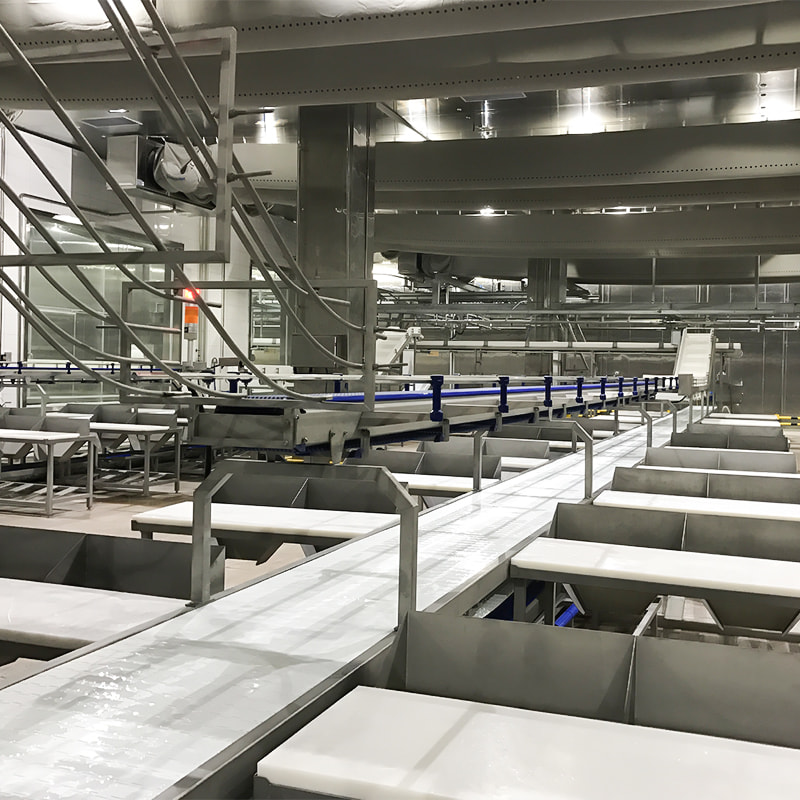
A semi-automated cattle cutting and deboning solution combines powered conveyors, carcass positioning systems, and mechanical lifts with manual cutting stations. Workers still handle the actual cutting and deboning, but the carcass or cuts move automatically between stations, cutting down on manual carrying and repositioning. This setup is a popular middle ground for mid-sized plants that want higher throughput without the cost of full automation.
Fully Automated Systems
Fully automated cattle cutting and deboning lines use robotic cutting arms, vision-guided saws, and programmable primal separation systems to process carcasses with minimal manual handling. These systems are capable of very high throughput and consistent cut precision, which is especially valuable for large export-focused plants that need to meet strict international grading and cut specifications. The tradeoff is a substantial upfront investment and the need for specialized technicians to maintain the equipment.
How to Choose the Right Cattle Cutting and Deboning Solution
Selecting the right setup requires more than picking the most advanced machinery on the market. Plant managers should weigh several practical factors specific to their operation before committing to a design.
- Daily carcass throughput and anticipated growth in processing volume
- Target markets and their specific primal cut or grading requirements
- Available skilled labor and regional labor cost trends
- Facility ceiling height, floor space, and rail system compatibility
- Total budget for equipment, installation, training, and long-term maintenance
Since beef carcasses are heavier and bulkier than pork, facility layout and rail height are especially important considerations that are sometimes overlooked during initial planning.
Hygiene and Food Safety Standards for Beef Processing
Cold Chain Management
A reliable cattle cutting and deboning solution must maintain processing room temperatures typically between 10 to 12 degrees Celsius to control bacterial growth while carcasses are being broken down. Any interruption in the cold chain during cutting or deboning increases food safety risk and shortens shelf life, so temperature monitoring throughout the line is essential.
Sanitary Equipment Standards
Cutting tables, rails, and deboning stations should be built from food-grade stainless steel with smooth surfaces that are easy to sanitize between shifts. Equipment with minimal seams and accessible components for cleaning helps prevent bacteria buildup, which is especially important given the size and surface area of beef carcasses moving through the line.
Traceability from Carcass to Cut
Many modern cattle cutting and deboning operations use barcode or RFID tags to track each carcass from the moment it enters the plant through final packaging. This traceability supports compliance with export requirements and allows plants to quickly identify the source of any quality or safety issue that arises later in the supply chain.
Maximizing Yield in Beef Cutting and Deboning
Yield optimization is one of the most important benefits of a well-designed cattle cutting and deboning solution, since beef primals carry significant value and even small yield improvements can add up to major revenue gains at scale. Precise deboning reduces bone fragments left in meat, minimizes trim loss, and increases the percentage of carcass weight converted into sellable product.
Regular staff training on proper cutting technique, routine calibration of automated saws and cutting tools, and tracking yield performance by shift or station are all practical steps plants can take to identify where losses occur. Many operations also find additional value in by-products such as bones, fat, and smaller trim pieces, which can be redirected into rendering, pet food, or other secondary product lines instead of being discarded.
Common Mistakes That Hurt Cattle Deboning Line Performance
- Underestimating the physical space and rail strength needed for full beef sides
- Ignoring ergonomic design, which leads to worker fatigue and higher injury rates
- Poor line balancing between splitting, cutting, deboning, and packing stations
- Skipping preventive maintenance on saws and automated cutting equipment
- Insufficient staff training, resulting in inconsistent primal cuts and yield loss
Addressing these issues early in the design phase can prevent costly downtime and rework once the cattle cutting and deboning line is already in operation.
Final Thoughts on Building an Effective Cattle Cutting and Deboning Solution
Whether a plant relies on manual butchery, semi-automated lines, or fully robotic systems, the most successful cattle cutting and deboning solutions are designed around a clear understanding of carcass volume, target market cut specifications, and strict hygiene requirements. Partnering with experienced equipment suppliers who understand the unique demands of beef processing will help plants achieve better yield, safer working conditions, and consistent quality that meets both domestic and export standards.