

 English
 русский
 Español
 عربى
عربى
Content
- 1 What Are Vacuum Tumblers and Why Do They Matter?
- 2 The Science Behind Vacuum Tumbling
- 3 Key Components of a Vacuum Tumbling Machine
- 4 Types of Vacuum Tumblers: Commercial vs. Home Use
- 5 What Foods Benefit Most from Vacuum Tumbling
- 6 Measurable Benefits of Using a Vacuum Tumbler
- 7 Key Specifications to Compare When Buying a Vacuum Tumbler
- 8 Practical Tips for Getting the Best Results from Your Vacuum Tumbler
What Are Vacuum Tumblers and Why Do They Matter?
A vacuum tumbler is a food processing machine that combines two simultaneous actions — mechanical tumbling and vacuum pressure — to accelerate the marination, curing, and tenderization of meat, poultry, seafood, and other food products. The drum or barrel of the machine rotates continuously, tumbling the product against internal paddles or baffles while a vacuum pump removes the air from the sealed chamber. This combination dramatically speeds up the absorption of marinades, brines, spice blends, and curing salts compared to conventional static marination methods.
In a standard marination process, flavor penetration relies entirely on slow diffusion — the marinade gradually works its way into the muscle tissue over many hours or even days. A vacuum tumbling machine shortens this to minutes or hours by opening up the cellular structure of the meat through reduced atmospheric pressure and then mechanically working the marinade into the tissue through repeated tumbling action. The result is deeper, more uniform flavor penetration, improved texture, better moisture retention during cooking, and a higher final yield compared to the raw weight of the product.
Vacuum tumblers are used across a wide spectrum — from large-scale commercial meat processing plants producing hundreds of kilograms per hour to compact home units designed for individual meals or small-batch barbecue preparation. Understanding how they work and what differentiates good machines from poor ones is essential for anyone looking to invest in one for professional or personal use.
The Science Behind Vacuum Tumbling
To appreciate why vacuum tumblers produce consistently superior results compared to conventional marination, it helps to understand what happens at a physical and cellular level during the process. Meat muscle tissue is composed of long protein fibers bound together in a complex matrix of connective tissue, fat, and intercellular fluid. Under normal atmospheric conditions, this matrix is relatively compressed and resistant to the penetration of external liquids.
When the chamber is evacuated to a vacuum of typically -0.08 to -0.1 MPa (80–100 kPa below atmospheric pressure), several things happen simultaneously. First, dissolved gases and air pockets within the muscle tissue expand and are partially drawn out toward the surface. This creates micro-channels and increased porosity in the protein matrix, making it more permeable to liquid uptake. Second, the reduction in atmospheric pressure causes any marinade present to be drawn into the surface layers of the tissue more readily than it would be under normal pressure.
The tumbling action — the mechanical rotation of the drum — then physically works the marinade into the tissue by repeatedly lifting and dropping the product, creating a gentle massaging and kneading effect. This mechanical action also helps to physically break down some of the tougher myofibrillar proteins, contributing to the tenderizing effect. When the vacuum is released at the end of the cycle, the returning atmospheric pressure drives the marinade that has accumulated at the surface deeper into the now-open tissue channels. This final pressure reinstatement is sometimes called the "pressure pulse" effect, and it significantly contributes to the deep penetration that distinguishes vacuum-tumbled product from surface-marinated alternatives.
Key Components of a Vacuum Tumbling Machine
Whether you're looking at a tabletop home vacuum marinator or a full-scale commercial meat vacuum tumbler, the core components are essentially the same — they differ in scale, materials, and automation capability rather than in fundamental design.
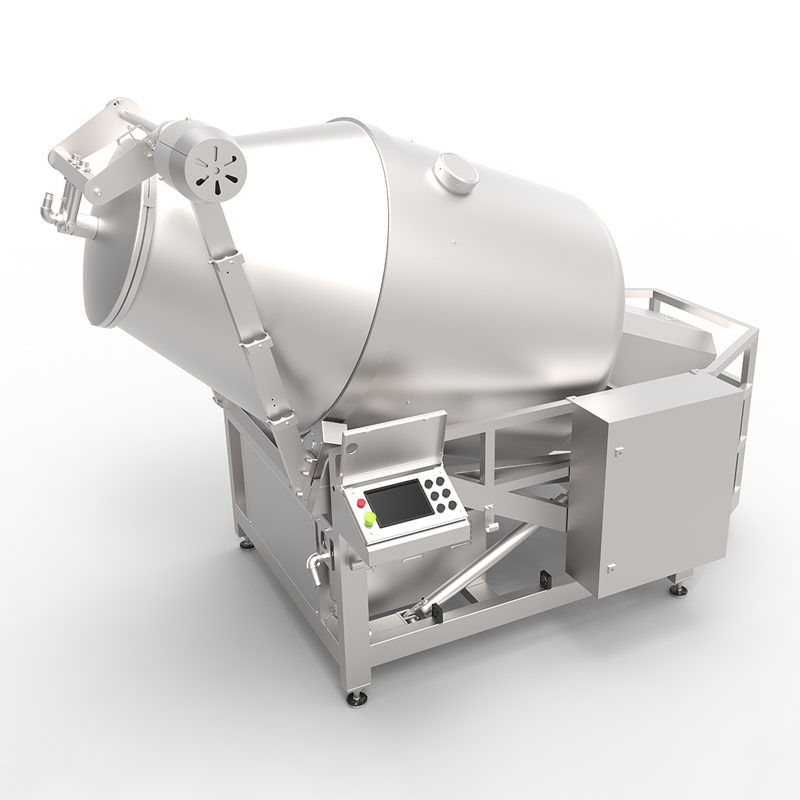
The Tumbling Drum
The drum is the primary processing vessel — a cylindrical or barrel-shaped chamber that holds the product and marinade. In commercial machines, drums are made from food-grade stainless steel (typically 304 or 316 grade) and range from 50 liters to over 3,000 liters in capacity. Home and small-batch units often use food-grade polycarbonate or stainless steel drums ranging from 1 to 20 liters. The interior of the drum typically features welded paddles, baffles, or flights — raised ribs that catch and lift the product as the drum rotates, creating the tumbling and massaging action. The design, number, and angle of these paddles significantly affect how gently or aggressively the product is handled, which matters greatly when processing delicate products like fish fillets or whole shrimp.
The Vacuum Pump
The vacuum pump is what separates a vacuum tumbler from a standard rotating drum marinator. Most commercial machines use oil-sealed rotary vane pumps capable of achieving vacuum levels of -0.09 to -0.1 MPa. Home units typically use smaller diaphragm pumps that achieve slightly lower vacuum depths — often in the -0.06 to -0.08 MPa range — which is still effective for most marination applications, though cycle times may need to be extended to compensate. The pump is connected to the drum through a sealed rotary coupling that maintains the vacuum while the drum rotates — the integrity of this coupling is a key quality indicator in any vacuum tumbler design.
Drive System and Speed Control
The drum is rotated by an electric motor through a geared drive system. Rotation speed — measured in RPM — is a critical process variable. Too fast, and the product is damaged by excessive mechanical impact; too slow, and the tumbling action is insufficient to work the marinade into the tissue. Commercial tumblers typically operate in the range of 4–14 RPM, with variable speed control allowing the operator to adjust based on the product type. Some advanced machines alternate between forward and reverse rotation to improve marinade distribution and avoid product bunching on one side of the drum.
Control System and Programmability
Modern commercial vacuum tumblers are controlled by a PLC (programmable logic controller) with a touchscreen interface that allows operators to program cycle time, rotation speed, tumble/rest intervals (intermittent tumbling), vacuum level, and temperature. Intermittent tumbling — where the drum rotates for a set period then pauses, then rotates again — is particularly important for delicate products and for allowing the marinade uptake effect of vacuum cycling to work between mechanical tumbling phases. Home units typically offer simpler controls with preset cycles or basic timer and speed settings.
Types of Vacuum Tumblers: Commercial vs. Home Use
The vacuum tumbler market broadly divides into commercial/industrial machines and home or small-batch units. The differences go beyond just size — they affect materials, process control, durability, and the types of results achievable.
| Feature | Commercial / Industrial | Home / Small-Batch |
| Drum Capacity | 50 L – 3,000+ L | 1 L – 20 L |
| Drum Material | 304 / 316 Stainless Steel | Polycarbonate or S/S |
| Vacuum Level | -0.09 to -0.1 MPa | -0.06 to -0.08 MPa |
| Speed Control | Variable (2–14 RPM) | Fixed or limited range |
| Programmability | PLC, multi-stage cycles | Basic timer / presets |
| Refrigeration | Built-in (many models) | None (use chilled product) |
| Typical Cycle Time | 30 min – 4 hours | 20 min – 2 hours |
| Price Range | $3,000 – $50,000+ | $30 – $500 |
| Best For | Meat processors, delis, food manufacturers | Home cooks, BBQ enthusiasts, small restaurants |
One important difference worth expanding on is the refrigeration question. Meat should always be kept below 4°C (40°F) during tumbling to prevent bacterial growth — the mechanical action generates heat, and extended tumbling cycles at room temperature can push surface temperatures into the danger zone. Commercial vacuum tumblers often include a built-in refrigeration jacket around the drum that maintains safe product temperatures throughout the cycle. Home users must ensure their product is well-chilled before loading, keep cycle times short, and tumble in a cool environment or refrigerated space when processing larger quantities.
What Foods Benefit Most from Vacuum Tumbling
Vacuum tumblers are most commonly associated with meat processing, but the technology is applicable to a broader range of food products than many people realize. Here's a breakdown of the most effective applications:
Whole Muscle Meats
Chicken breasts, pork loins, beef steaks, and lamb shoulder are among the most common products processed in a meat vacuum tumbler. The combination of vacuum and tumbling delivers marinade penetration of 10–15mm into the muscle in a fraction of the time required for static marination. This is particularly valuable for thick cuts where surface marination alone produces an unevenly flavored result — well-seasoned on the outside, bland in the center. Ham and deli meat producers use vacuum tumbling as a core processing step, combining it with brine injection to achieve the moisture uptake and uniform cure distribution needed for consistent sliced product.
Poultry Products
Vacuum marinating chicken — whether whole pieces, bone-in thighs, or boneless breast fillets — is one of the most popular home applications. Poultry's relatively open muscle structure responds extremely well to vacuum tumbling, with marinade penetration and flavor development that would take 24 hours in a refrigerator achievable in 20–30 minutes. Commercial poultry processors use large-format vacuum tumblers to apply brines, phosphate solutions, and seasoning blends to whole bird pieces before packaging, significantly improving cooked yield and juiciness in the final product.
Seafood and Fish
Fish fillets, shrimp, scallops, and squid can all be processed in a vacuum tumbler, but require careful attention to tumbling speed and paddle design. The delicate texture of seafood is easily damaged by aggressive mechanical action — lower RPM settings, shorter cycle times (typically 10–20 minutes), and smooth or minimal paddle designs are essential. When done correctly, vacuum-tumbled seafood absorbs marinades and seasoning blends more evenly than any static method, and the texture improvement from gentle massaging is noticeable in the cooked product.
Vegetables and Plant-Based Products
A less conventional but increasingly explored application is using vacuum tumblers for quick pickling and marinating of vegetables. Cucumbers, mushrooms, peppers, and tofu can absorb brine or marinade rapidly under vacuum, producing a result comparable to several hours of conventional pickling in a matter of minutes. This application is particularly valuable in food service environments where mise en place speed is important. Plant-based meat alternatives also benefit from vacuum tumbling to improve the distribution of seasoning and brine within the product matrix.
Measurable Benefits of Using a Vacuum Tumbler
The advantages of vacuum tumbling over conventional marination methods are well-documented in food science literature and consistently reported by both commercial processors and home users. Here are the most significant practical benefits:
- Dramatically faster marination: A process that takes 12–48 hours in a conventional refrigerator marinade is typically reduced to 30 minutes to 4 hours in a vacuum tumbling machine, depending on the product and cycle parameters. This has enormous implications for production scheduling and inventory management in commercial settings.
- Deeper and more uniform flavor penetration: Static marination primarily affects the surface layer of meat. Vacuum tumbling achieves penetration into the muscle interior, producing a consistent flavor profile throughout the cut rather than a well-seasoned crust over a bland interior.
- Improved moisture retention and yield: Vacuum-tumbled product typically retains 5–15% more moisture during cooking compared to conventionally marinated product of the same type. In commercial meat processing, this translates directly to higher cooked yield and improved profitability per kilogram of raw material.
- Tenderization: The mechanical action of tumbling, combined with the effects of vacuum on muscle fiber structure, produces measurable tenderization — particularly in tougher muscle cuts. This allows processors to produce tender, appealing products from lower-cost raw material grades.
- Improved surface appearance: Vacuum-tumbled products develop a more uniform protein exudate on the surface, which improves surface binding in formed products and creates better color development and browning during cooking or smoking.
- Reduced marinade waste: Because marinade uptake is much more efficient under vacuum, less liquid is left behind after processing. Commercial processors report marinade absorption rates of 85–95% compared to 40–60% for conventional static methods.
Key Specifications to Compare When Buying a Vacuum Tumbler
Whether you're purchasing a home vacuum marinator or a commercial meat tumbler, the following specifications directly determine how well the machine will perform in your application. Don't skip past these when evaluating options:
- Drum capacity and fill ratio: Vacuum tumblers should be loaded to 60–70% of drum capacity for optimal tumbling action — overfilling prevents proper product movement, while underfilling causes excessive impact and product damage. Choose a drum size that matches your typical batch weight when filled to this ratio, not the maximum rated capacity.
- Achievable vacuum level: The maximum vacuum level the pump can achieve, expressed in kPa or MPa below atmospheric pressure, determines the effectiveness of the cellular opening effect. For commercial applications, look for machines rated to -0.09 MPa or better. For home use, -0.06 MPa is the minimum worth considering.
- Variable speed control: Fixed-speed machines are a significant limitation if you intend to process a variety of products. Variable speed — ideally from 2 to at least 10 RPM — allows you to process delicate seafood on slow settings and tougher beef cuts on faster settings without damaging either.
- Paddle or baffle design: Request information about the internal paddle geometry. For general meat processing, standard flat paddles work well. For delicate products, specify smooth or low-profile baffles. Some commercial machines offer removable or interchangeable paddle sets.
- Seal and coupling quality: The rotary vacuum seal where the drum connects to the vacuum pump line is the most failure-prone component in any vacuum tumbler. Ask about seal material (food-grade silicone or PTFE preferred), warranty coverage, and seal replacement accessibility before purchasing.
- Cleanability: Look for smooth internal welds, no dead zones where product can accumulate, and full tool-free access to the drum interior for cleaning. Commercial machines should comply with 3-A Sanitary Standards or equivalent. For home units, dishwasher-safe drum components are a significant convenience advantage.
Practical Tips for Getting the Best Results from Your Vacuum Tumbler
Owning a vacuum tumbler is only half of the equation — using it correctly is what produces consistently excellent results. These practical guidelines apply whether you're using a home vacuum marinator or a commercial meat processing tumbler:
- Always start with cold product: Load meat at 0–4°C to ensure the entire tumbling cycle stays within food-safe temperature ranges. If using a commercial machine without refrigeration, pre-chill your drum with ice water before loading.
- Use the right marinade-to-meat ratio: A typical guideline is 10–15% marinade by weight of meat (e.g., 100–150ml of marinade per kilogram of meat). More than this can create a soupy consistency that reduces the tumbling effectiveness; less may not provide enough liquid for even distribution.
- Use intermittent tumbling for best results: Rather than running continuously, a cycle of 20 minutes tumbling followed by 10 minutes rest (repeated 2–3 times) often produces better penetration than a single uninterrupted tumble. The rest periods allow the marinade drawn to the surface during vacuum cycling to soak inward before the next mechanical phase.
- Reduce speed for delicate products: Fish, shrimp, and soft vegetables need the lowest speed settings available. If your machine doesn't go slow enough for very delicate products, reduce cycle time instead to minimize mechanical damage.
- Let the product rest after tumbling: After the cycle completes, allow the product to rest under refrigeration for 30–60 minutes before cooking. This equilibration period allows the marinade distributed through the tissue to stabilize and fully absorb, improving both flavor and moisture retention during cooking.
- Clean the seal after every use: The rotary vacuum seal is the most critical maintenance point. Wipe it clean after every batch and inspect it regularly for wear or deformation — a degraded seal reduces vacuum depth and eventually allows marinade to contaminate the pump.