

 English
 русский
 Español
 عربى
عربى
Have you ever wondered how commercial kitchens or butcher shops achieve incredibly tender, flavorful meats in a fraction of the time it takes to marinate at home? The secret often lies in a powerful piece of equipment: the meat marinade tumbler. Far from being just a spinning drum, this device employs clever principles of physics and chemistry to infuse flavor deep into the muscle tissue, transforming tough cuts into gourmet-quality meals.
Content
A Whirlwind of Flavor Infusion
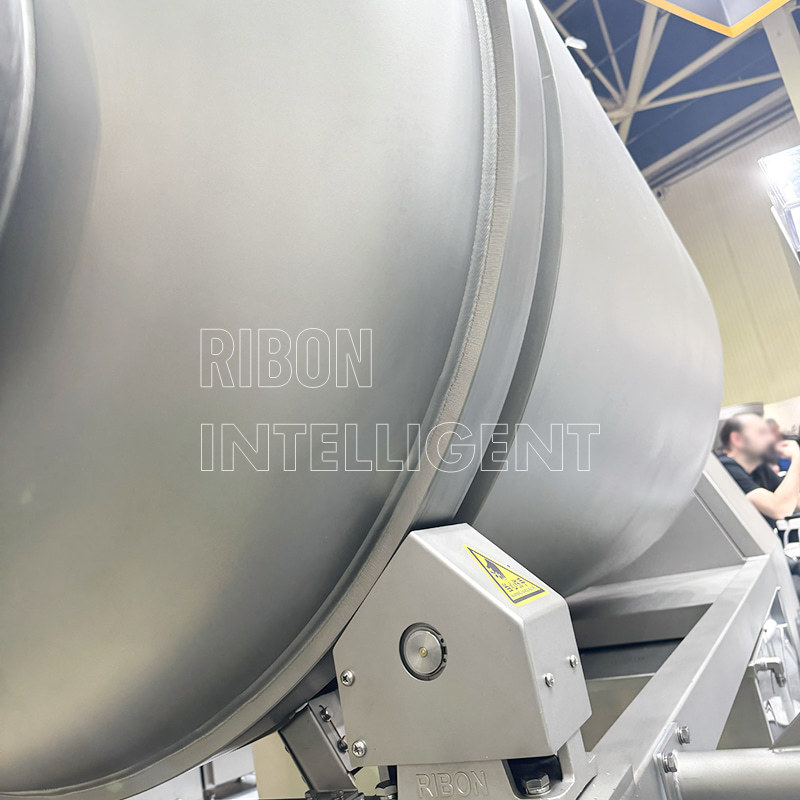
A marinade tumbler is essentially a large, rotating drum connected to a vacuum pump. Its core function is to speed up the marination process, which traditionally relies on the slow process of diffusion.
The Role of Mechanical Action and Impact
The most obvious benefit of the tumbler is its movement. As the drum slowly rotates, the meat is gently lifted and dropped—a process sometimes called “massaging” or “tumbling.”
- Muscle Fiber Relaxation: The gentle, repetitive impact from the tumbling action physically breaks down some of the muscle fibers. This helps to loosen the meat’s structure, allowing it to relax. This relaxation makes the meat more tender and creates pathways for the marinade to enter.
- Surface Abrasion and Distribution: The constant movement ensures the marinade is evenly distributed across the entire surface of the meat. More importantly, the gentle abrasion helps to open up the surface pores and capillaries, which acts like an express lane for flavor.
The Magic of the Vacuum
While the tumbling is important, the real scientific breakthrough in these machines is the use of a vacuum. The tumbler is sealed, and a pump removes most of the air, dropping the internal pressure significantly.
- The Science of Porosity: Meat, like a sponge, is porous. It contains small pockets of air and moisture. Under normal atmospheric pressure, these pockets resist the entry of the liquid marinade.
- Pressure Differential and Expansion: When a vacuum is applied, the air and gases trapped within the meat’s structure expand rapidly, forcing their way out. You might even see small bubbles rising from the meat’s surface. This essentially evacuates the tiny internal spaces.
- The “Soaking” Stage: Once the vacuum is released (or during the tumbling under vacuum), the high pressure outside the meat (the atmosphere) immediately forces the marinade into the newly vacated internal spaces. This is the phenomenon of capillary action being supercharged by the pressure difference, pulling the liquid deep into the muscle fibers. This process is much faster and more thorough than simple soaking.
The Chemical Reaction of Marination
It’s not just the physical movement; the marinade itself is a chemical powerhouse designed to alter the meat’s structure.
Salt and Protein Extraction
One of the most critical ingredients in a commercial marinade is salt (sodium chloride). Tumbling ensures this salt is quickly and uniformly absorbed.
- Myofibrillar Protein Solubility: Salt works by increasing the solubility of the key muscle proteins, specifically myosin and actin (the myofibrillar proteins). When these proteins dissolve slightly, the water-holding capacity of the meat increases.
- Juiciness and Yield: This protein alteration is why tumbled meat feels so much juicier. The proteins form a kind of gel matrix that traps the moisture and flavor compounds during cooking. This is a crucial technique used in products like ham and bacon.
Acids and Enzymes
While less common in high-end commercial tumbling (as they can sometimes make meat “mushy”), marinades often contain acids (like vinegar or citrus juice) or natural enzymes (like papain from papaya or bromelain from pineapple).
- Enzyme Tenderization: Enzymes work by chemically clipping the long protein chains in the muscle tissue, breaking them down into smaller, more tender fragments.
- Acidic Denaturation: Acids cause the proteins to denature (unfold). While this initially tightens the surface proteins, which can squeeze out moisture, the action of the tumbler and the vacuum helps ensure the acid is introduced quickly and evenly, working with the salt to enhance flavor and tenderness without the common pitfall of a tough, leathery exterior.
Why Tumbling is a Time Saver
The traditional soaking method relies on diffusion, where molecules slowly move from an area of high concentration (the marinade) to an area of low concentration (the center of the meat). This can take 12 to 24 hours to penetrate even a medium-sized cut.
By contrast, the mechanical action and pressure differential created by the vacuum marinade tumbler can achieve a full, deep infusion in as little as 20 to 45 minutes. This efficiency is why it’s a staple in food production, allowing for rapid preparation of high-quality, fully flavored meat products.
So, the next time you enjoy a perfectly seasoned cut of meat, remember the unsung hero—the spinning, sucking, and tenderizing action of the meat marinade tumbler!