

 English
 русский
 Español
 عربى
عربى
Whether you're setting up a small artisan operation or scaling up to a full commercial smokehouse production line, the equipment you choose determines the quality, consistency, and efficiency of everything that comes out of your smokehouse. Smoking house equipment covers a broad range of machinery and components — from the smoke generation system and the chamber itself to humidity control, airflow management, loading hardware, and monitoring systems. This guide breaks down each category in practical detail so you can make informed decisions about what your operation actually needs, what to prioritize, and what separates entry-level from professional-grade smokehouse setups.
Content
- 1 The Smokehouse Chamber: The Foundation of Your Smoking Operation
- 2 Smoke Generators: Types, Fuel, and Output Control
- 3 Heating Systems in Commercial Smokehouse Equipment
- 4 Airflow and Ventilation Systems: Why They Matter More Than Most Operators Realize
- 5 Smoke Trolleys, Hanging Systems, and Loading Equipment
- 6 Control Systems and Process Automation in Modern Smokehouse Equipment
- 7 Cooling and Showering Equipment for Post-Smoking Processing
- 8 Comparing Key Smokehouse Equipment Specifications: What to Look for When Buying
- 9 Ancillary Smokehouse Equipment Worth Including in Your Setup Plan
The Smokehouse Chamber: The Foundation of Your Smoking Operation
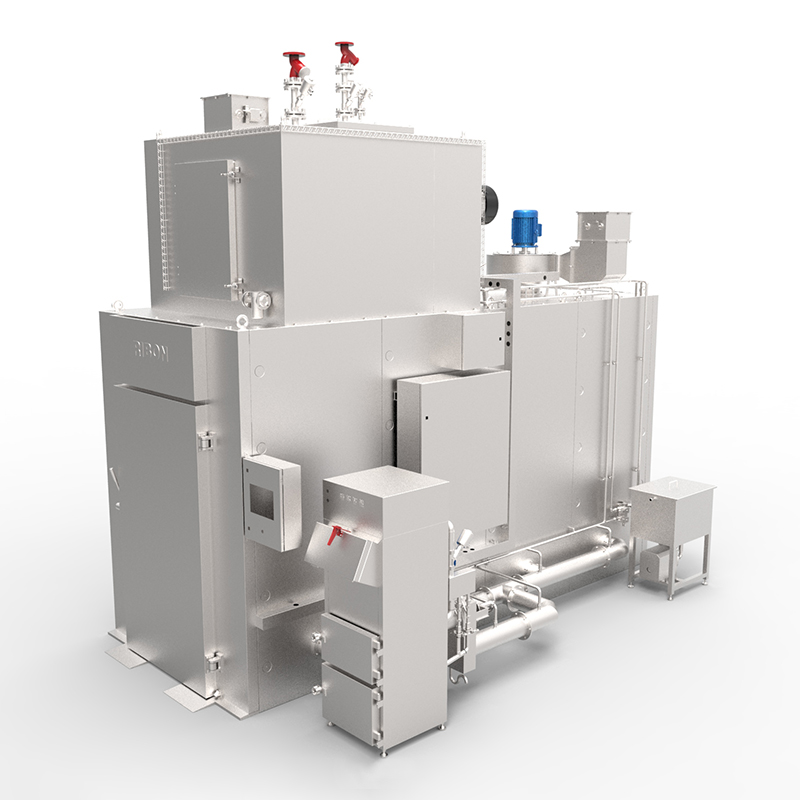
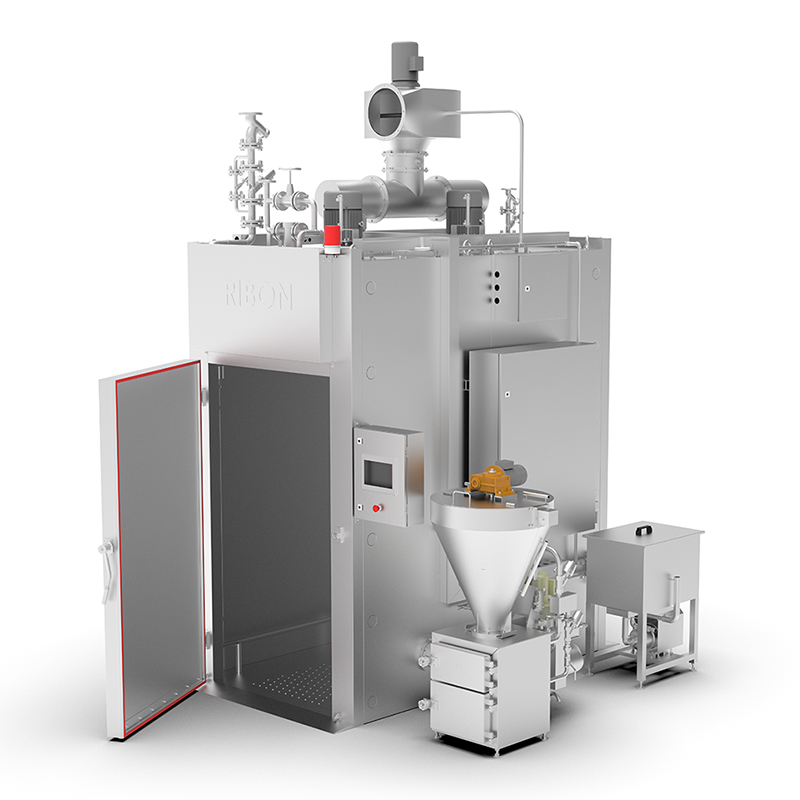
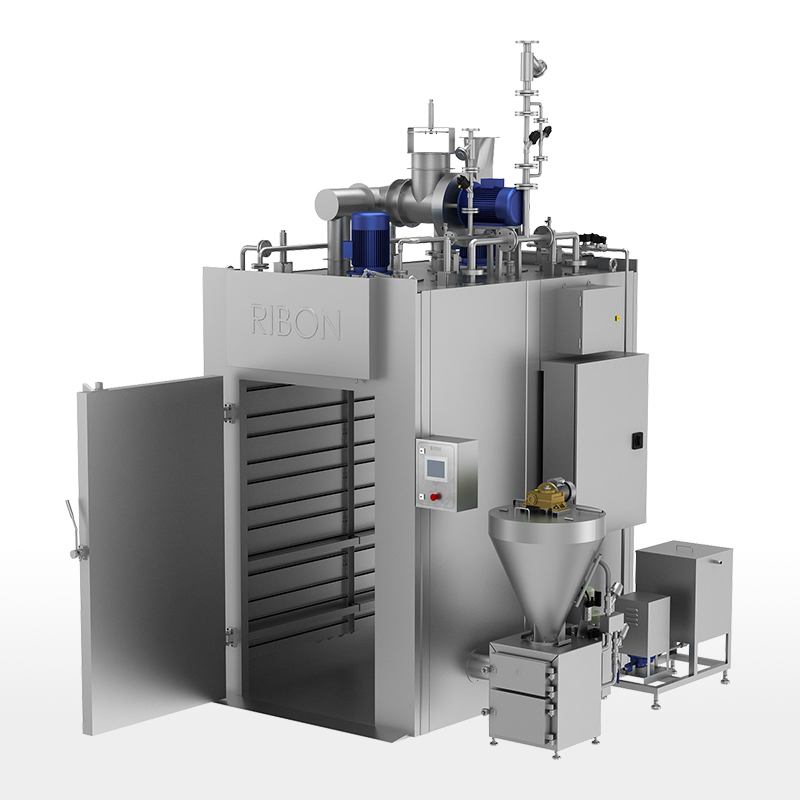
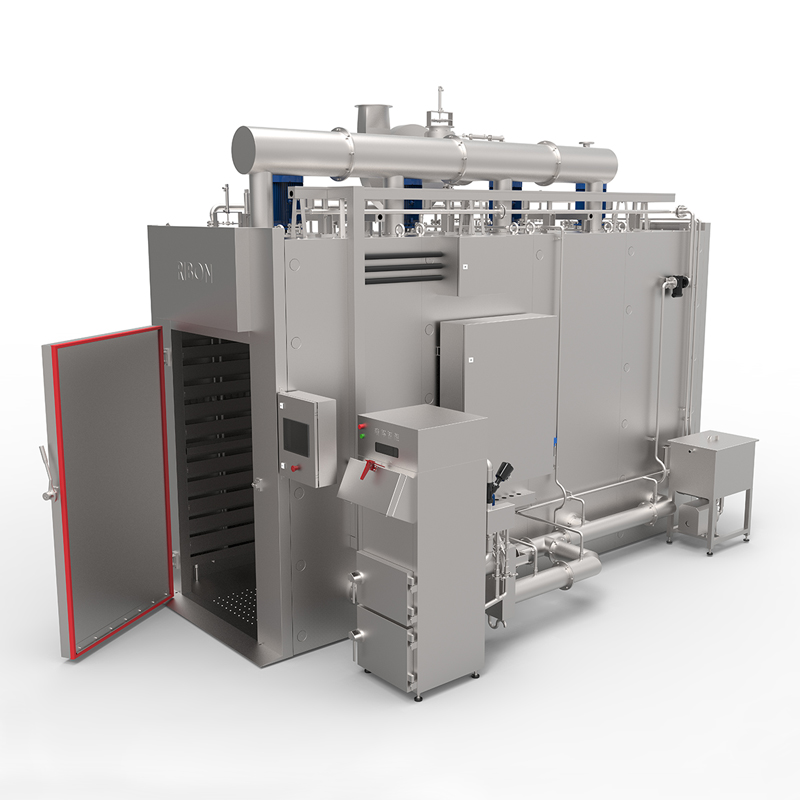
The smokehouse chamber is the core piece of smoking house equipment — it is the enclosed space where temperature, smoke, humidity, and airflow converge to process the product. Every other component in a smokehouse system exists to serve the chamber and control what happens inside it. Chamber selection sets the ceiling on production capacity, the range of products you can process, and the consistency of output you can achieve.
Commercial smokehouse chambers are constructed almost exclusively from stainless steel — typically AISI 304 grade for most food contact surfaces, with AISI 316 used in higher-corrosion-risk environments or for operations processing high-salt products like cured fish. Stainless steel is mandatory in professional meat smoking equipment because it resists the corrosive combination of smoke acids, salt, condensate, and high-temperature steam that cycles through the chamber during every production run. Mild steel chambers, found in some budget equipment, corrode rapidly under these conditions and become food safety liabilities within a relatively short service life.
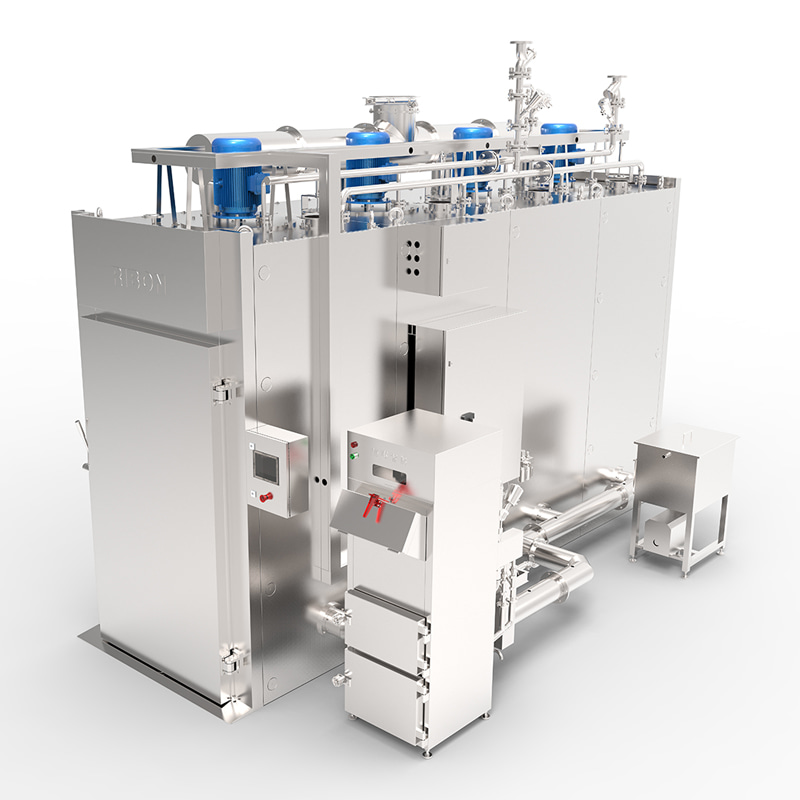
Chamber sizes for commercial smokehouse equipment are typically rated by trolley capacity — the number of standard smoke trolleys (also called smoke carts or smoking frames) that fit inside the chamber simultaneously. A single-trolley chamber handles small-batch artisan production. Two- to four-trolley chambers are the standard for mid-scale operations such as butcher shops, small charcuterie producers, and farm processors. Eight-trolley and larger chambers are industrial-scale installations used by meat processing plants and large food manufacturers. Matching chamber capacity to your realistic production throughput — not your aspirational maximum — prevents the common mistake of purchasing oversized equipment that runs inefficiently at low loads.
Chamber Insulation and Construction Quality
The wall construction of a professional smokehouse chamber uses mineral wool or polyurethane foam insulation panels sandwiched between inner and outer stainless steel skins, typically achieving 50mm to 100mm total wall thickness. Adequate insulation is critical for two reasons: it maintains stable internal temperatures without excessive energy consumption, and it prevents external surface temperatures from reaching levels that create burns or heat stress in the surrounding work environment. Chambers with inadequate insulation are identifiable by their inability to hold setpoint temperature when loaded with cold product, and by hot outer surfaces that indicate thermal bridging through the panel joints.
Door sealing is another construction detail worth examining closely when evaluating smokehouse chambers. Smoke is a highly penetrating medium — even small gaps around door seals allow smoke to escape into the work environment, creating both an air quality problem for workers and a production consistency problem since smoke loss from the chamber reduces the concentration available for product. High-quality smokehouse doors use multi-point locking mechanisms and silicone or EPDM compression seals that maintain contact across the full door perimeter. Double-door chambers, where product enters from one end and exits from the other, are preferred in continuous production environments because they support HACCP flow separation between raw and processed product.
Smoke Generators: Types, Fuel, and Output Control
The smoke generator is the component that produces the smoke introduced into the chamber. It is a distinct piece of smokehouse equipment from the chamber itself and is typically mounted externally, with smoke ducted into the chamber through an inlet port. Smoke generator selection affects flavor profile, smoke density, temperature contribution, and operational complexity more than any other single equipment decision in a smokehouse setup.
Friction Smoke Generators
Friction generators produce smoke by pressing a rotating disc or drum against a solid wood log or block under controlled pressure. The friction generates localized heat at the wood surface, causing pyrolysis — the thermal decomposition of wood into smoke compounds — without open combustion. Friction generators produce a dense, consistent smoke stream with very low particulate ash content compared to direct combustion methods. They are widely used in professional meat smoking equipment because they allow precise control of smoke output rate (by adjusting the rotational speed and applied pressure), produce consistent smoke chemistry regardless of wood moisture variation, and generate relatively cool smoke that doesn't add unwanted heat load to the chamber. Friction generators require solid wood billets as fuel — beech, oak, cherry, hickory, and alder are the most commonly used species for different product types.
Sawdust and Chip Smoke Generators
Sawdust smoke generators smolder fine wood particles in a controlled oxygen-limited environment to produce smoke through slow combustion. They are simpler in construction than friction generators, less expensive, and can use a wide variety of wood species in fine particle form. The smoke output is slightly less dense and consistent than friction generation, and the smoldering process produces more ash that requires periodic cleaning of the generator body and inlet ducting. Chip generators operate on a similar principle using coarser wood chip fuel, which smolders more slowly and is better suited to longer production cycles. Both sawdust and chip generators are appropriate for artisan and mid-scale commercial smokehouse operations and are the most common smoke generation method in entry-to-mid-range commercial smokehouse equipment packages.
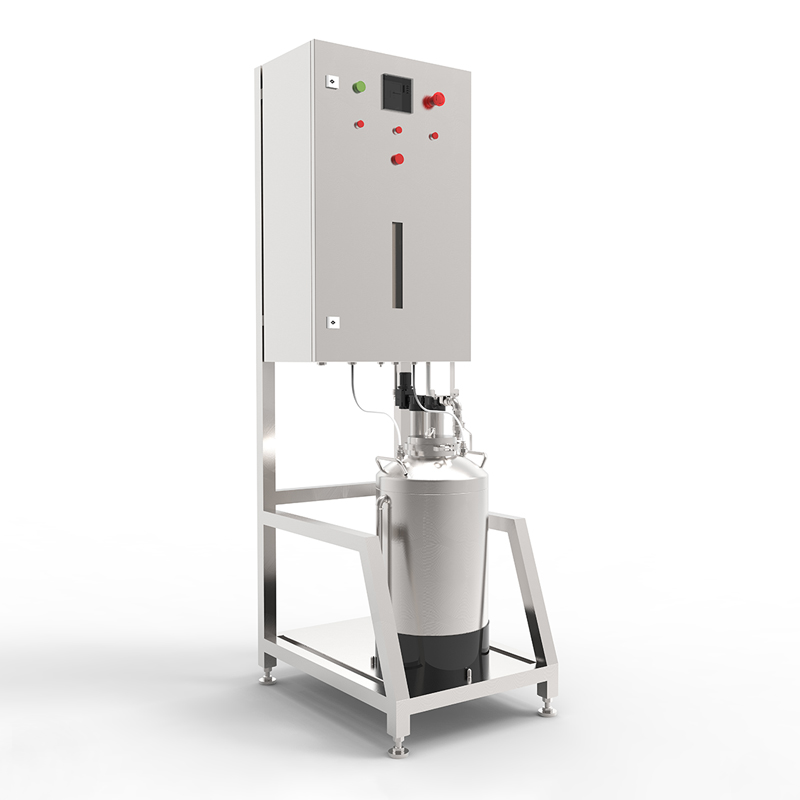
Liquid Smoke Injection Systems
Liquid smoke systems atomize a water-based smoke condensate solution and inject the aerosol directly into the chamber airstream, eliminating the need for a combustion or pyrolysis smoke generator entirely. Liquid smoke injection is used in high-speed industrial production where processing time must be minimized and flavor consistency across very large batches is paramount. The flavor profile of liquid smoke differs from natural wood smoke — it lacks some of the volatile aromatic compounds produced by fresh pyrolysis — but it provides exceptional batch-to-batch consistency and eliminates the fire risk associated with combustion-based generation. Liquid smoke systems are not appropriate for artisan or premium product positioning but are standard in industrial-scale smokehouse equipment installations processing high-volume commodity products.
Heating Systems in Commercial Smokehouse Equipment
Smokehouse processing involves multiple temperature phases — drying, smoking, cooking, and in some protocols, pasteurization — that require precise and responsive heating. The heating system in a professional smokehouse must deliver controlled temperature rise rates, stable setpoint maintenance under variable product loads, and rapid response to temperature deviation. Two main heating technologies are used in commercial smoke house machines: electric resistance heating and steam heating.
Electric Resistance Heating
Electric heating elements — typically Incoloy-sheathed resistance heaters — are the standard heating method in single-phase and three-phase commercial smokehouse chambers up to medium scale. Electric heating provides very precise temperature control, responds quickly to setpoint changes, and requires no external utility supply beyond the electrical connection. The heating elements are typically mounted in the air circulation pathway so that the forced airflow passes over them directly before being distributed through the chamber. Element wattage is sized to the chamber volume and the intended maximum temperature — most commercial smokehouse equipment operates up to 90°C to 100°C for standard meat processing, while some specialized units reach 120°C or higher for specific products. Electric heating is the practical choice for most artisan and mid-scale operations where steam infrastructure is not already available.
Steam Heating and Steam Injection
Steam-heated smokehouse chambers use steam coils or steam injection to heat the chamber interior. Steam heating delivers very even temperature distribution due to the high heat transfer coefficient of steam and the latent heat released during condensation. More importantly, steam injection is the primary method for controlling relative humidity inside the chamber — a critical process variable for products that require a specific moisture loss rate during smoking or a final cooking step at controlled humidity to prevent case hardening (the formation of a dry, impermeable surface layer that traps moisture inside the product). Steam-equipped smokehouse equipment is more complex to install and operate than electric-only units, requiring a boiler or steam supply line, condensate return, and steam control valves, but it is the correct choice for operations processing fermented sausages, whole muscle products, or any product where humidity control directly impacts product quality and yield.
Airflow and Ventilation Systems: Why They Matter More Than Most Operators Realize
Airflow is one of the most underappreciated variables in smokehouse processing, yet it directly determines temperature uniformity across the product load, drying rate, smoke penetration depth, and the consistency of color development on the product surface. Professional smokehouse equipment incorporates forced-air circulation systems specifically designed to deliver controlled, uniform airflow across every position in the loaded chamber.
Most commercial smokehouse chambers use centrifugal or axial fans mounted in a duct plenum above or at the rear of the chamber interior. The fan draws air from the chamber, passes it over the heating elements and through the smoke inlet, and re-distributes it through perforated baffles or nozzle arrays designed to create even velocity across the entire chamber cross-section. The critical performance specification is airflow uniformity — the maximum temperature difference between the hottest and coldest measurement points in a fully loaded chamber at setpoint. High-quality commercial smoke house machines achieve uniformity within ±2°C across the chamber. Budget equipment often shows variations of ±5°C to ±10°C, which translates directly into inconsistent product — some pieces undercooked, others overcooked, in the same batch.
Reversible Airflow Systems
Premium smokehouse equipment incorporates reversible airflow — the fan direction alternates at set intervals during the smoking cycle, so air flows from both directions through the product load over the course of processing. This eliminates the airflow shadow effect where products positioned downstream of dense loading consistently receive less airflow than those at the inlet side. Reversible airflow is particularly important in multi-trolley chambers processing large-diameter products such as whole hams or large sausage loops, where the sheer bulk of the product creates significant airflow resistance and directional bias. In chambers without reversible airflow, rotating trolley positions mid-cycle is the manual workaround — effective but operationally inconvenient.
Exhaust and Fresh Air Dampers
Controlled exhaust and fresh air intake dampers are essential components of a professional smokehouse ventilation system. During the drying phase, dampers are opened to allow moisture-laden air to exhaust from the chamber and be replaced with drier fresh air, accelerating surface moisture removal from the product. During the smoking phase, dampers are partially or fully closed to retain smoke concentration within the chamber. During cooking phases, damper positions are adjusted to control humidity by balancing moisture evaporation from the product against fresh air dilution. Automated damper control — either motorized with position feedback or pneumatically actuated — is standard on professional smokehouse equipment and allows damper position to be programmed as part of multi-step process recipes.
Smoke Trolleys, Hanging Systems, and Loading Equipment
The mechanical system for loading product into the smokehouse chamber is a practical but important part of the overall smoking house equipment package. Inefficient loading systems slow throughput, increase labor requirements, and can introduce product handling damage that affects yield and appearance.
Smoke Trolleys and Frames
Standard smoke trolleys are welded stainless steel frames on castors, designed to roll in and out of the smokehouse chamber on guide rails. The trolley carries multiple horizontal smoke sticks (also called smoking rods or hanging rods) — typically 25mm diameter stainless steel bars spanning the full trolley width — from which products are hung using hooks, loops of butcher's twine, or net casings. Standard trolley dimensions in European commercial smokehouse equipment are 1000mm wide × 1000mm deep × 2000mm tall, though dimensions vary between manufacturers. Trolley compatibility with the chamber guide rail system is critical — never mix trolley brands without confirming rail spacing matches, as a misfit trolley that derails inside a loaded chamber creates a serious operational problem.
Trolley spacing within the chamber should allow adequate airflow around the product load. Overloading trolleys by hanging products in contact with each other prevents smoke penetration and creates pale, under-colored contact zones on the product surface. As a practical guideline, products should be hung with a minimum of 30mm clearance between adjacent pieces, and smoke sticks should not be loaded so densely that the lower sticks are in the airflow shadow of the upper rows.
Flat Rack and Net Systems
Not all products are suited to hanging. Flat fish fillets, small sausage portions, burger patties, and delicate products that would deform or break under their own weight when hung require flat rack systems — stainless steel mesh shelving that mounts horizontally on the trolley frame instead of smoke sticks. Flat rack trolleys are a separate trolley configuration from hanging trolleys and are specified when the product range includes items processed in a lying-flat orientation. Some smokehouse operations maintain both trolley types and configure their chamber loading depending on the production run.
Trolley Washers
Smoke trolleys accumulate significant deposits of tar, dripped fat, smoke condensate, and protein residue during operation. In any production environment processing multiple batches per day, manual trolley cleaning is impractically time-consuming. Industrial trolley washers — cabinet-format or tunnel-format pressure wash machines designed to accept full-size smoke trolleys — are an important ancillary piece of smokehouse equipment for any operation running at commercial scale. They use hot water at 60°C to 80°C with alkaline detergent to remove carbonized deposits, and cycle times of 15 to 30 minutes per trolley. The investment in a trolley washer is quickly recovered in reduced labor time and improved hygiene compliance.
Control Systems and Process Automation in Modern Smokehouse Equipment
The control system is what separates a modern professional smokehouse from a basic heated enclosure with a smoke source. Automated process control allows complex multi-step smoking programs to run unattended, ensures critical food safety temperatures are reached and maintained with documented evidence, and enables consistent reproduction of the same process across batches, operators, and production shifts.
Entry-level commercial smokehouse equipment uses basic PID (proportional-integral-derivative) temperature controllers with manual smoke and damper adjustment. Mid-range and professional systems use programmable logic controllers (PLCs) with touchscreen human-machine interfaces (HMIs) that allow multi-step process programs — sequences of drying, smoking, cooking, and cooling steps — to be programmed, saved, and recalled by name. Each step in a program specifies setpoints for chamber temperature, smoke on/off, damper position, fan speed (in variable-speed systems), steam injection, and step duration or core temperature endpoint.
Core Temperature Probes
Core temperature probes — also called product temperature sensors or meat probes — are needle-type thermocouples or PT100 resistance temperature detectors inserted directly into the geometric center of the thickest product in the chamber load. The smokehouse control system monitors the core probe reading and can trigger step advancement or process termination based on core temperature reaching a defined endpoint (typically 72°C to 75°C for cooked sausage and ham products in most jurisdictions). Core temperature control is a HACCP critical control point for cooked meat products — any smokehouse equipment used for cooked product processing should have multiple core probe inputs (typically 2 to 6) to allow monitoring of multiple product positions simultaneously, providing evidence that the coldest point in the load reached the required temperature.
Data Logging and HACCP Documentation
Professional smokehouse control systems include continuous data logging of all process parameters — chamber temperature, core temperatures, smoke status, damper position, humidity where monitored — with timestamp recording throughout each production batch. This data log serves as the primary HACCP documentation record for cooked product batches, demonstrating that the required time-temperature profile was achieved for every batch released to market. Data should be exportable in a tamper-evident format (PDF reports, CSV files with checksum protection, or direct transfer to a production management system) and stored for the period required by local food safety regulations — typically a minimum of two years for shelf-stable products. Smokehouse equipment that does not provide documented data logging is increasingly a compliance liability for commercial producers operating under third-party food safety certification schemes.
Cooling and Showering Equipment for Post-Smoking Processing
In many smokehouse production protocols, rapid cooling of the product immediately after the cooking phase is a critical food safety and quality step. Without controlled cooling, cooked product passes slowly through the temperature range of 55°C to 20°C — the zone of most rapid microbial growth — increasing the risk of post-process contamination developing before the product reaches refrigerated storage. Cooling also arrests the cooking process at the intended endpoint, preventing overcooking from residual heat in the product mass.
Cold water shower systems are the standard cooling method integrated into professional smokehouse equipment. The chamber is fitted with overhead spray nozzles connected to cold water supply, and after the cooking cycle completes, cold water is sprayed over the product for a defined period — typically reducing the product surface temperature from 70°C+ to below 30°C within 30 to 60 minutes depending on product size. The shower water drains through a floor drain in the chamber base. Shower systems require the chamber floor to have an adequate drainage gradient and drain capacity to handle the volume of water used during a shower cycle, which can be substantial for large chamber installations.
For operations where water use is constrained or where very rapid cooling is required, blast chilling tunnels or spiral blast chillers positioned immediately after the smokehouse chamber provide forced cold-air cooling as an alternative or supplement to water showering. These are separate pieces of equipment from the smokehouse itself but are important ancillary components in a complete smokehouse production line layout.
Comparing Key Smokehouse Equipment Specifications: What to Look for When Buying
When evaluating commercial smokehouse equipment from different manufacturers, the following specification categories are the most meaningful for comparing quality and suitability. Request these specifications in writing from any supplier before purchase — the inability or unwillingness to provide them is a meaningful signal about equipment quality and the supplier's technical competence.
| Specification | Entry-Level Equipment | Mid-Range Commercial | Professional / Industrial |
| Chamber material | Mild steel or thin SS | AISI 304 stainless | AISI 304 / 316 stainless |
| Temperature uniformity | ±5–10°C | ±3–5°C | ±1–2°C |
| Smoke generator type | Basic chip/sawdust | Sawdust / friction | Friction / controlled sawdust |
| Humidity control | None or manual | Basic steam injection | Full steam + sensor feedback |
| Airflow control | Fixed speed fan | Fixed or 2-speed fan | Variable speed + reversible |
| Process control | Manual / basic PID | Programmable multi-step | Full PLC + HMI + data logging |
| Core temperature probes | None or 1 | 1–2 | 2–6 with HACCP logging |
| Integrated shower system | No | Optional | Standard or available |
Ancillary Smokehouse Equipment Worth Including in Your Setup Plan
Beyond the core smoking chamber and its integrated systems, a complete smokehouse operation relies on a range of ancillary equipment that is easy to overlook in initial planning but becomes critical to daily operational efficiency. Failing to budget for these items often results in operational bottlenecks and improvised workarounds that reduce throughput and hygiene standards.
- Smoke stick loading tables: Stainless steel work tables at the correct height for loading products onto smoke sticks before trolley loading. Purpose-built loading tables with smoke stick support brackets allow efficient hanging without the sticks rolling or the product being set down on contaminating surfaces.
- Trolley transfer rails and floor channels: Recessed floor rail channels connecting the smokehouse chamber door threshold to the production floor allow loaded trolleys to be rolled smoothly from the work area into the chamber without lifting. This is a significant ergonomic and efficiency feature that is often overlooked in facility planning until the first time a team attempts to maneuver a fully loaded 200kg trolley over an uneven floor threshold.
- Smokehouse maintenance tools: Internal chamber cleaning requires pressure washers rated for food processing environments, alkaline foaming detergents certified for smoke residue removal, and long-handled brushes for reaching the chamber ceiling and rear baffle areas. Dedicated cleaning equipment maintained in proximity to the smokehouse reduces the time barrier to regular cleaning and supports consistent hygiene practice.
- Spare smoke generator components: Friction pads, sawdust feed auger components, and ignition elements for smoke generators should be held in on-site spares inventory. Smoke generator component failure during a production batch can result in product being held at smoking temperatures without adequate smoke application, disrupting the process program and potentially affecting product quality. The lead time for specialist smokehouse spare parts from overseas manufacturers can be several weeks, making local spares holding essential for continuous operation.
- Calibration equipment: Reference thermometers and calibration check equipment for validating smokehouse chamber temperature sensors and core probes are required under most third-party food safety certification schemes. Temperature sensor calibration verification should be performed at minimum annually, and reference thermometers should themselves be traceable to national measurement standards.