

 English
 русский
 Español
 عربى

Slaughtering equipment is often pictured as a row of stainless steel machines, but the real work happens in the spaces between them. Animals have to move calmly, operators need safe access, carcasses must travel without unnecessary lifting, and every surface has to stand up to daily cleaning. When those details are right, the line feels quiet and predictable. When they are wrong, even good machines create bottlenecks.
We design and build slaughtering equipment with that whole-line view in mind. The goal is not to add the longest equipment list. It is to create a sequence that fits your species, throughput, building, and hygiene routine.
Content
- 1 What Slaughtering Equipment Really Covers
- 2 From Restraint to Chilling: The Core Stages
- 3 Cattle and Pig Lines Are Not Interchangeable
- 4 Rail Systems: The Quiet Backbone
- 5 Hygiene and By-Product Handling
- 6 Specifying Equipment Without Overbuying
- 7 Connecting Slaughter to Further Processing
- 8 Working With an Experienced Equipment Partner
What Slaughtering Equipment Really Covers
In practical terms, slaughtering equipment covers restraint and stunning, bleeding, dressing, evisceration, splitting, inspection, chilling, and the rail and transfer systems that connect those stages. Cattle lines add hide removal and hide handling. Pig lines add scalding, dehairing, singeing, and polishing. Support equipment—vacuum blood collection, lifting platforms, wash basins, knife sterilizers, and crate handling—is less visible but just as important to daily performance.
A common mistake is to buy stage by stage without a line plan. A skin puller that saves time can still cause problems if rail spacing does not match its cycle. A high-capacity saw can sit idle if the deboning tables are not supplied evenly. Good slaughtering equipment selection starts with flow, not with a single machine.
From Restraint to Chilling: The Core Stages
Every plant is different, but most lines follow the same broad logic. The table below is a practical way to review the main stages and the decisions behind them.
| Stage | Typical equipment | Planning focus |
|---|---|---|
| Receiving and restraint | Restraint systems, ritual killing box, lifting platform | Animal size, calm handling, operator access, local rules |
| Bleeding | Bleed shackle return, vacuum blood collection | Hygiene, blood containment, rail timing |
| Dressing and skinning | Skin puller, transferring system | Hide quality, carcass size, ergonomics |
| Rail movement | Delivery arm, electric rail, pneumatic rail | Throughput, route, future expansion |
| Cutting and deboning | Circular blade saws, crate spinning, stack and unstack units, crate washer | Product mix, box flow, knife hygiene |
| Hygiene support | Hand wash basin, knife sterilizer, crate washer | Cleaning routine, water, drainage, chemical compatibility |
Use the table as a checklist, not a fixed template. In a real project, rail height, hook spacing, floor drains, column positions, and maintenance access often shape the layout as much as the machines themselves.
Cattle and Pig Lines Are Not Interchangeable
On a cattle line, the lifting platform, ritual killing box, skin puller, bleed shackle return, vacuum blood collection device, and transferring system set the rhythm. The ritual box supports a controlled process where religious or welfare requirements call for it. The skin puller affects hide value and carcass cleanliness. Get the rail height and transfer timing right, and operators do less reaching while the carcass stays cleaner.
Pig lines have a different sequence. Scalding, dehairing, singeing, and polishing change the way carcasses are handled, and the rail system has to cope with different weights and line speeds. A pig layout copied from a cattle line usually shows up in awkward transfers, extra manual handling, and inconsistent cleaning access. The equipment may look similar at a glance; the process logic is not.
Rail Systems: The Quiet Backbone
Rail systems carry the line. A delivery arm can remove a difficult manual transfer. Electric and pneumatic rail systems move carcasses at controlled speed and route them through switches without back-tracking. The design question is not simply which rail type is best. It is which route keeps flow one-way, avoids cross-contamination, and gives maintenance teams safe access.
Pay attention to rail height, hook spacing, switch positions, and what happens during a stoppage. A line that cannot be cleared safely or restarted smoothly can turn a small fault into a long wash-down. That is why rail planning belongs early in the project, not at the end of the equipment list.
Hygiene and By-Product Handling
Hygiene equipment should sit where people actually work. Hand wash basins and knife sterilizers need to be within reach without blocking movement. Vacuum blood collection reduces splashing and keeps the bleed area cleaner. Crate spinning machines, stack and unstack units, and crate washers keep containers moving without repeated lifting of wet, heavy boxes.
These details matter even more when the slaughter line connects to cutting and deboning solutions. If carcasses reach the saw at uneven intervals, the deboning team either waits or rushes. Neither is good for yield or morale. A well-planned line delivers a steady supply, and the cutting room can work at a stable pace.
Specifying Equipment Without Overbuying
It is easy to be attracted to the largest capacity or the most automated option. A better approach is to specify what the plant can actually support. Consider:
- Real throughput: carcasses per hour, shifts per day, and seasonal peaks, rather than brochure maximums.
- Species and size range: cattle and pigs need different handling, and carcass weights can vary widely.
- Building constraints: rail crossings, column positions, doorways, drainage, ceiling height, and maintenance access.
- Labor reality: automation should remove repetitive lifting or unsafe movement, not add a new failure point.
- Cleaning routine: smooth surfaces, drainable areas, and accessible components matter more than a long feature list.
- Future changes: new cuts, packaging formats, or a second shift can change the line later.
- Local requirements: inspection, animal welfare, and hygiene rules should be confirmed before the layout is fixed.
This is where experience earns its place. A supplier who has seen different plants will ask about the awkward corners—the wash-down route, the spare parts store, the way a shift change affects the line.
Connecting Slaughter to Further Processing
Slaughtering equipment is only the front half of a meat plant. After chilling, carcasses move into cutting, deboning, marination, smoking, cooking, and packaging. When these areas are planned together, the whole plant benefits. A shorter rail route reduces travel. A sensible crate flow keeps the deboning room supplied. Temperature control between stages protects quality.
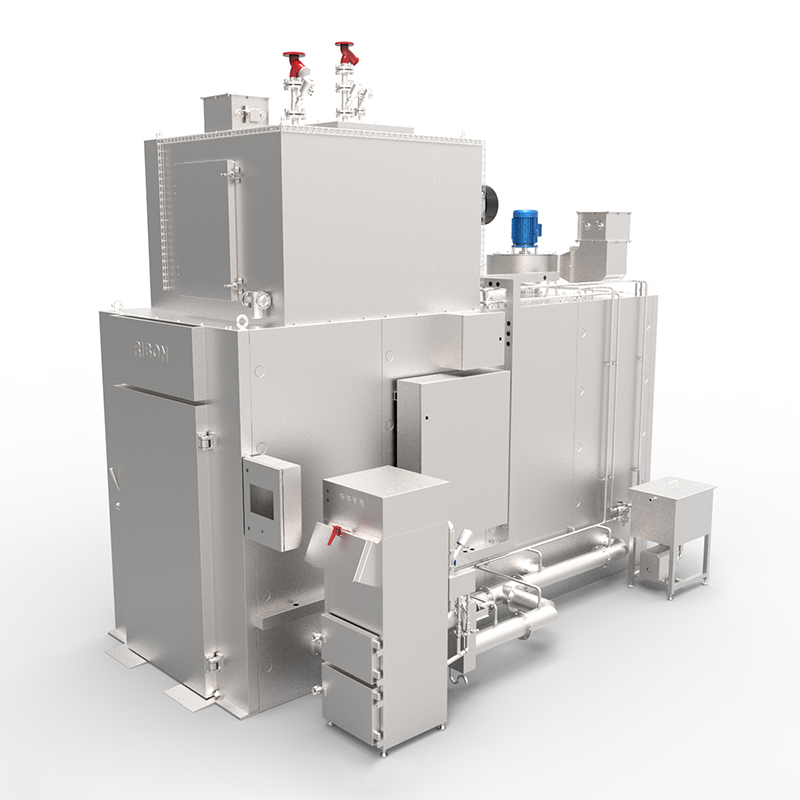
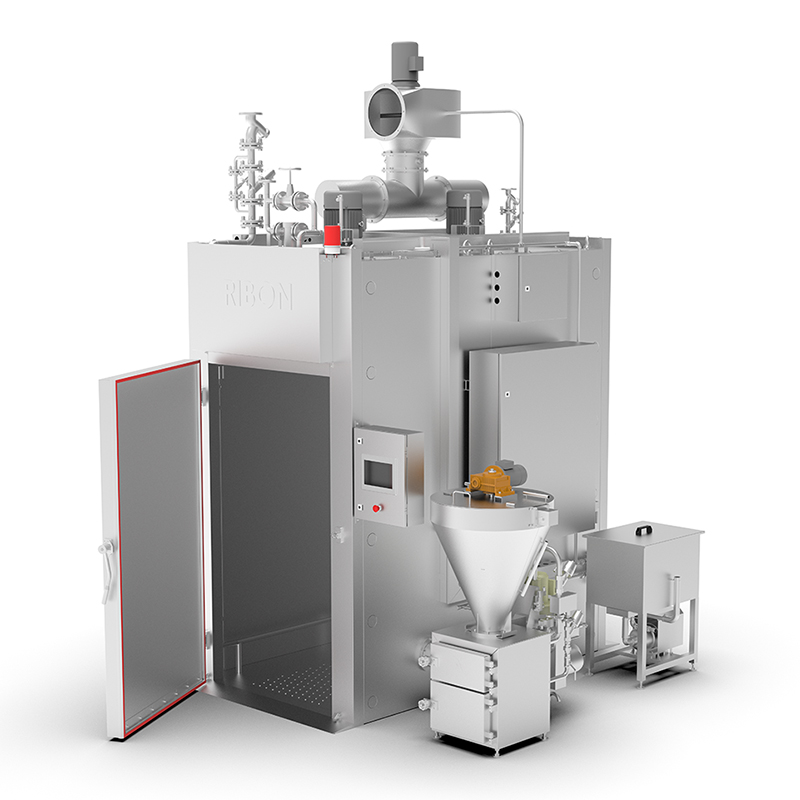
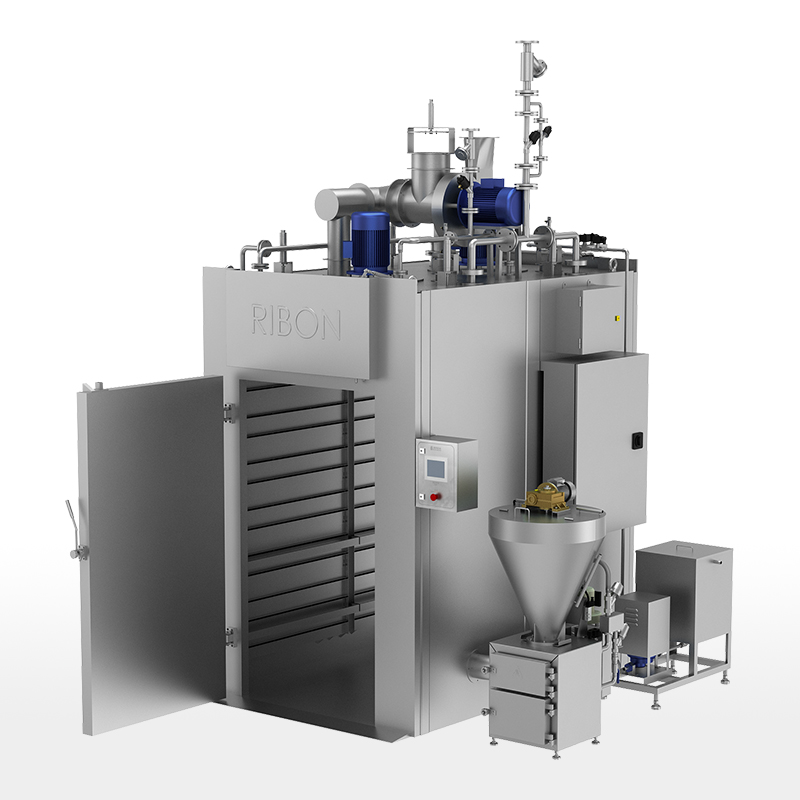
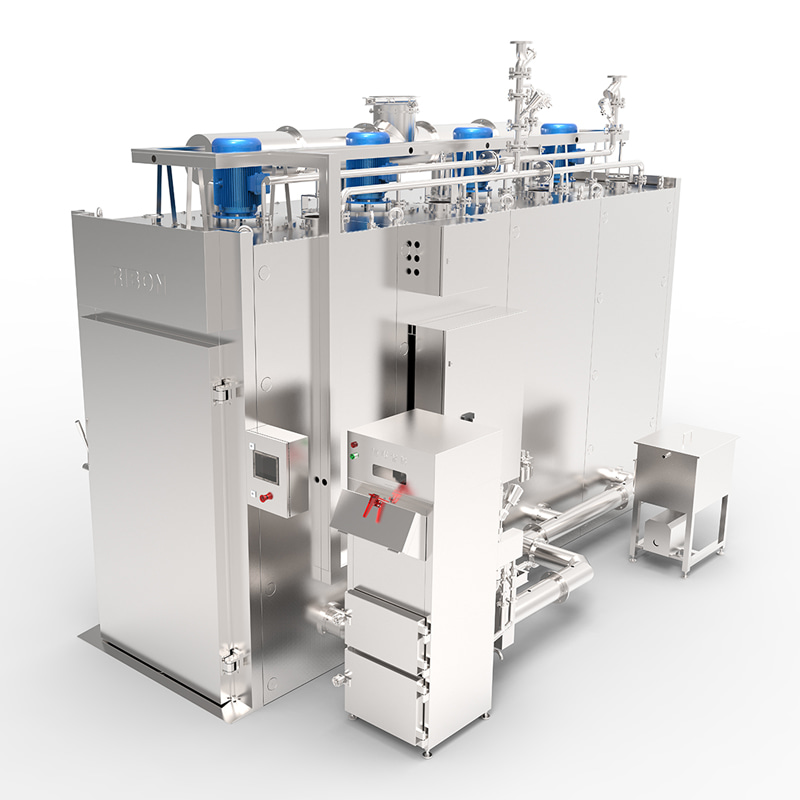
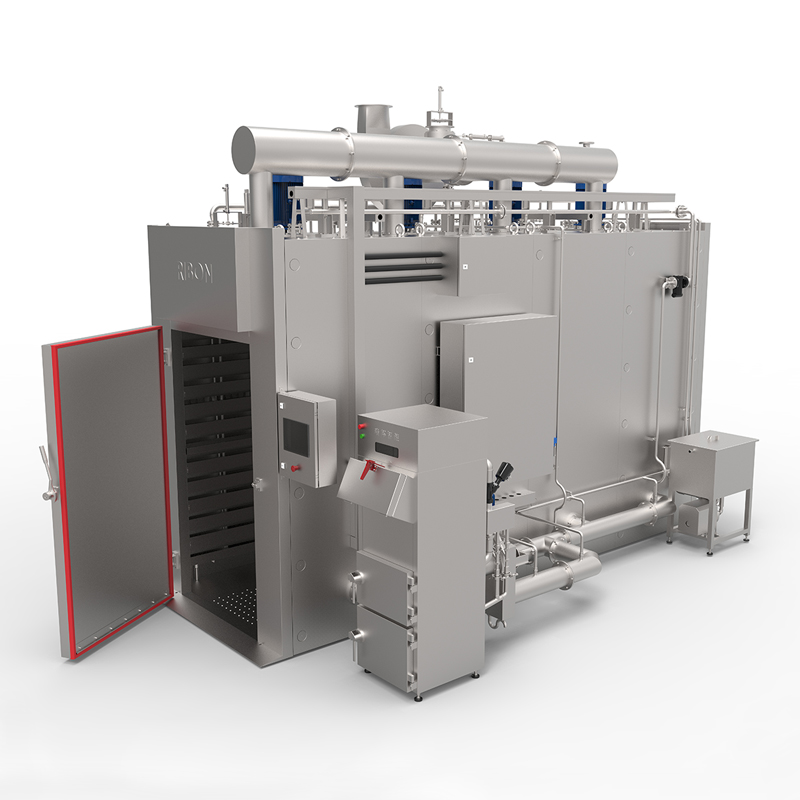
Our vacuum tumblers and smokehouses sit downstream of the slaughter line, but they are selected with the same questions: batch size, product mix, cleaning, and how the line behaves on a busy day. A slaughter line that is fast but cannot feed a stable cutting schedule is not efficient. A slightly slower line with reliable flow often wins.
Working With an Experienced Equipment Partner
Ribon has been building meat processing machinery since 2003, with a focus on slaughtering, cutting and deboning, vacuum tumbling, and smokehouse equipment. Our central test center lets customers try processes on a complete equipment set before committing to a layout. Our team works with customers in different export markets, and we know that local power, hygiene, and space conditions can change a layout.
We would rather ask a few more questions at the start than send a machine that does not fit the line. If you are planning a new line or replacing a bottleneck, bring a simple layout, carcass size range, target throughput, and product mix. That is enough to start a useful conversation about slaughtering equipment that works in the real world.