

 English
 русский
 Español
 عربى

Walk into a busy red-meat plant and you will hear a version of the same question: how do we get more clean meat off the bone without sacrificing speed, hygiene, or the people doing the work? The answer is rarely one machine. It is usually a combination of the right cutting tool, a sensible line layout, and operators who understand how meat behaves when it meets a blade.
We have been building meat processing equipment since 2003, and we have seen deboning areas that run smoothly and others that create bottlenecks a few steps downstream. This guide shares what we have learned about meat deboning machines, where they fit, and how to choose one without overbuying or underestimating the job.
Content
- 1 What a meat deboning machine really does
- 2 The main types we see in red-meat plants
- 3 Where deboning fits in a complete cutting line
- 4 Matching the machine to your species and product mix
- 5 Yield, safety, and hygiene
- 6 How to evaluate a deboning machine before you buy
- 7 Maintenance and operator training
What a meat deboning machine really does
A meat deboning machine is not a single category. In practice, the term covers floor saws, bench saws, mechanical separators, and automated systems that help remove meat from bone or trim meat from skeletal frames. Some machines are designed for primary breaking of cattle and pig quarters, while others are used for smaller cuts, trimmings, or further processing.
The common goal is consistent separation. A good deboning setup protects yield, keeps bone fragments out of the product stream, and reduces the physical strain on workers who would otherwise use knives for hours. The right machine also fits the product specification: a saw that works well for splitting a carcass may not be the best choice for precise primal trimming, and an automated separator may be unnecessary for a small plant with a changing product mix.
The main types we see in red-meat plants
Deboning equipment tends to fall into three broad groups. Each has a place, and many plants use more than one.
Saw-based deboning and cutting
Circular blade saws are the workhorses of many cutting rooms. Table-type circular blade saws are often used for bench work, while vertical-type circular blade saws handle larger pieces and repeated splitting. Blade guards, stable tables, and easy cleaning matter as much as motor power. If the saw is hard to clean or the blade change is awkward, operators will avoid proper sanitation routines.
Mechanical separation and automated systems
Mechanical deboners use pressure or other mechanical action to separate meat from bone, often for trimmings and frames that would be difficult to handle by knife. Automated deboning lines add conveyors, positioning equipment, and controls to reduce handling. These systems can improve consistency, but they need a stable product mix and a clear maintenance plan.
| Approach | Typical fit | What to watch |
|---|---|---|
| Manual knives and ergonomic aids | Small batches, intricate cuts, changing specifications | Operator fatigue, knife control, training, and sanitation |
| Table-type or vertical circular blade saws | Breaking, splitting, and routine cutting room work | Blade guarding, table stability, cleaning access, and blade condition |
| Mechanical and automated deboning systems | Higher volume, repetitive separation, consistent product streams | Product mix, yield testing, maintenance, and operator training |
For bench work and smaller primals, a sturdy table-type circular blade saw is often the first step. Our 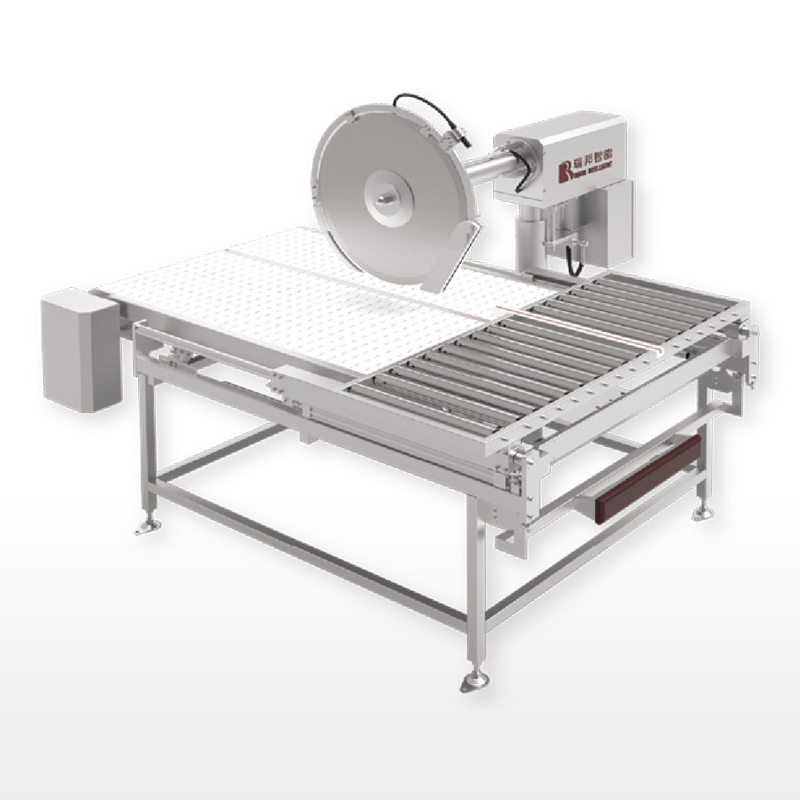 Table Type Circular Blade SawA sturdy table-type saw for daily cutting room use, with pneumatic roller table, hydraulic lift, laser positioning and 180-degree swiveling blade for cleaning.View Product → is designed for that kind of daily cutting room use, with attention to safe blade access and cleaning.
Where deboning fits in a complete cutting line
Deboning does not happen in isolation. In a well-planned plant, carcasses move from the rail to the cutting area, then through splitting, trimming, deboning, and packing. Crates or totes carry meat between stations, and washing equipment keeps containers and tools in condition. If any of these links is weak, the deboning station becomes a storage area instead of a production area.
That is why we look at the whole flow before recommending a single machine. Our cutting and deboning solutions include saws, crate handling equipment, hand-wash basins, and knife sterilizers so the line can keep moving without hygiene shortcuts. A deboning machine is only as effective as the space, lighting, and workflow around it.
One practical check is the distance between the rail, the cutting table, and the crate washer. If operators must walk through a wet or crowded area to reach a sterilizer, they will delay tool cleaning. Small layout changes often improve results more than a larger motor or a higher-speed blade.
Matching the machine to your species and product mix
Cattle and pigs bring different challenges to the cutting room. Cattle quarters are heavier, and the working height and transfer method matter for both safety and accuracy. Pig cutting often involves smaller pieces and a faster rhythm. A machine that suits one species may feel slow or awkward with the other.
For cattle, we often start with the break saw and the rail layout rather than the deboning bench alone. Our 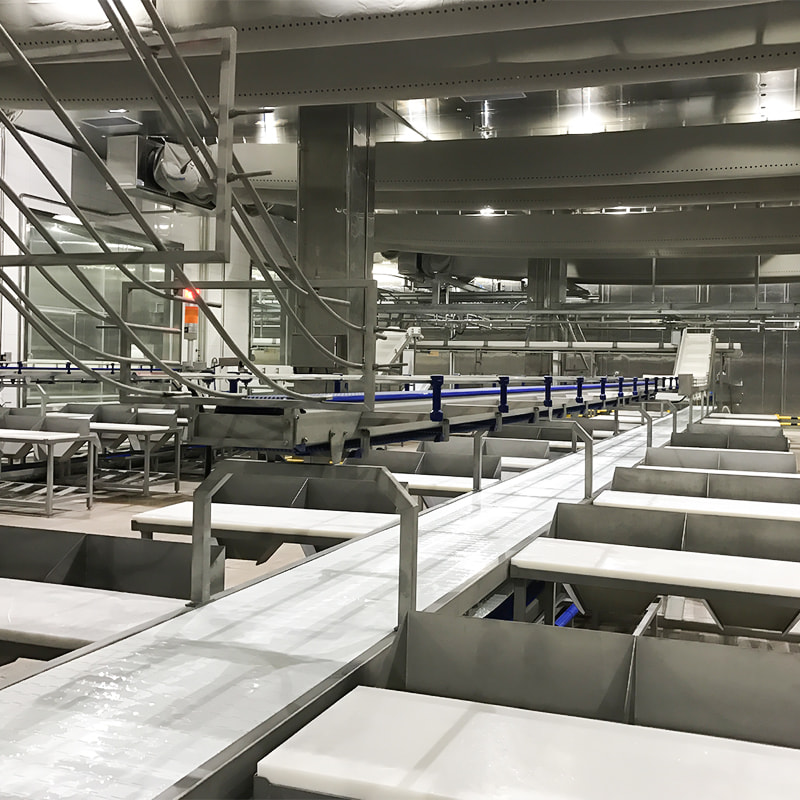 Cattle Cutting and Deboning SolutionTurnkey cattle processing solution covering layout design, manufacture, installation and commissioning, with deboning, trimming and packaging areas for meat plants.View Product → brings together the saws, transfer equipment, and hygiene stations that support a cattle cutting room. The goal is not to add more equipment, but to reduce unnecessary handling between steps.
For pig processing, the cutting room may need a different balance of bench saws, crates, and operator stations. Our 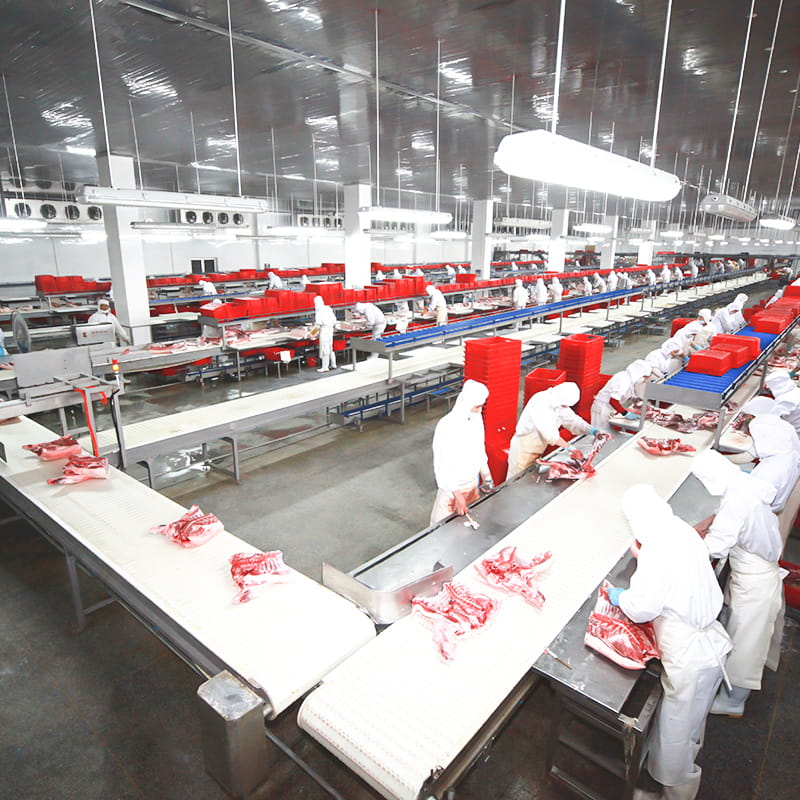 Pig Cutting and Deboning SolutionTurnkey pig processing solution with pre-cutting, cutting and deboning, and packaging lines, including conveyors, crate handling and cleaning equipment.View Product → is arranged around that faster, smaller-piece workflow. If your product mix changes by season, choose equipment that can adapt without a full rebuild.
Product temperature is another factor. Meat that is too warm can smear and tear; meat that is too cold can chip or dull blades faster. The best deboning result usually comes from a controlled chill and a blade that is matched to the cut, not from pushing the machine harder.
Yield, safety, and hygiene
Yield is often the first number buyers ask about, but it should not be the only one. A machine that recovers a little more meat but creates bone dust, heat, or difficult cleaning can cost more in rework and downtime. Ask for a trial with your own product and measure the full result: usable meat, bone quality, trim appearance, and the time needed to clean the machine at the end of the shift.
- Check blade guarding and emergency stop placement before comparing motors.
- Look for smooth surfaces and accessible areas around blades, belts, and guards.
- Confirm that hand-wash and knife-sterilizing stations are close to the deboning bench.
- Test how the machine handles different sizes and temperatures of product.
- Ask how bone chips and scraps are contained and removed.
Hygiene is a line-wide habit, not a single feature. A crate washer, a knife sterilizer, and a hand-wash basin in the right place do more for food safety than a costly add-on that operators rarely use. We prefer to design the deboning area around the people and the cleaning routine, then select the machine that fits.
How to evaluate a deboning machine before you buy
Before you compare quotes, write down the product you will run, the cuts you need, and the output you expect per shift. Then ask every supplier to test against the same brief. Our article on choosing the right meat deboning machine covers this in more detail, but the short version is simple: do not buy from a brochure alone.
- Define the species, cut size, temperature range, and hourly target.
- Run a yield test with your own product and weigh the usable meat.
- Check blade change, adjustment, and cleaning time with the operators who will do the work.
- Confirm spare parts availability and the response time for service.
- Review the electrical, guarding, and washdown requirements for your site.
- Ask for training and a written start-up checklist, not just a manual.
We keep a central test center with a full set of meat processing equipment so customers can try a process before committing to a line. That kind of trial is especially useful when a plant is moving from manual knife work to a saw-based or automated deboning setup.
Maintenance and operator training
Most deboning machines are mechanically simple, but they still need a routine. Blades should be checked for dullness and damage at the start of each shift. Guards and stops should be tested. Belts, bearings, and motors should be inspected on a schedule that matches the plant's running hours. A sharp blade is safer than a dull one because the operator does not need to force the product.
Training should cover more than start and stop. Operators need to know how to adjust the machine for different cuts, how to recognize a worn blade, and when to stop and call maintenance. Supervisors should also watch for crowding around the deboning bench. A well-designed line gives each person enough space to work without reaching across a blade or waiting for a crate.
Finally, keep a simple log. Blade changes, cleaning checks, and breakdowns tell you more about the real cost of a machine than the purchase price alone. A machine that runs quietly for years is usually one that was matched to the job and maintained with care.
Choosing a meat deboning machine is a practical decision, not a popularity contest. Start with your product, your people, and your line layout. Then choose the saw or system that makes the work cleaner, safer, and more consistent. If you are planning a new cutting room or replacing an aging station, we are glad to walk through the options with you and help you test them against your own product.