

 English
 русский
 Español
 عربى
عربى
Content
- 1 What Is a Meat Marinade Tumbler?
- 2 How a Meat Tumbler Marinator Actually Works
- 3 Marinade Tumbler vs. Traditional Marinating: A Direct Comparison
- 4 What Types of Meat Work Best
- 5 Key Features to Look for When Choosing a Marinade Tumbler
- 6 Tips for Getting the Best Results
- 7 Home Use vs. Commercial Use: Which Model Do You Need?
- 8 Cleaning and Maintenance
What Is a Meat Marinade Tumbler?
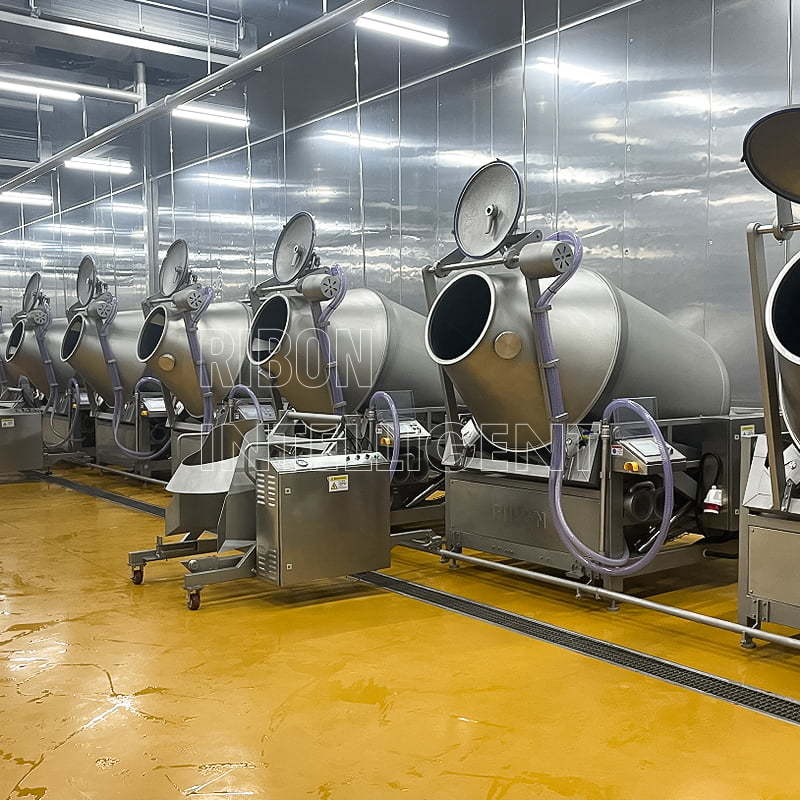
A meat marinade tumbler is a kitchen or commercial device designed to speed up and improve the marinating process. Instead of letting meat sit in a bowl or bag for hours, the tumbler continuously rotates and tumbles the meat inside a sealed drum, working the marinade deep into the muscle fibers in a fraction of the time. Most models also apply vacuum pressure to open up the meat's pores, allowing the seasoning to penetrate more thoroughly. The result is more flavorful, more tender meat — in as little as 15 to 30 minutes instead of overnight.
These devices are used across a wide range of settings: backyard BBQ enthusiasts, home cooks who meal prep in bulk, food trucks, butcher shops, and large-scale meat processing operations all rely on marinade tumblers to produce consistent, well-seasoned results efficiently.
How a Meat Tumbler Marinator Actually Works
The mechanics behind a meat marinade tumbler are straightforward but effective. The meat and marinade are loaded into a rotating drum. As the drum turns, the meat is repeatedly lifted and dropped, creating a gentle massaging and tumbling action that physically breaks down surface proteins and connective tissue. This mechanical action alone accelerates absorption significantly compared to passive soaking.
In vacuum marinade tumbler models, a pump removes air from the drum before or during rotation. This reduced-pressure environment causes the meat's muscle fibers to expand slightly, creating channels that draw the marinade inward rather than just coating the surface. When the vacuum is released, the fibers contract again, locking the flavor inside. This two-stage process — vacuum expansion followed by mechanical tumbling — is why vacuum models consistently outperform standard tumblers in both penetration depth and flavor intensity.
Electric meat marinade tumblers automate the rotation cycle entirely. Most allow you to set tumble duration, speed, and rest intervals, so you can load the machine and walk away. Some models include a timer that alternates between tumbling and resting phases, which gives the marinade time to settle into the fibers between cycles.
Marinade Tumbler vs. Traditional Marinating: A Direct Comparison
Most people who try a marinade tumbler for meat don't go back to traditional methods. The differences are significant across every dimension that matters — time, penetration, texture, and consistency.
| Factor | Traditional Marinating | Meat Marinade Tumbler |
| Time Required | 4–24 hours | 15–60 minutes |
| Marinade Penetration | Surface level only | Deep into muscle fibers |
| Texture Improvement | Minimal | Noticeably more tender |
| Consistency | Uneven, depends on flipping | Uniform across all pieces |
| Effort Required | Manual monitoring needed | Set and walk away |
| Suitable for Bulk | Difficult to scale | Designed for volume |
The time savings alone make a compelling case. If you're prepping a large batch of chicken thighs, pork shoulder, or beef brisket, waiting 12 hours is a planning constraint that a tumbler eliminates entirely. For commercial operations, that constraint is the difference between a flexible prep schedule and a rigid one.
What Types of Meat Work Best
A meat marinade tumbler is versatile enough to handle nearly any protein, but results vary depending on the cut and density of the meat. Here's how different types perform:
- Chicken (whole pieces, thighs, breasts): One of the best candidates. Chicken absorbs marinade quickly, and the tumbling action significantly improves tenderness, especially in breast meat, which tends to dry out when cooked.
- Pork (chops, shoulder, ribs): Responds very well. The mechanical action helps break down tougher connective tissue in shoulder cuts, and pork takes on seasoning flavor more intensely after tumbling.
- Beef (steak, brisket, short ribs): Denser cuts benefit most from vacuum tumbling. Thinner steaks tumble well at shorter cycles; brisket and short ribs may need 45–60 minutes for full effect.
- Seafood (shrimp, fish fillets): Use caution — seafood is delicate. Short tumble cycles at low speed (10–15 minutes, no vacuum) are recommended to avoid breaking down the texture too aggressively.
- Vegetables and tofu: Many users apply the same technique for plant-based proteins and firm vegetables like mushrooms, zucchini, or eggplant — particularly useful for grilling prep.
Key Features to Look for When Choosing a Marinade Tumbler
Not all meat marinade tumblers are built the same. The right choice depends on your volume, intended use, and how much control you need over the marinating process.
Drum Capacity
Home models typically range from 3 to 10 liters, suitable for 1–3 kg of meat per batch. Commercial and semi-commercial units start at 20 liters and go well beyond 100 liters for industrial applications. Don't overload the drum — leaving 30–40% of the volume empty is important for the tumbling action to work properly.
Vacuum Function
A built-in vacuum pump is the single most impactful feature in a marinade tumbler for meat. It dramatically reduces marinating time and improves penetration depth compared to non-vacuum models. If flavor intensity and tenderness are priorities, a vacuum marinade tumbler is worth the additional cost.
Speed and Timer Controls
Adjustable rotation speed matters — delicate proteins like fish need a slower, gentler cycle than dense beef cuts. A programmable timer with work/rest interval settings gives you the flexibility to fine-tune the process for different proteins without babysitting the machine.
Drum Material
Food-grade stainless steel is the preferred material for commercial use — durable, easy to clean, and resistant to acidic marinades. For home use, BPA-free food-safe plastic drums are common and practical. Avoid drums with internal seams or crevices that trap marinade residue and are difficult to sanitize.
Noise Level
Electric meat marinade tumblers vary widely in noise output. Home units run quieter; industrial models can be loud enough to require placement away from prep areas. Check product specs or reviews for noise ratings if this is a concern for your setup.
Tips for Getting the Best Results
Owning a meat tumbler marinator is only part of the equation. How you use it determines the quality of the output.
- Score thick cuts before tumbling. Light surface scoring on thick steaks or pork shoulder allows the marinade to reach deeper layers faster, especially when used in combination with vacuum tumbling.
- Keep the meat cold throughout. Tumbling generates some friction heat. Keep the meat at or below 4°C (40°F) during the process — especially important for food safety during longer cycles.
- Don't over-marinate. More time in the tumbler is not always better. Over-tumbling, particularly with acidic marinades (citrus, vinegar), can break down protein structure to the point where texture becomes mushy rather than tender.
- Use the right marinade-to-meat ratio. A general guideline is 10–15% marinade by weight of the meat. Too little and coverage is uneven; too much and excess marinade gets thrown around without contributing to absorption.
- Rest the meat after tumbling. Letting tumbled meat rest in the refrigerator for 15–20 minutes before cooking allows the fibers to relax and the seasoning to stabilize. The difference in final flavor is noticeable.
Home Use vs. Commercial Use: Which Model Do You Need?
The core technology is the same across home and commercial models, but the scale, build quality, and feature sets differ substantially.
| Spec | Home / Countertop | Commercial / Industrial |
| Drum Capacity | 3–10L | 20L–200L+ |
| Drum Material | BPA-free plastic | Food-grade stainless steel |
| Vacuum Function | Optional | Standard |
| Cycle Programming | Basic timer | Programmable intervals |
| Price Range | $30–$200 | $500–$5,000+ |
| Best For | Household, meal prep | Restaurants, butchers, food processing |
If you're cooking for a household and want faster, better-flavored meals, a compact home model is sufficient and affordable. If you're running a food business where marinating quality and throughput directly affect your product and bottom line, a commercial-grade electric meat marinade tumbler with vacuum function and programmable controls is the right investment.
Cleaning and Maintenance
A marinade tumbler is only as reliable as how well it's maintained. After each use, disassemble the drum and rinse immediately — dried marinade residue, especially sugar-based or oil-heavy sauces, is significantly harder to remove once it sets. Most plastic drums are dishwasher-safe; stainless steel drums should be hand-washed with a non-abrasive brush to preserve the finish.
For the motor and vacuum components, wipe down the exterior and check seals regularly. A degraded drum seal will compromise vacuum performance over time, which directly affects marinating results. Replacement seal kits are available for most commercial models and are worth keeping on hand. Lubricate rotating parts per the manufacturer's schedule to extend the motor lifespan.